
Mydas
Fabricius, 1794
Mydas flies
Species Guides
16- Mydas arizonensis
- Mydas atratus(black mydas fly)
- Mydas audax
- Mydas boonei
- Mydas brunneus(golden mydas fly)
- Mydas chrysostomus
- Mydas clavatus(Clubbed Mydas Fly)
- Mydas davidsoni
- Mydas floridensis
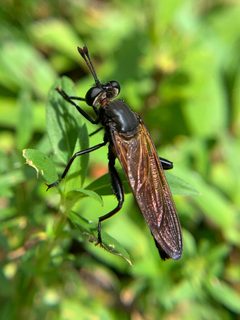
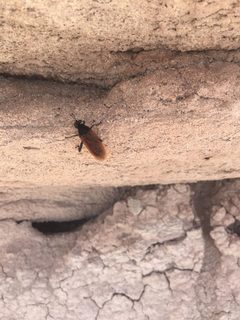
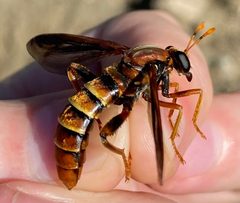
Mydas is a of flies in the Mydidae, established by Fabricius in 1794. These are among the largest flies in North America, with some reaching substantial body lengths. The genus is characterized by elongate clubbed and -mimicking coloration, typically featuring black bodies with orange or red markings. Mydas flies are often mistaken for large wasps or robber flies by observers due to their impressive size and similar appearance to hymenopteran mimics.
Pronunciation
How to pronounce Mydas: /ˈmiːdəs/
These audio files are automatically generated. While they are not always 100% accurate, they are a good starting point.
Images
Similar Taxa
- Stizoides renicinctusBoth share black body with orange/red abdominal banding and large size, causing frequent misidentification by non-entomologists. S. renicinctus is a kleptoparasitic (Hymenoptera), distinguished by having two pairs of wings (Hymenoptera) versus one pair plus in Mydas (Diptera), and short versus Mydas elongate clubbed antennae.
- Scolia dubiaBlue-winged Wasp shares similar black-and-orange color pattern and large size. Scolia has dark blue-black wings with translucent tips and is a true (Hymenoptera) with constricted waist, while Mydas lacks the wasp waist and has different wing venation and structure.
- Anoplius spider waspsSpider wasps in Anoplius, particularly A. semicinctus and related with red abdominal markings, closely resemble Mydas in coloration and size. Distinguished by long spiny legs typical of Pompilidae and different wing structure.
- Ospriocerus abdominalisThis robber fly (Asilidae) is suggestive of a mydas fly in general form and -mimic coloration, but has short versus the elongate clubbed antennae diagnostic of Mydidae.
- Wyliea mydasWestern robber fly with similar mimetic -like coloration modeled after spider wasps. Distinguished by black and red wings versus Mydas typically having red/orange abdominal markings and dark wings.
Sources and further reading
- BugGuide
- Wikipedia
- NCBI Taxonomy
- Catalogue of Life
- Ospriocerus abdominalis | Beetles In The Bush
- robber flies | Beetles In The Bush | Page 3
- Bug Eric: Wasp Wednesday: Stizoides renicinctus
- cybertaxonomy | Blog
- Bug Eric: December 2020
- Nesting habitat characteristics of green sea turtle (Chelonia mydas) in the Tambelan archipelago, Indonesia
- Retinal oil globule counts and distributions in two species of turtles:Pseudemys scripta elegans (Wied) andChelonia mydas mydas (Linnaeus)
- Nesting habitat characteristics of green sea turtle (Chelonia mydas) in the Tambelan archipelago, Indonesia
- Microsatellitee DNA variation in green turtles Chelonia mydas of Thailand
- Fibropapillomatosis in immature Green Turtles (Chelonia mydas) from the Gulf of Venezuela