
Toxophora amphitea
Walker, 1849
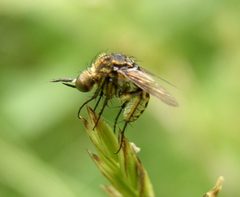
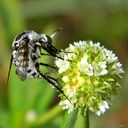
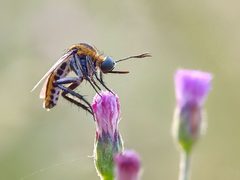
Toxophora amphitea is a of bee fly in the Bombyliidae. It is known from eastern North America, ranging from Ontario south to Florida and Texas. The species has been documented as a of mason wasp nests, specifically those of Ancistrocerus campestris. As a member of the Toxophorinae, it belongs to a group of bee flies characterized by particular morphological and ecological traits.
Pronunciation
How to pronounce Toxophora amphitea: //tɒkˈsɒfərə æmˈfaɪtiə//
These audio files are automatically generated. While they are not always 100% accurate, they are a good starting point.
Images
Distribution
Eastern North America, from Ontario, Canada southward to Florida and west to Texas in the United States.
Host Associations
- Ancistrocerus campestris - Parasitizes nests of this mason wasp
- Trypoxylon clarkei - Has been observed parasitizing nests of this keyhole wasp
Behavior
Has been observed as a nest of solitary , invading pre-existing cavities such as borings in wood, hollow twigs, or abandoned mud dauber nests.
Ecological Role
Acts as a in the nests of solitary , contributing to of .
More Details
Parasitoid ecology
Toxophora amphitea is one of several organisms documented to exploit the nest resources of Ancistrocerus campestris. Other documented nest associates include the eulophid Melittobia chalybii and the wedge-shaped beetle Macrosiagon cruentum.