
Toxophorinae
Schiner, 1868
bee flies
Genus Guides
3- Geron
- Systropodini
- Toxophora(bee flies)
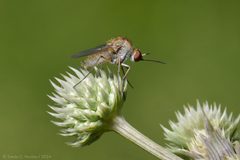
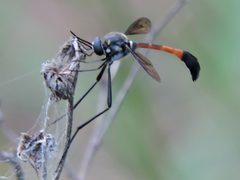
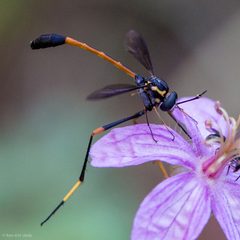
Toxophorinae is a of bee flies (Bombyliidae) established by Schiner in 1868, comprising more than 400 described across five extant (Dolichomyia, Geron, Systropus, Toxophora, Zaclava) and two extinct genera (Melanderella, Paradolichomyia). The subfamily is characterized by , with larvae developing in the nests of solitary . Species of Toxophora have been documented as parasitoids of sphecid and vespid wasps, including genera such as Isodontia, Cyphomenes, Pachodynerus, and Zethus.
Pronunciation
How to pronounce Toxophorinae: /tɔk.səˈfɔr.ɪ.neɪ/
These audio files are automatically generated. While they are not always 100% accurate, they are a good starting point.
Images
Habitat
are defined by the nesting sites of , which include various terrestrial environments where solitary wasps construct nests. Specific microhabitat requirements vary by host association.
Distribution
Documented from multiple localities in Argentina including Formosa, Misiones, Chaco, Santiago del Estero, and Santa Fe provinces. The has a broader distribution beyond South America, though specific range boundaries for the subfamily as a whole remain incompletely documented.
Host Associations
- Isodontia costipennis - Toxophora aurea reared from nest in Formosa province, Argentina
- Cyphomenes anisitsii - Toxophora leucon reared from nest in Formosa province, Argentina
- Pachodynerus guadulpensis - Toxophora leucon reared from nest in Formosa province, Argentina
- Zethus dicomboda - Toxophora leucon reared from nest in Formosa province, Argentina
Life Cycle
Larvae develop as within the nests of solitary . are free-living. Specific developmental stages and duration have not been documented in available sources.
Behavior
engage in -seeking to locate nests of solitary for oviposition. The precise mechanisms of host location remain unstudied.
Ecological Role
of solitary , potentially regulating of . The functions as a mortality factor in wasp nesting .
More Details
Taxonomic composition
The contains seven : Dolichomyia (1830), Geron (1820), Systropus (1820), Toxophora (1803), Zaclava (1973), and the extinct genera Melanderella (1909) and Paradolichomyia (2004).
Research gaps
Most biological knowledge derives from a single study on two Toxophora in Argentina. The of Dolichomyia, Geron, Systropus, and Zaclava remains undocumented in available literature.