
Macrosiagon
Hentz, 1830
wedge-shaped beetles
Species Guides
9- Macrosiagon cruenta
- Macrosiagon dimidiata(wedge-shaped beetle)
- Macrosiagon excavata
- Macrosiagon flavipennis
- Macrosiagon limbata(Bordered Wedge-shaped Beetle)
- Macrosiagon linearis
- Macrosiagon octomaculata
- Macrosiagon pectinata
- Macrosiagon sayi
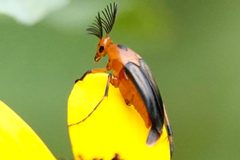
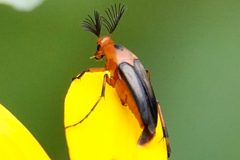
Macrosiagon is a of wedge-shaped beetles ( Ripiphoridae) containing more than 20 described . Species in this genus are of and bees. First-instar larvae (triungulinids) exhibit phoretic , attaching to insects for transport. The genus has a broad distribution spanning the Nearctic, Neotropical, Palaearctic, Oriental, and Afrotropical regions.

Pronunciation
How to pronounce Macrosiagon: //ˌmækroʊsiˈæɡən//
These audio files are automatically generated. While they are not always 100% accurate, they are a good starting point.
Images
Habitat
Restinga has been documented for M. octomaculata in Brazil. M. flavipennis has been recorded in urban areas in Chile. Specific habitat preferences for most remain poorly documented.
Distribution
Palaearctic, Oriental, and Afrotropical regions (including Azerbaijan, Nepal, Laos, Malaysia, Yemen, Eritrea, Saudi Arabia, Kenya). Nearctic region (United States, southern Canada). Neotropical region (Brazil, Chile).
Host Associations
- Thynnidae wasp - phoretic triungulinid observed attached to wing
- Ancistrocerus campestris - M. cruentum larvae reported to prey on larvae in nest
Life Cycle
Hypermetamorphic development with distinct larval stages. First-instar larvae (triungulinids) are active, mobile, and phoretic. and triungulinids have been found on plants (e.g., Paepalanthus polyanthus, Eriocaulaceae). Triungulinids attach to wings for to nests where later instars develop as .
Behavior
First-instar larvae (triungulinids) exhibit , actively seeking and attaching to winged Hymenoptera for transport to nests. This facilitates access to the stages of and bees that serve as hosts.
Ecological Role
of solitary and bees. Macrosiagon larvae develop within nests, consuming host larvae and provisions. of host Hymenoptera.
Similar Taxa
- RipiphorusAlso in Ripiphoridae with wedge-shaped body form; distinguished by taxonomic characters in wing venation and genitalia
More Details
Nomenclatural note
Under ICZN rules, the name is feminine in gender (based on Greek 'siagon', jaw, feminine), though some recent publications have erroneously treated it as neuter.
Host plant association
First record of Eriocaulaceae (Paepalanthus polyanthus) playing a role in Macrosiagon bionomics; and triungulinids found on this plant in Brazil.
Sources and further reading
- BugGuide
- Wikipedia
- GBIF taxonomy match
- iNaturalist taxon
- NCBI Taxonomy
- Catalogue of Life
- Bug Eric: How to (Almost) Catch a Leaf-tier Caterpillar (Video)
- Taxonomy and distribution of Palaearctic and Oriental species of the genus Macrosiagon. Part III (Coleoptera, Ripiphoridae)
- Updated catalog of the Chilean wedge-shaped beetles (Coleoptera: Ripiphoridae) with the first records of Macrosiagon flavipennis (LeConte) in Chile
- Morphology and biological notes of Macrosiagon octomaculata (Gerstaecker) triungulinid and a summary of the knowledge on immature stages of the genus (Ripiphoridae)