
Ripiphorinae
Laporte, 1840
wedge-shaped beetles
Genus Guides
2- Macrosiagon(wedge-shaped beetles)
- Ripiphorus(wedge-shaped beetles)
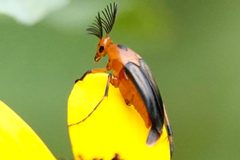
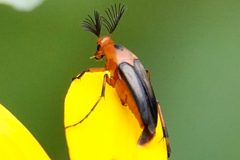
Ripiphorinae is a of wedge-shaped beetles within Ripiphoridae, comprising at least 2 (Macrosiagon and Ripiphorus) and approximately 40 described . Members exhibit hypermetamorphic development with free-living first instar larvae. The subfamily includes species with documented oceanic capabilities, as evidenced by Ripiphorus caboverdianus on Cape Verde.

Pronunciation
How to pronounce Ripiphorinae: /ˈrɪpɪˌforɪniː/
These audio files are automatically generated. While they are not always 100% accurate, they are a good starting point.
Identification
typically exhibit wedge-shaped body form characteristic of Ripiphoridae. Ripiphorus display milky white , hyaline hind wings, and translucent membranous between and surfaces of the first abdominal segments. Females of some species have slightly curved hind tibiae (wider at apex than base) and slender, parallel-sided first metatarsomeres.
Images
Habitat
Includes volcanic island environments; specific microhabitat associations vary by .
Distribution
Widespread distribution including North America, with at least one (Ripiphorus caboverdianus) documented from oceanic volcanic islands (Boavista Island, Cape Verde archipelago), representing the first Ripiphoridae record from Macaronesian islands.
Host Associations
- bees - Ripiphorus associated with Halictidae (Hymenoptera); specific associations for most Ripiphorinae not confirmed
Life Cycle
Hypermetamorphic development with free-living, mobile first instar larvae () that actively seek . Larval of first instar described for some ; subsequent instars become endoparasitic or nest-inhabiting.
Behavior
First instar larvae are free-living and mobile, exhibiting active -seeking . behavioral observations limited but include activity at type localities.
Ecological Role
of bees (Hymenoptera), potentially regulating . Island populations may have conservation significance due to restricted distributions.
Similar Taxa
- Ripiphoridae (other subfamilies)Ripiphorinae distinguished by combination of wedge-shaped body, specific wing and elytral characteristics, and associations primarily with bees rather than other Hymenoptera groups
- Macrosiagon within Ripiphorinae; -level identification requires examination of female tibial and tarsal , male genitalia, and specific elytral coloration patterns