Macrosiagon limbata
Fabricius, 1781
Bordered Wedge-shaped Beetle
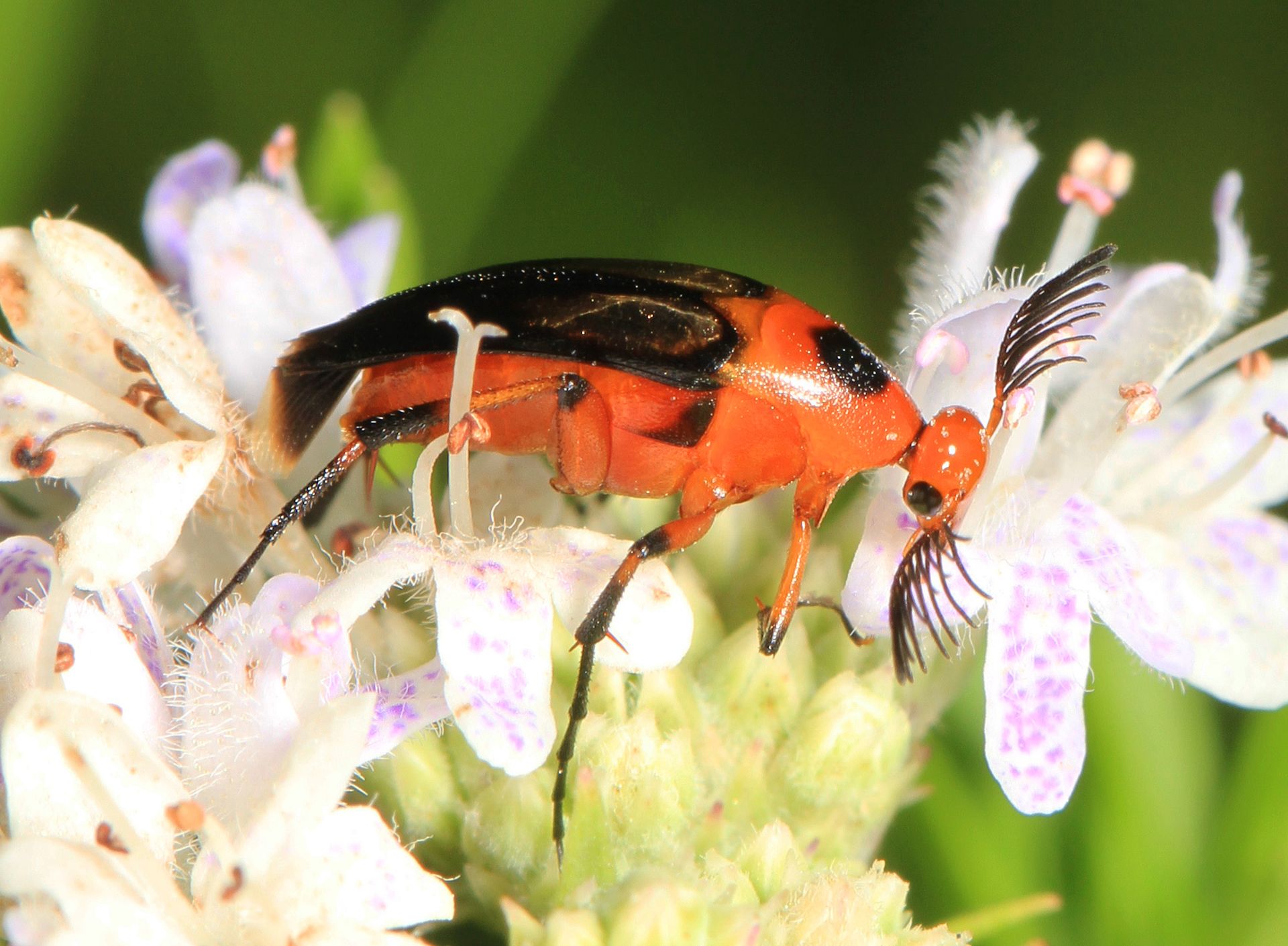
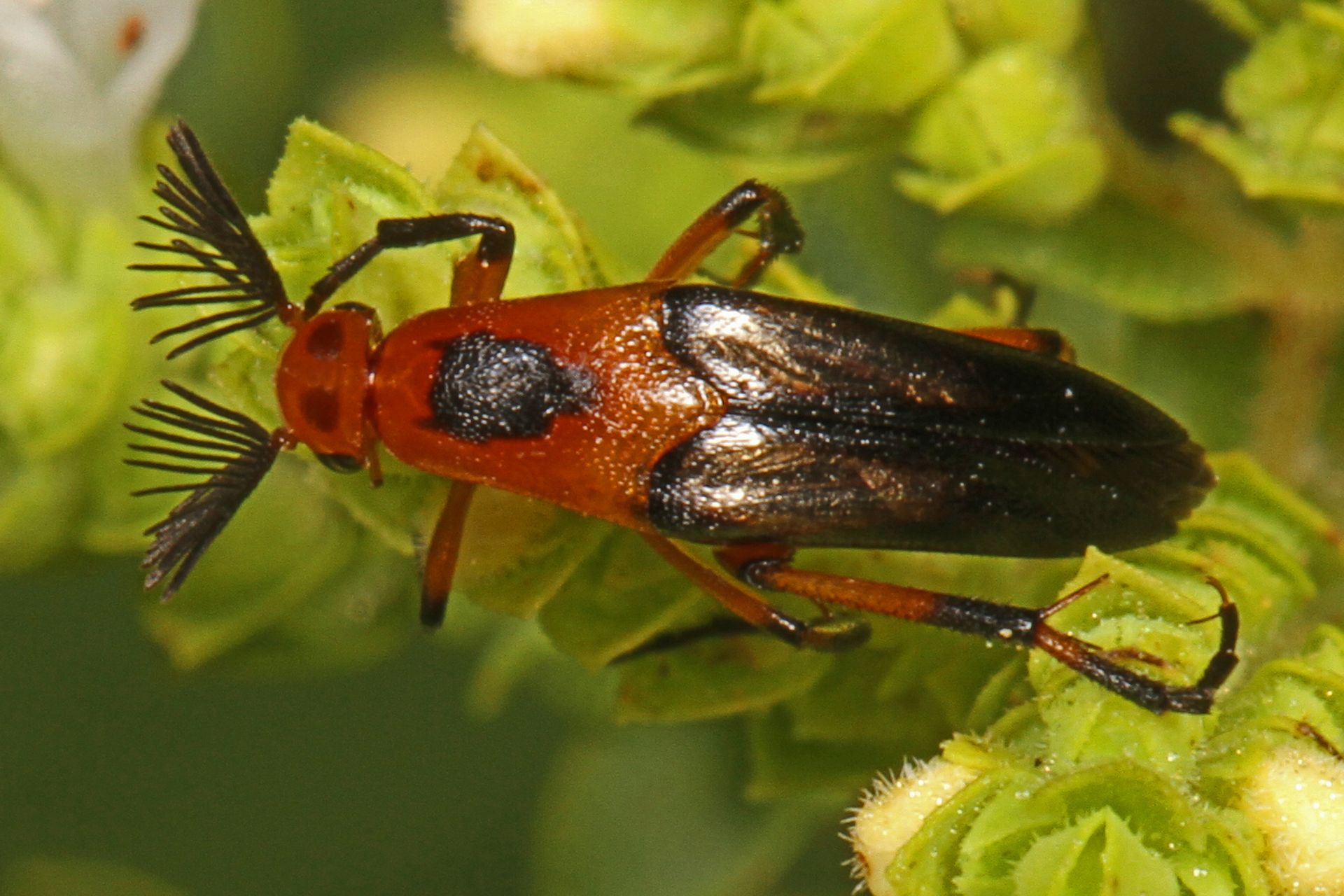
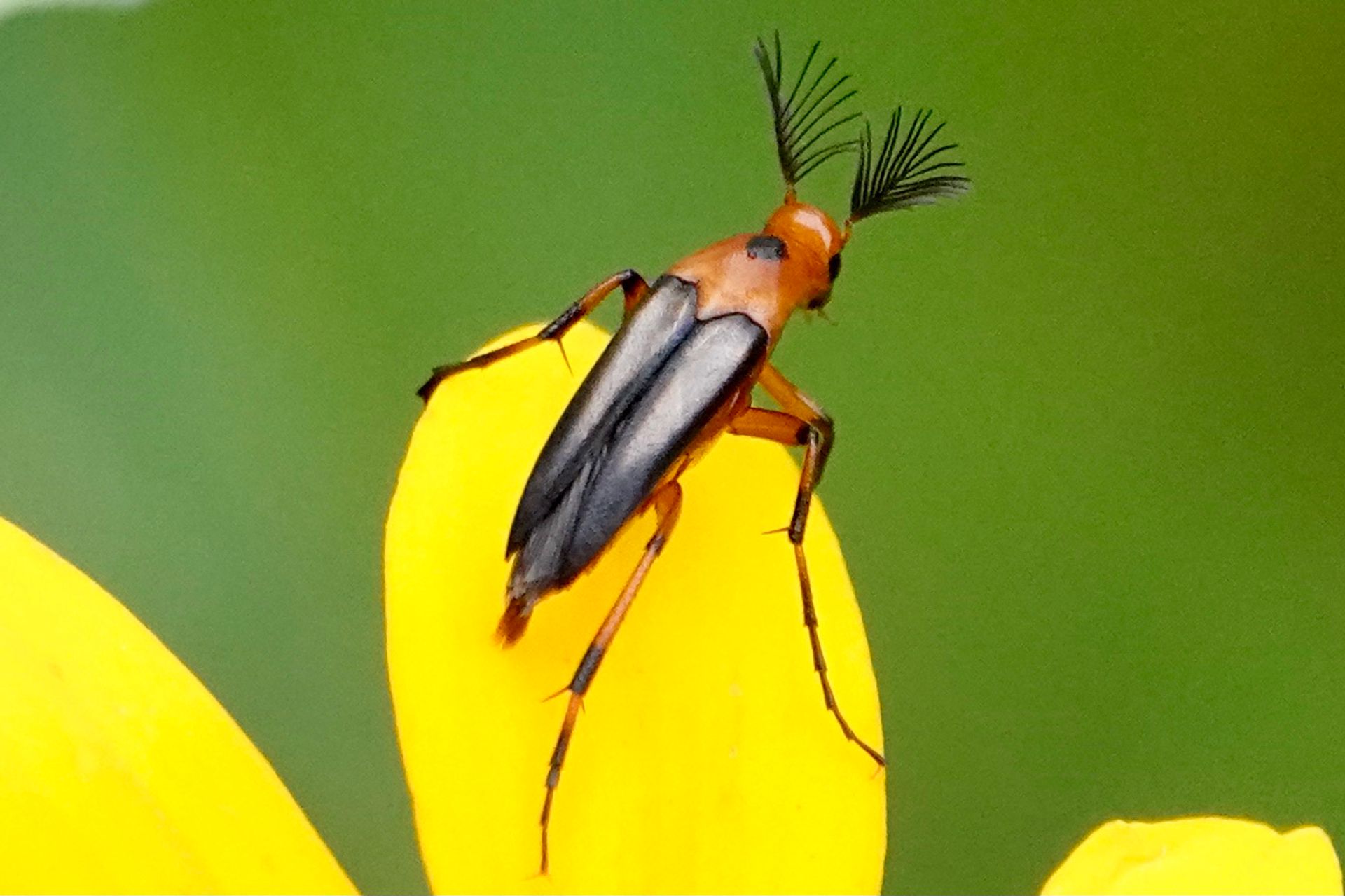
Macrosiagon limbata is a wedge-shaped beetle in the Ripiphoridae, first described by Fabricius in 1781. are active in summer and found on flowers, particularly elderberries and goldenrod. The undergoes , with larvae serving as internal of Crabronidae . Females deposit on flowers visited by bees and other hymenopterans, where first-instar attach to for transport to nests.
Pronunciation
How to pronounce Macrosiagon limbata: //ˌmækroʊˈsaɪəɡɒn lɪmˈbeɪtə//
These audio files are automatically generated. While they are not always 100% accurate, they are a good starting point.
Identification
Distinguished from other Ripiphoridae by inserted to the . Differs from similar-appearing Mordellidae (tumbling flower beetles) in having longer . Separated from Melandryidae (false darkling beetles) by -level characters including body shape and antennal structure.
Images
Appearance
have longer than the , diverging at the apex. Males possess comblike ; female antennae are serrate. Mouthparts are elongated and appear adapted for nectar feeding. The overall body form is wedge-shaped, characteristic of the Ripiphoridae.
Habitat
Open fields with wildflowers. frequent flowers, particularly elderberry and goldenrod.
Distribution
Eastern United States, Southeastern Canada, and Central America. Range likely extends into South America but this remains unconfirmed.
Seasonality
active in summer months.
Diet
have been observed feeding on nectar. Larvae feed on larvae or stored pollen and nectar supplies in host nests.
Host Associations
- Crabronidae - larval Larvae reported as of this
Life Cycle
Hypermetamorphic development with multiple morphologically distinct instars. First instar is a —an active, legged larva that climbs onto hymenopterans. Subsequent instars are legless and remain in the host nest. Females deposit on flowers visited by bees and other hymenopterans.
Behavior
move swiftly and have short periods. First-instar larvae actively seek and climb onto hymenopterans for transport to nests. Adults have been observed digging into sand during midday hours in some .
Ecological Role
Internal of Crabronidae , potentially regulating . may contribute to pollination through nectar feeding.
Human Relevance
Collected by entomologists for study; difficult to capture due to swift movement and brief periods. No significant economic impact documented.
Similar Taxa
- MordellidaeSimilar wedge-shaped appearance; distinguished by shorter in Mordellidae
- MelandryidaeSimilar general appearance; separated by -level morphological characters
- Other RipiphoridaeDistinguished by antennal insertion to the
More Details
Collecting notes
Sweep-netting on flowers and low vegetation during summer is the most effective collection method. Hand-catching is difficult due to rapid movement.