
Toxophora
Meigen, 1803
bee flies
Species Guides
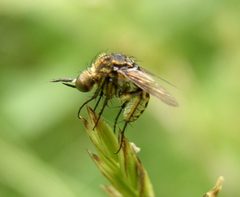
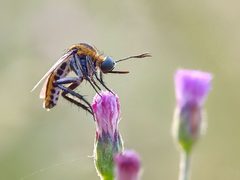
5Toxophora is a of bee flies ( Bombyliidae) comprising approximately 47 described with worldwide distribution. These flies are characterized by a distinctive hunchbacked, robust body form and are most abundant in the southwestern United States and western Mediterranean region. Larvae are of solitary and bees, particularly in the family Vespidae.
Pronunciation
How to pronounce Toxophora: /tɒkˈsɒfərə/
These audio files are automatically generated. While they are not always 100% accurate, they are a good starting point.
Identification
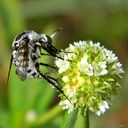
The hunchbacked thoracic profile distinguishes Toxophora from most other bee fly . The compact, stocky build and relatively short wings compared to body length are additional diagnostic features. Specific identification requires examination of wing venation, abdominal patterning, and genitalia.
Images
Appearance
Stout, robust flies with a pronounced hunchbacked form. Body length 6–12 mm, wing length 4–7.5 mm. Most are black with banding or spots on the body.
Habitat
Found in diverse environments corresponding to nesting sites; associated with areas supporting of solitary and bees including woodlands, forest edges, and open with suitable nesting substrates.
Distribution
Worldwide distribution with highest in the southwestern United States and western Mediterranean. Documented from Nearctic, Neotropical, Afrotropical, Palaearctic, Oriental, and Australasian/Oceanian regions.
Diet
feeding habits not documented in available sources. Larvae are , feeding on larvae within nests.
Host Associations
- Vespidae - Primary ; larvae parasitize solitary and bees
- Isodontia costipennis - for T. aurea in Argentina (Sphecidae)
- Cyphomenes anisitsii - for T. leucon in Argentina (Vespidae: Eumeninae)
- Pachodynerus guadulpensis - for T. leucon in Argentina (Vespidae: Eumeninae)
- Zethus dicomboda - for T. leucon in Argentina (Vespidae: Eumeninae)
- Ancistrocerus campestris - for T. amphitea in North America (Vespidae: Eumeninae)
Life Cycle
Larvae develop as within nests of solitary and bees. presumably emerge from nests. Specific details of deposition and larval development not documented.
Behavior
poorly documented. One (T. amphitea) has been observed as a nest of mason wasps.
Ecological Role
of solitary Hymenoptera; contributes to of and bees. Specific impacts not quantified.
Human Relevance
No documented direct economic or medical significance. potential for pest not evaluated.
Similar Taxa
- Other BombyliidaeToxophora distinguished by hunchbacked thoracic form and compact, robust body; most other bee flies have more elongate bodies and straighter thoracic profiles
More Details
Taxonomic history
established by Meigen in 1803. Currently classified in Toxophorinae, tribe Toxophorini.
Research gaps
feeding , mating systems, and detailed remain undocumented for most . specificity patterns require further investigation.