
Zopherus nodulosus
Solier, 1841
Ironclad beetle
Species Guides
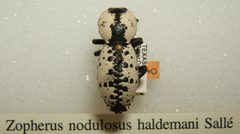
1- Zopherus nodulosus haldemani(Texas Ironclad Beetle)
Zopherus nodulosus is a of ironclad beetle in the Zopheridae, named for the nodular bumps on its surface. The species occurs in Central America and North America, with recognized including Z. n. haldemani (Texas ironclad beetle) and Z. n. nodulosus. These beetles possess exceptionally hardened that make them notoriously difficult to pin, a trait shared with other members of the Zopherus.
Pronunciation
How to pronounce Zopherus nodulosus: //ˈzoʊ.fə.rəs ˌnɒd.jəˈloʊ.səs//
These audio files are automatically generated. While they are not always 100% accurate, they are a good starting point.
Identification
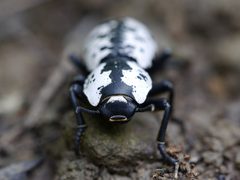
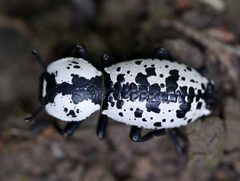
Distinguished from other darkling beetle-like by the combination of: extremely hard, armor-like making specimens difficult to pierce with standard entomological pins; presence of distinct nodules or bumps; and overall robust, compact body form. Z. n. haldemani can be identified by its specific black-and-white mottled pattern and fully black legs. Separation from other Zopherus requires examination of specific patterns and geographic occurrence.
Images
Appearance
Body covered with prominent bumps or nodes on the surface, from which the name derives. Size varies by : Z. n. nodulosus measures 14–28 mm in length and 5–11 mm in width; Z. n. haldemani reaches 15–20 mm. Subspecies Z. n. haldemani displays a blotchy black-and-white pattern with fully black legs.
Habitat
Associated with woodland and forest environments. Z. n. haldemani has been documented in pecan wood and American elm, with larvae and pupae found in pecan wood serving as developmental sites. Related in the (Z. uteanus) have been observed on trunks of ponderosa pine and Utah juniper at night, suggesting arboreal activity in coniferous and mixed woodlands.
Distribution
Central America and North America. Z. n. haldemani is found in East and Central Texas. GBIF records confirm presence in Middle America and North America.
Seasonality
Activity patterns not well documented. Related Zopherus have been collected at night during June and September, suggesting activity spans late spring through early fall. Specific for Z. nodulosus not established.
Diet
Z. n. haldemani is thought to feed on lichen and dead plant material based on field observations.
Host Associations
- pecan (Carya illinoinensis) - larval development sitelarvae and pupae found in pecan wood
- American elm (Ulmus americana) - oviposition sitefemales observed laying on American elms
Life Cycle
Larval and pupal stages occur in wood, specifically documented in pecan wood for Z. n. haldemani. Females lay on American elms. Complete developmental details unknown.
Behavior
activity on tree trunks documented for related Zopherus . Z. n. haldemani females observed ovipositing on American elms. Slow, deliberate movement typical of ironclad beetles due to heavy armor.
Ecological Role
Decomposer; feeds on dead plant material and lichen. Wood-boring larvae contribute to nutrient cycling in forest .
Human Relevance
Collected by entomologists for scientific study. Extreme exoskeletal hardness makes specimens challenging to prepare for collections—requires drilling starter holes or specialized pinning techniques. No significant economic impact documented.
Similar Taxa
- Zopherus uteanusSimilar arboreal on conifer trunks, but distinguished by geographic range and specific patterns
- Eleodes spp. (darkling beetles)Similar slow movement and defensive posture, but Eleodes has bead-like and concealed ; Zopherus has extremely hardened and distinct nodules
- other TenebrionidaeFormerly classified in Tenebrionidae; Zopheridae now recognized as distinct based on morphological characters including extremely hardened
Misconceptions
Formerly placed in Tenebrionidae; now correctly classified in Zopheridae. The 'ironclad beetle' applies to multiple and is not specific to Z. nodulosus.
More Details
Taxonomic history
Zopherus nodulosus was originally described by Solier in 1841. The Z. n. haldemani was described by Horn in 1870 and is sometimes treated as a separate . The Zopherus comprises 19 species distributed in the Americas, all adapted to wood-boring habits. Some Zopherus species are used as living brooches in Mexico.
Specimen preparation challenges
The extreme exoskeletal hardness of Zopherus beetles makes them among the most difficult beetles to pin. Collectors have resorted to drilling starter holes or using heavy-duty tools. One collector humorously noted using 'a hammer and a 16d common nail' for Zopherus specimens.