
Valgus
Scriba, 1790
Species Guides
4- Valgus californicus
- Valgus canaliculatus
- Valgus hemipterus
- Valgus seticollis(Bristly-necked Valgus)
Valgus is a of small scarab beetles in the Scarabaeidae, Cetoniinae. Most described occur in Asia, with some extending into northern Africa and Europe. Three species are native to the New World, and one species is found in South Africa. are characterized by their strongly flattened bodies and distinctive -like setae covering both and surfaces.
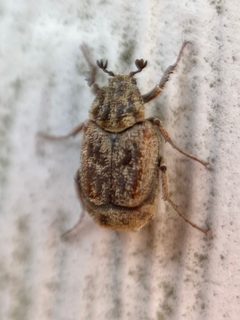
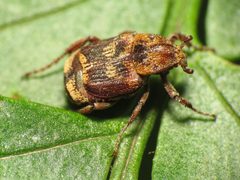
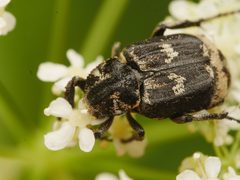
Pronunciation
How to pronounce Valgus: /ˈval.ɡus/
These audio files are automatically generated. While they are not always 100% accurate, they are a good starting point.
Images
Distribution
Oriental, Palaearctic, Nearctic, and Afrotropical regions. Most occur in Asia, with some reaching northern Africa and Europe. Three species are native to the New World, and one species occurs in South Africa.
Behavior
are attracted to flowers; only males visit flowers, using specially modified brush-like mouthparts to lap up nectar. Males do not feed on pollen.
Similar Taxa
- CyclocephalaBoth are small scarab beetles in Cetoniinae, but Cyclocephala lacks the -like setae and flattened body form of Valgus.
- TrigonopeltastesBoth are flower-visiting scarab beetles, but Trigonopeltastes has distinctive triangular pronotal markings and lacks the dense -like setae of Valgus.
More Details
Taxonomic placement
Valgus belongs to the tribe Valgini, one of only two tribes in Scarabaeidae that possess and -like setae (the other being the unrelated tribe Hopliini, or monkey beetles).
Termite associations
Most New World of Valgini are associated with . are laid in termite galleries and larvae feed on wood within the galleries. It remains unclear whether this termophily is obligatory or if the beetles simply exploit the stable environment and accessible food source provided by termite colonies.
Species diversity
The contains relatively few compared to other Cetoniinae genera. The iNaturalist database records approximately 14,000 observations, though many of these may represent a small number of widespread species.