Valgus seticollis
(Palisot de Beauvois, 1807)
Bristly-necked Valgus
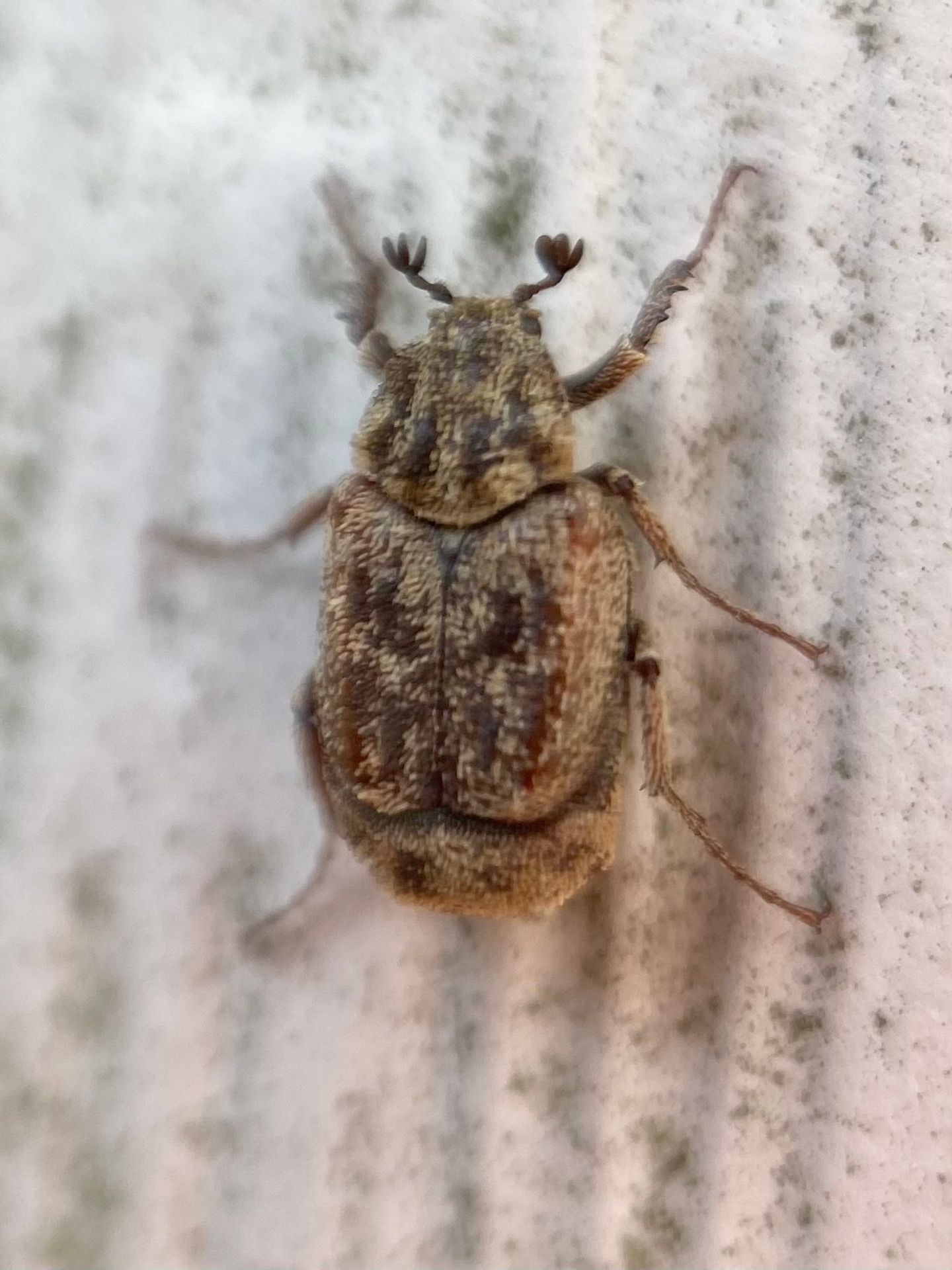
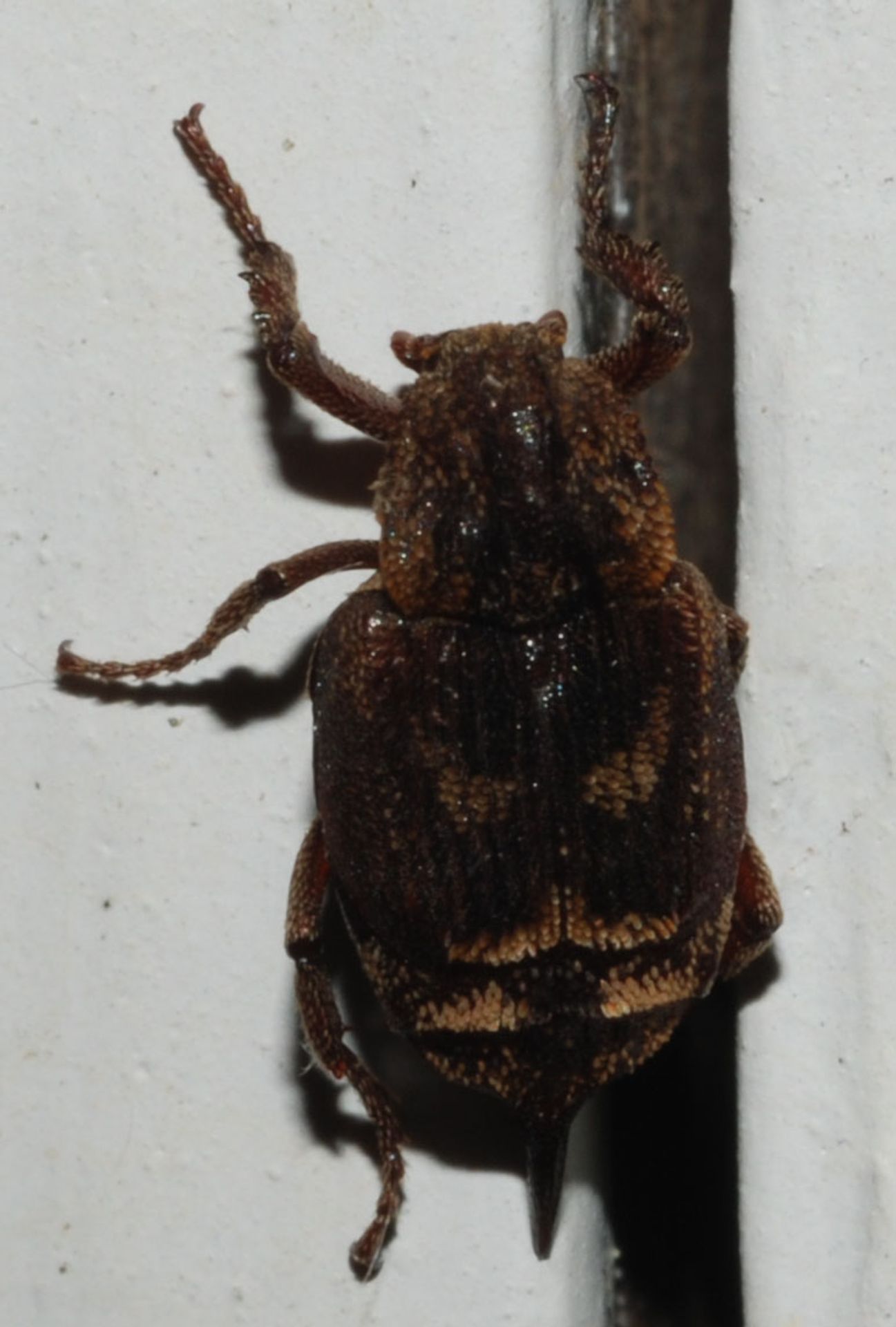
Valgus seticollis is a small scarab beetle in the Cetoniinae, tribe Valgini. It is one of two Valgus native to North America, distinguished from the more widespread V. canaliculatus by its setose (bristly) pronotum. are flower visitors, with males possessing brush-like mouthparts adapted for nectar feeding. The species is associated with colonies, where larvae develop in wood within termite galleries.
Pronunciation
How to pronounce Valgus seticollis: //ˈvælɡəs ˌsetɪˈkɒlɪs//
These audio files are automatically generated. While they are not always 100% accurate, they are a good starting point.
Identification
Distinguished from the congeneric V. canaliculatus by the presence of dense, erect setae on the pronotum (the source of its specific epithet 'seticollis,' meaning 'bristly-necked'). Both share the tribe Valgini's characteristic flattened, -like and setae. are small (similar in length to Acmaeodera neglecta, approximately 4–6 mm), with a broad, strongly flattened body form. The pronotum is triangular and shield-shaped.
Images
Distribution
Eastern and central North America, recorded from Arkansas, Connecticut, Georgia, Illinois, Indiana, Iowa, Kansas, Kentucky, Maryland, Massachusetts, Mississippi, Missouri, Nebraska, New Jersey, New York, North Carolina, Ohio, Pennsylvania, Rhode Island, South Carolina, Tennessee, Texas, Virginia, and West Virginia.
Diet
feed on nectar; males possess specially modified, brush-like mouthparts for this purpose. Larvae feed on wood within galleries.
Life Cycle
are laid in galleries; larvae feed on wood within these galleries. The degree of termite association (obligate versus facultative) remains unclear.
Behavior
visit flowers, but only males have been observed doing so. When disturbed, adults may exhibit defensive postures. The is attracted to lights.
Ecological Role
Larvae function as secondary consumers of decaying wood within -modified . may contribute to pollination through nectar feeding, though this has not been quantified.
Similar Taxa
- Valgus canaliculatusOverlapping North American distribution; distinguished by smooth, non-setose pronotum versus the setose pronotum of V. seticollis. Both share the flattened, -like body setae characteristic of tribe Valgini.