
Hopliini
Latreille, 1829
Monkey Beetles
Genus Guides
1- Hoplia(monkey beetles)
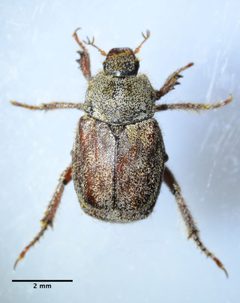
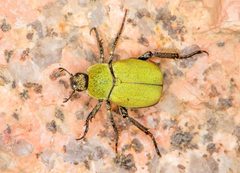
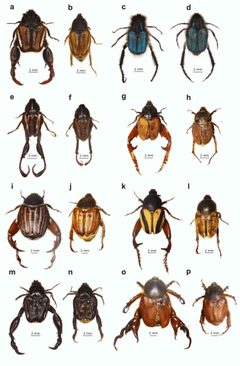
Hopliini is a tribe of scarab beetles commonly known as monkey , established by Latreille in 1829. The tribe's placement within Scarabaeidae remains uncertain, with some classifications placing it in Melolonthinae and others in Rutelinae. Members are characterized by their frequent association with flowers, where they feed on pollen, nectar, and floral tissues. The tribe is particularly diverse and ecologically significant in the Greater Cape Floristic Region of South Africa, where they serve as important for numerous plant .
Pronunciation
How to pronounce Hopliini: /hoʊˈplaɪ.iː.naɪ/
These audio files are automatically generated. While they are not always 100% accurate, they are a good starting point.
Images
Habitat
Flowers in the Greater Cape Floristic Region of South Africa; specifically Western and Northern Cape Province. Flowers serve as both food sources and mating sites.
Distribution
Western and Northern Cape Province of South Africa; Greater Cape Floristic Region.
Diet
Floral tissue (disk florets, receptacles, ovules), pollen, and/or nectar. Three distinct feeding groups have been identified: floral/plant tissue feeders, pollen feeders, and nectar feeders.
Host Associations
- Gazania rigida - food plantAsteraceae
- Didelta carnosa - food plantAsteraceae
- Leucadendron salignum - food plantProteaceae
- Arctotheca calendula - food plantAsteraceae
- Grielum humifusum - food plantNeuradaceae
Life Cycle
feed on floral resources; larvae consume rotting plant material, following the typical Scarabaeoidea pattern.
Behavior
Two putative feeding guilds have been identified: a 'non-embedding' guild (pollen/nectar feeding) and an 'embedding' guild (digging into flowers to feed on floral tissue). Semi-circular movements of mouthparts are used for sweeping up pollen and mopping up nectar. Flowers serve as mating sites.
Ecological Role
Important for many plants belonging to different in the Greater Cape Floristic Region. They act as pollen attracted by floral tissue, pollen, and nectar rewards.