
Xyleborinus andrewesi
Wood & Bright, 1992
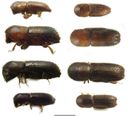
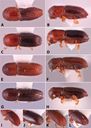
Xyleborinus andrewesi is a small ambrosia beetle in the weevil Scolytinae. Native to the Old World tropics, it has been widely introduced to the New World. The is and has been recorded from 59 plants across 29 . It was synonymized with Xyleborinus mimosae in a 2021 taxonomic revision.
Pronunciation
How to pronounce Xyleborinus andrewesi: //ˌzaɪləbɔːˈraɪnəs ˌændruˈiːsaɪ//
These audio files are automatically generated. While they are not always 100% accurate, they are a good starting point.
Images
Distribution
Native to Kenya, Seychelles, Zambia, Bangladesh, Myanmar, China, Japan, India, Indonesia, Malaysia, Nepal, Philippines, Sri Lanka, Taiwan, Thailand, Vietnam, New Guinea, Micronesia, and Papua New Guinea. Introduced to Hawaii, Cuba, Jamaica, and the United States. GBIF records additionally indicate presence in Australia and the Caribbean.
Diet
ambrosia beetle that cultivates and feeds on symbiotic fungi within wood galleries. Has been recorded from 59 plants belonging to 29 .
Host Associations
- Albizzia - plant
- Anacardium - plant
- Annona squamosa - plant
- Araucaria cunninghamii - plant
- Artocarpus dadah - plant
- Breonia - plantsyn. Anthocephalus
- Buchenavia - plant
- Canarium - plant
- Cinnamomum - plant
- Cryptocarya - plant
- Garuga - plant
- Isonandra - plant
- Mallotus - plant
- Mangifera indica - plant
- Myristica indica - plant
- Odina wodier - plant
- Palaquium eliptica - plant
- Pterospermum - plant
- Randia - plant
- Samanea saman - plant
- Shorea - plant
- Tectona grandis - plant
Ecological Role
As an ambrosia beetle, introduces and cultivates symbiotic fungi in wood galleries. The fungal creates internal wood decay that can contribute to tree decline, though the is primarily associated with stressed, weakened, or dying trees rather than healthy .
Human Relevance
Documented as a pest with broad range across timber and fruit tree . Its introduction to New World countries including the United States raises concerns for orchard and forestry industries.
Similar Taxa
- Xyleborinus mimosaeSynonymized with X. andrewesi in 2021 taxonomic revision; previously treated as separate
- Xyleborinus saxeseniiCongeneric ambrosia beetle with similar and introduced range in North America; distinguished by and genetic divergence
Sources and further reading
- BugGuide
- Wikipedia
- GBIF taxonomy match
- iNaturalist taxon
- NCBI Taxonomy
- Catalogue of Life
- Xyleborinus_saxesenii - Entomology Today
- Xyleborinus saxesenii Archives - Entomology Today
- What Role, If Any, Do Ambrosia Beetles Play in Rapid Apple Decline?
- Study Confirms Effectiveness of Cheap, Simple Traps for Citizen Science Project
- Integrated Taxonomic Revision of AfrotropicalXyleborinus(Curculionidae: Scolytinae) Reveals High Diversity After Recent Colonization of Madagascar