
Enaphalodes atomarius
(Drury, 1773)
Robust Oak Borer
Enaphalodes atomarius, commonly known as the robust oak borer, is a of longhorn beetle in the Cerambycidae. First described by Dru Drury in 1773 from New York City, this is known to be attracted to ultraviolet and mercury-vapor lights in mesic lowland deciduous forests. It has been documented in traps using ethanol and red wine mixtures in xeric dolomite prairie remnants and dry upland deciduous forests.
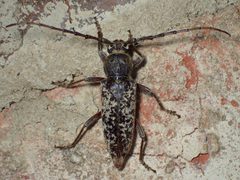
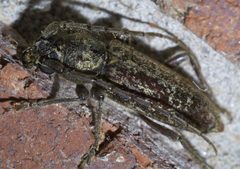
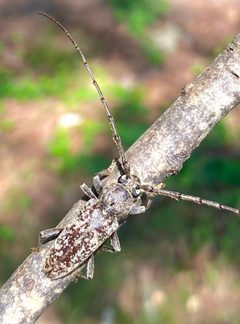
Pronunciation
How to pronounce Enaphalodes atomarius: //ˌɛnəfəˈloʊdiːz ˌætəˈmɛəriəs//
These audio files are automatically generated. While they are not always 100% accurate, they are a good starting point.
Identification
Can be distinguished from similar longhorn beetles by the combination of: with spines on all joints except the basal joint; with two terminal spines each; elytra not fully covering the ; black elytra with yellow-grey mottled pattern. The robust oak borer is attracted to UV/MV lights, which can aid in detection. Similar in the Enaphalodes may differ in antennal spine arrangement, elytral coloration patterns, and body proportions.
Images
Habitat
Mesic lowland deciduous forests; dry-mesic upland deciduous forests; xeric dolomite prairie remnants; dry post oak woodland. Associated with oak-dominated .
Distribution
North America: United States (documented in Missouri, New York, Oklahoma); Canada (Ontario). Middle America.
Seasonality
active in mid-July through summer months. Attracted to lights at night. Documented at UV/MV light setups in July.
Host Associations
- Quercus - larval Larvae develop in living oak branches; 'robust oak borer' indicates association with oak
Life Cycle
Complete with , larva, pupa, and stages. Larvae are wood-borers in living oak branches. Adults emerge and are attracted to lights.
Behavior
; attracted to ultraviolet and mercury-vapor lights. have been observed at light setups in mesic lowland deciduous forests and have been captured in ethanol/red wine traps.
Ecological Role
Larval wood-borer in living oak branches; contributes to nutrient cycling in oak-dominated forest . Serves as prey for various .
Human Relevance
Collected by entomologists for scientific study. Attracted to artificial lights, making it accessible for observation and collection.
Similar Taxa
- Elytrimitatrix undataBoth are cerambycid beetles attracted to lights and found in similar oak-associated ; E. undata is in Disteniidae (formerly considered cerambycids) and differs in body form and antennal structure
- Lepturges confluensAnother cerambycid attracted to UV/MV lights in similar ; differs in smaller size and different elytral pattern
More Details
Historical description
Original description by Dru Drury in 1773 from New York City provides detailed morphological account including coloration, pilosity, and structural features such as antennal spines and elytral armature
Collection methods
Effectively collected using UV/MV light setups in forested and in ethanol/red wine traps in prairie and woodland settings