
Lepturges confluens
(Haldeman, 1847)
Dark-stained Longhorned Beetle
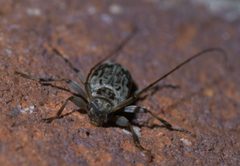
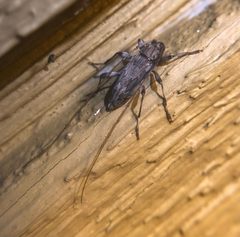
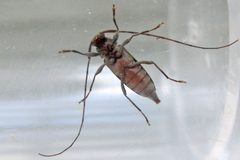
Lepturges confluens is a of longhorn beetle in the Cerambycidae, Lamiinae. It was described by Samuel Stehman Haldeman in 1847. The species is known to be attracted to ultraviolet and mercury-vapor lights during activity. It has been documented in mesic lowland deciduous forests and is associated with oak-dominated . The species occurs in eastern North America, with records from the United States and Canada.
Pronunciation
How to pronounce Lepturges confluens: /lɛpˈtʊrdʒiːz kənˈfluːɛnz/
These audio files are automatically generated. While they are not always 100% accurate, they are a good starting point.
Images
Habitat
Mesic lowland deciduous forest, particularly areas with large standing Quercus spp. (oak). Documented from forested with mature white oak and mixed hardwood stands.
Distribution
Eastern North America. Documented from Ontario and Québec in Canada, and widely distributed in the United States. Specific collection records include Missouri (Holly Ridge Natural Area, Bald Hill Glade Natural Area, Peck Ranch Conservation Area, Stegall Mountain Natural Area, Russell Mountain/Jakk's Glade), Illinois (Salt Lick Point Land & Water Preserve), and likely throughout the eastern deciduous forest biome.
Seasonality
have been collected in mid-July, suggesting summer activity period. activity documented with attraction to UV/MV lights.
Behavior
Nocturnally active, attracted to ultraviolet and mercury-vapor light sources. Has been observed flying to light setups placed in forest .
Human Relevance
Collected by entomologists for scientific study and documentation. Used as a voucher specimen for faunal surveys and biodiversity assessments.
Similar Taxa
- Lepturges angulatusBoth are congeneric of longhorn beetles in the Lepturges, Lamiinae. L. angulatus was described by LeConte in 1852 and may overlap in distribution and preferences.
- Lepturges sp. (undetermined)Other congeneric occur sympatrically and may be captured in similar sampling methods; specific identification requires examination of morphological details.