
Paussinae
Latreille, 1806
Ant nest beetles, paussines, flanged bombardier beetles
Tribe Guides
2Paussinae is a of ground beetles (Carabidae) commonly known as ant nest beetles or flanged bombardier beetles. The subfamily includes four tribes: Metriini, Ozaenini, Paussini, and Protopaussini. Many are obligate myrmecophiles, living within nests where they feed on ant and reproduce. Some lineages exhibit chemical defense capabilities, and the group displays diverse morphological adaptations including flanged and modified .
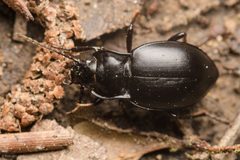
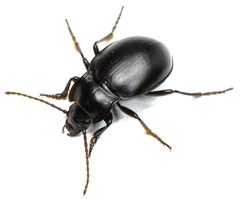
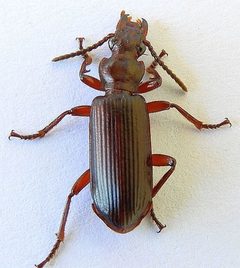
Pronunciation
How to pronounce Paussinae: /paʊˈsɪniː/
These audio files are automatically generated. While they are not always 100% accurate, they are a good starting point.
Images
Habitat
Many inhabit nests as obligate myrmecophiles. Larvae of some (e.g., Goniotropis) construct and inhabit sealed burrows. of forest-dwelling species have been collected from rotten wood.
Distribution
Widespread across tropical and subtropical regions. Goniotropis ranges from southern Arizona to northern Argentina in the New World. Ceratoderus occurs across the Oriental region including India, Nepal, Myanmar, Pakistan, Afghanistan, China, Vietnam, Laos, Philippines, and Indonesia. Paussus favieri has a circum-Mediterranean distribution including France, Spain, Portugal, Morocco, and Tunisia. Lebioderus has been recorded from China.
Diet
Larvae of Goniotropis kuntzeni feed on live insect prey captured using their terminal disk. Paussus favieri feeds on ants and within nests.
Host Associations
- Pheidole pallidula - Obligate for Paussus favieri throughout its ; follows host
- Carebara - First record for Lebioderus from China
Life Cycle
Paussus favieri lays and larvae develop within nests. Goniotropis kuntzeni has described egg, first instar larva, and second instar larva stages; larvae construct sealed burrows.
Behavior
Paussus favieri follows , with optimal response at 0.03 minor poison glands per cm; trail-following ability improves after isolation and recontact with host workers. High concentrations (≥0.06 glands/cm) elicit avoidance. Goniotropis larvae trap prey using moveable components of their terminal disk and bring captured prey into their gallery. Trail-following is host-specific.
Ecological Role
Similar Taxa
- AnthiiniAlso large, aposematic ground beetles with chemical defense; historically confused in common naming ('tyrant ground beetles') but Anthiini are now placed in Carabidae Cicindelinae, not Paussinae
- CicindelinaeTiger beetles share some predatory habits and are closely related within Carabidae; molecular places Paussinae, Cicindelinae, and Rhysodinae together
More Details
Molecular phylogenetics
Increasingly placed within Carabidae based on molecular evidence, with Paussinae, Cicindelinae, and Rhysodinae forming a clade
Co-phylogeny
Paussus favieri shows significant co-phylogenetic signals with its Pheidole pallidula at the level, with codiversification and host population switching among nearby, closely related populations
Chemical defense
Some Paussinae are known as 'flanged bombardier beetles' and possess chemical defense capabilities, though this is not universal across the
Sources and further reading
- BugGuide
- iNaturalist taxon
- NCBI Taxonomy
- Catalogue of Life
- Tyrant ground beetles | Beetles In The Bush
- Description and behaviour of Goniotropis kuntzeni larvae (Coleoptera: Carabidae: Paussinae: Ozaenini) and a key to genera of Paussinae larvae
- A new species of Ceratoderus from Cambodia (Coleoptera, Carabidae, Paussinae)
- Host trail following by the myrmecophilous beetleEdaphopaussus favieri (Fairmaire) (Carabidae Paussinae) Suivi de la piste de l'hôte par le Coléoptère myrmécophileEdaphopaussus favieri (Fairmaire) (Carabidae Paussinae)
- Biogeography and Cophylogeny of Paussus favieri(Carabidae, Paussinae) and Pheidole pallidula(Hymenoptera, Myrmicinae)
- Discovery of the genus Lebioderus (Coleoptera, Carabidae, Paussinae) from China, with description of two new species
- Flanged Bombardier beetles from Shanghai, China, with description of a new species in the genus Eustra Schmidt-Goebel (Coleoptera, Carabidae, Paussinae)
- Co‐phylogeny and biogeography of the myrmecophilous beetle Paussus favieri (Carabidae, Paussinae) and its host ant Pheidole pallidula (Hymenoptera, Myrmicinae)
- Eustra yinggelingensis sp. nov., a new flanged bombardier beetle from Yinggeling Nature Reserve, Hainan, China with contribution to the knowledge of Chinese Eustra species (Coleoptera, Carabidae, Paussinae)
- New Species of Paussus, Subgenus Scaphipaussus (Coleoptera: Carabidae: Paussinae), from Southeast Asia Reveal Ambiguities in Species Group Limits and High Species Diversity in the Oriental Region.