
Metriini
LeConte, 1853
Ant nest beetles
Genus Guides
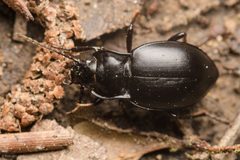
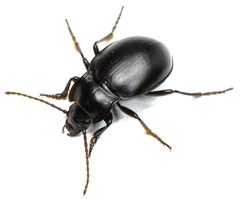
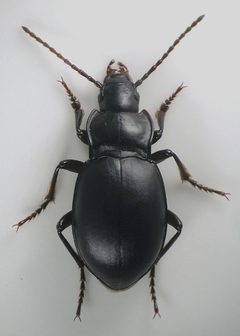
1Metriini is a small tribe of ground beetles in the Paussinae, commonly known as ant nest beetles. The tribe contains at least three and approximately six described . Members are found in North America and China, with one extinct genus known from Burmese amber. These beetles are associated with colonies, though specific ecological details remain limited.
Pronunciation
How to pronounce Metriini: //mɛˈtriː.aɪni//
These audio files are automatically generated. While they are not always 100% accurate, they are a good starting point.
Identification
Metriini can be distinguished from other Paussinae tribes by their reduced defensive gland structures compared to the flanged bombardier beetles (Ozaenini). The tribe lacks the prominent flanges on the that characterize Ozaenini. Members are generally less specialized in body form than the highly modified Paussini, which possess elaborate antennal and abdominal adaptations for colony integration. The two extant (Metrius and Sinometrius) are geographically separated, with Metrius in North America and Sinometrius in China.
Images
Habitat
Associated with colonies; specific microhabitat preferences are poorly documented. The North American Metrius has been found in forested environments. The Chinese genus Sinometrius occupies subtropical to temperate regions.
Distribution
Disjunct distribution: North America ( Metrius, 2 ) and China (genus Sinometrius, 3 species). One extinct genus, †Kryzhanovskiana, is known from Cenomanian-age Burmese amber in Myanmar.
Host Associations
Behavior
Presumed to inhabit colonies based on placement, but specific behavioral adaptations have not been well documented. Unlike the more derived Paussini, Metriini lack obvious chemical or morphological specializations for ant colony integration.
Ecological Role
Potentially acts as a or within colonies; ecological impact is likely minor given low and restricted distribution.
Human Relevance
No documented economic or medical significance. Of interest to entomologists studying the evolution of myrmecophily in ground beetles.
Similar Taxa
- PaussiniBoth are myrmecophilous tribes in Paussinae, but Paussini are highly modified with trichomes for chemical mimicry and elaborate antennal structures, while Metriini are more generalized in form.
- OzaeniniBoth belong to Paussinae, but Ozaenini possess distinctive flanged and well-developed defensive glands that produce audible detonations; Metriini lack these features.
- ProtopaussiniBoth are basal Paussinae tribes with limited ; Protopaussini are restricted to tropical Asia and show intermediate morphological specialization between Metriini and Paussini.
More Details
Taxonomic history
The tribe was established by LeConte in 1853. The extinct Kryzhanovskiana was described in 2019 from Burmese amber, providing the first fossil record of the tribe and confirming an ancient origin of the Paussinae lineages.
Evolutionary significance
Metriini, along with Protopaussini, represent more basal lineages within Paussinae, offering insights into the evolutionary transition from free-living ground beetles to the highly specialized myrmecophilous forms in Paussini.