
Ozaenini
Hope, 1838
ant nest beetles
Genus Guides
4- Goniotropis
- Ozaena(ozaena beetles)
- Pachyteles
- Physea
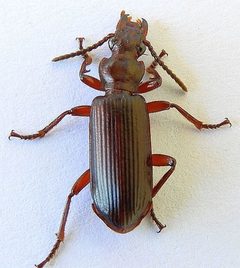
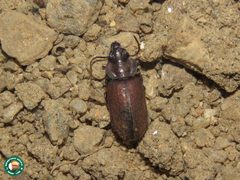
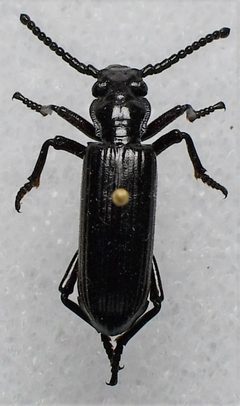
Ozaenini is a tribe of ground beetles (Carabidae: Paussinae) comprising over 20 and approximately 230 described . The tribe is distributed across the New World from North America through Central America to South America, with the majority of species occurring in tropical regions. Members are commonly known as ant nest beetles due to their association with colonies. The tribe includes the genus Ozaena, which has been subject to detailed phylogenetic study revealing a complex evolutionary history spanning approximately 12 million years from the late Miocene to Recent.
Pronunciation
How to pronounce Ozaenini: /oʊˈziːnɪnaɪ/
These audio files are automatically generated. While they are not always 100% accurate, they are a good starting point.
Identification
of Ozaenini can be distinguished from other Paussinae tribes by the combination of: reduced or absent tactile sense organs, loss of the antennal cleaner on the fore tibia, and absence of adhesive vestiture on male fore . The tribe shows derived features including -like basiconic on the pronotum and , and concentration of basiconic sensilla in groups on antennomeres (particularly antennomere 11). Larvae possess a terminal disk composed of modified urogomphi and plates used in burrow construction and prey capture.
Images
Habitat
Most inhabit tropical regions. Larvae of at least some (e.g., Goniotropis) construct and inhabit burrows sealed with their terminal disk.
Distribution
New World distribution spanning North, Central, and South America. Range extends from approximately 30°S to 30°N, with greatest diversity in cis-Andean South America. Some range north to Panama (Ozaena dentipes) and southern Arizona, USA (Ozaena lemoulti, Goniotropis kuntzeni).
Diet
Larvae of Goniotropis kuntzeni have been observed to trap and consume live insect prey using the moveable components of their terminal disk. feeding habits are not documented in available sources.
Life Cycle
, first instar larva, and second instar larva have been described for Goniotropis kuntzeni. Larval development occurs within constructed burrows. Temporal range of diversification for the Ozaena is estimated at approximately 12 million years, from the late Miocene to Recent, with most recent speciation events of Pliocene age.
Behavior
Larvae construct burrows sealed with their terminal disk. They trap live insect prey using moveable components of the terminal disk and bring captured prey into their gallery to consume. Burrowing and feeding in Goniotropis closely resemble those of Pachyteles .
Similar Taxa
- PaussiniBoth are tribes within Paussinae; Ozaenini differs in having reduced tactile sense organs, loss of antennal cleaner on fore tibia, and absence of adhesive vestiture on male fore .
- MetriiniBoth are tribes within Paussinae; Ozaenini can be distinguished by the concentration of basiconic in groups on antennomeres and presence of -like basiconic sensilla on pronotum and .
- ProtopaussiniBoth are tribes within Paussinae; Ozaenini represents a more derived lineage with distinct antennal and mouthpart modifications.
Sources and further reading
- BugGuide
- Wikipedia
- iNaturalist taxon
- NCBI Taxonomy
- Catalogue of Life
- SYNOPSIS OF THE NEOTROPICAL GENUSOZAENAOLIVIER: CLASSIFICATION AND RECONSTRUCTED EVOLUTIONARY HISTORY (COLEOPTERA: CARABIDAE: OZAENINI)
- Description and behaviour of Goniotropis kuntzeni larvae (Coleoptera: Carabidae: Paussinae: Ozaenini) and a key to genera of Paussinae larvae