
Goniotropis
G.R.Gray, 1831
Species Guides
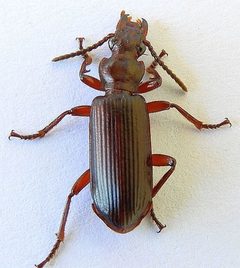
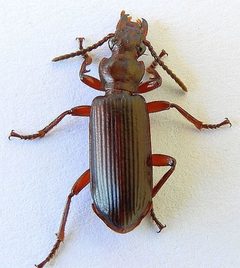
2Goniotropis is a of ground beetles in the Carabidae, Paussinae, containing at least 40 described . are large, parallel-sided beetles found in the New World tropics. Larvae are burrow-dwelling with a distinctive terminal disk composed of modified urogomphi and plates. The genus ranges from southern Arizona to northern Argentina.
Pronunciation
How to pronounce Goniotropis: /ɡoʊˌnaɪoʊˈtroʊpɪs/
These audio files are automatically generated. While they are not always 100% accurate, they are a good starting point.
Identification
: large, parallel-sided body form characteristic of paussine beetles. Larvae: possess a terminal disk composed of modified urogomphi and plates used to seal burrows; this structure distinguishes them from other paussine larvae. A key to paussine larval is available in the taxonomic literature.
Images
Habitat
Larvae construct and inhabit burrows in soil or substrate, which they seal using their terminal disk. occur in tropical and subtropical terrestrial environments.
Distribution
New World tropics, from southern Arizona (United States) south to northern Argentina.
Diet
Larvae are predatory, feeding on live insect prey captured using the moveable components of their terminal disk. diet is not documented.
Life Cycle
Development includes , first instar larva, and second instar larva. Larval stage is spent in constructed burrows. Details of and are not described.
Behavior
Larvae construct burrows and seal them with their terminal disk. They trap live prey using moveable components of this disk, then transport captured prey into their gallery for consumption. Burrowing and feeding closely resemble those of Pachyteles .
Similar Taxa
- PachytelesLarval burrowing and feeding closely resemble those of Goniotropis; both share the distinctive terminal disk structure and predatory larval .
More Details
Larval morphology
The terminal disk of Goniotropis larvae is a unique structural composed of modified urogomphi and plates, serving both defensive and predatory functions.
Research history
The first larval description for any Goniotropis was published for G. kuntzeni in 2006, based on specimens from southern Arizona reared under laboratory conditions.