
Omus californicus
Eschscholtz, 1829
California night-stalking tiger beetle
Species Guides
5- Omus californicus angustocylindricus(Narrow Night-stalking Tiger Beetle)
- Omus californicus californicus(California Night-stalking Tiger Beetle)
- Omus californicus intermedius(Intermediate Night-stalking Tiger Beetle)
- Omus californicus lecontei
- Omus californicus subcylindricus(Subcylindrical Night-stalking Tiger Beetle)
Omus californicus is a tiger to western North America, recognized for its distinctive night-stalking predatory . The species exhibits notable taxonomic complexity with six recognized distributed across California, Oregon, and adjacent regions. are elusive, active primarily during nighttime hours, and are associated with forested and montane . The species has been subject to taxonomic confusion with related , particularly regarding subspecies boundaries.
Pronunciation
How to pronounce Omus californicus: //ˈoʊməs kælɪˈfɔrnɪkəs//
These audio files are automatically generated. While they are not always 100% accurate, they are a good starting point.
Identification
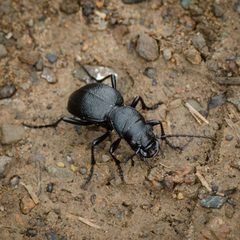
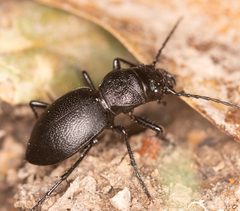
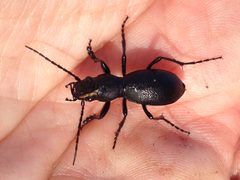
activity distinguishes Omus californicus from most North American tiger beetles, which are . are typically found under logs, rocks, or in shadow during daylight hours. The can be differentiated from the similar Omus submetallicus and its Omus californicus lecontei through careful examination of morphological characters, though precise identification often requires expert evaluation. Subspecies identification relies on geographic provenance combined with subtle differences in body proportions and coloration.
Images
Habitat
Forested and montane environments in the Sierra Nevada, Coast Ranges, and Cascade Range; frequently associated with rain shadow zones on western slopes. Larval burrows occur in suitable soil substrates within these forested . have been documented in atypical habitats including coastal tide pools in Mendocino County, where they were observed hunting amphipods.
Distribution
Western North America: primarily California, with records extending into Oregon and adjacent states. show distinct geographic patterns: O. c. californicus in northern California and southern Oregon; O. c. angustocylindricus and O. c. intermedius in the Sierra Nevada and Cascades; O. c. lecontei, O. c. subcylindricus, and O. c. vermiculatus with more restricted ranges.
Seasonality
active from spring through fall; peak activity varies by elevation and locality. May through September represents the primary activity window across most of the range, with earlier at lower elevations.
Diet
are predatory; documented prey includes small arthropods and, in unusual coastal records, amphipods in tide pools. Larvae are sit-and-wait at burrow entrances.
Life Cycle
Multi-year typical of tiger beetles; larvae occupy burrows for extended periods with third instar being the longest and most conspicuous stage. are short-lived relative to the total life cycle, often present for only a few weeks. occurs in burrows.
Behavior
Strictly foraging ; emerge at night to hunt. During daylight, adults shelter under logs, rocks, or in shaded locations. Adults have been observed to readily come to in some . Larvae maintain consistent orientation at burrow entrances, using sickle-shaped to capture passing prey.
Ecological Role
in forest floor and montane ; larvae contribute to soil aeration through burrowing activity.
Human Relevance
Subject of entomological interest due to taxonomic complexity and habits; collected by enthusiasts. No significant economic impact documented.
Similar Taxa
- Omus submetallicusHistorically confused with Omus californicus lecontei; requires careful morphological examination for differentiation
- Cicindela species activity pattern contrasts with Omus; burrow and preferences differ
Sources and further reading
- BugGuide
- Wikipedia
- GBIF taxonomy match
- iNaturalist taxon
- NCBI Taxonomy
- Catalogue of Life
- Encyrtid Holdings | Entomology Research Museum
- California Has No State Bee--Yet! | Bug Squad
- Bohart Museum: Learn about California's State Insect on UC Davis Picnic Day | Bug Squad
- Diversity in Tiger Beetle Larval Burrows | Beetles In The Bush
- A rare opportunity to do fall insect collecting in western North America | Beetles In The Bush
- Sex Attraction Pheromone Improves Detection of a Threatened Beetle
- Distribution and Conservation Status ofOmus submetallicusG. Horn and Its Confusion withOmus californicus leconteiG. Horn (Coleoptera: Carabidae)