
Amblycheilini
Csiki, 1903
Genus Guides
2- Amblycheila(giant tiger beetles)
- Omus(Night-stalking Tiger Beetles)
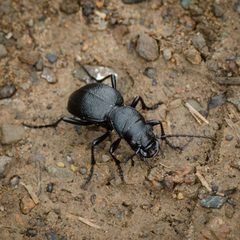
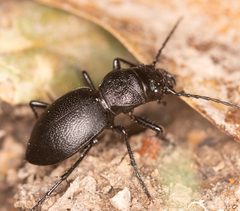
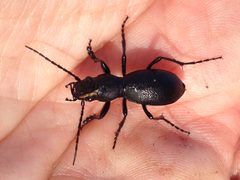
Amblycheilini is a tribe of tiger beetles (Cicindelinae) established by Csiki in 1903. Members are characterized by morphological features distinguishing them from other cicindeline tribes, particularly in structure and elytral . The tribe includes adapted to arid and semi-arid environments, primarily distributed in the Palearctic and Oriental regions.
Pronunciation
How to pronounce Amblycheilini: /ˌæm.blɪˈkaɪ.lɪ.naɪ/
These audio files are automatically generated. While they are not always 100% accurate, they are a good starting point.
Identification
Amblycheilini can be distinguished from related tribes (Cicindelini, Megacephalini) by the combination of: with reduced or absent basal teeth; often with reduced or irregular maculation patterns; and pronotum proportions that differ from the more robust form seen in Megacephalini. Unlike Cicindelini, members lack the pronounced convexity of the elytral disc found in many temperate tiger beetles.
Images
Habitat
within this tribe are primarily associated with arid, semi-arid, and steppe environments. include sandy substrates, saline flats, and dry riverbeds. Many species show specific substrate preferences, with some restricted to particular soil types.
Distribution
Palearctic and Oriental realms, with primary diversity in Central Asia, the Middle East, and parts of the Mediterranean region. The tribe extends eastward into parts of China and adjacent areas.
Seasonality
Activity periods vary by and regional climate. In temperate zones, are active during warmer months; in arid regions, activity may be restricted to brief periods following rainfall or during specific temperature windows.
Life Cycle
Development includes the typical carabid sequence of , larva (three instars), pupa, and . Larvae construct vertical burrows in sandy or friable soils. Specific developmental rates vary with environmental conditions and have not been comprehensively documented for most .
Behavior
are fast-running, visually oriented . Many are or , particularly in hot desert environments, reducing activity during peak daytime temperatures. Burrowing in larvae is well-developed, with third-instar larvae sealing burrow entrances prior to .
Ecological Role
As , and larvae contribute to regulation of small in arid . Their presence indicates functional in often harsh environments with low productivity.
Human Relevance
Limited direct economic impact. Some are collected for scientific study and by amateur entomologists. degradation through desertification and agricultural expansion poses threats to regional .
Similar Taxa
- CicindeliniShares Cicindelinae but differs in , elytral convexity, and predominant distribution in more mesic environments.
- MegacephaliniAlso in Cicindelinae but distinguished by larger body size, more robust pronotum, and typically more pronounced mandibular development in males.
More Details
Taxonomic history
The tribal classification of Cicindelinae has undergone revision, with Amblycheilini sometimes treated as a subtribe or synonymized with other groups in older literature. Current molecular and morphological evidence supports its recognition as a distinct tribe.
Conservation
Several within Amblycheilini have restricted ranges in threatened , though comprehensive conservation assessments are lacking for most .