
Amblycheila
Say, 1830
giant tiger beetles
Species Guides
6- Amblycheila baroni(Montane Giant Tiger Beetle)
- Amblycheila cylindriformis(Great Plains Giant Tiger Beetle)
- Amblycheila hoversoni(South Texas giant tiger beetle)
- Amblycheila katzi(Trans-Pecos Giant Tiger Beetle)
- Amblycheila picolominii(Plateau Giant Tiger Beetle)
- Amblycheila schwarzi(Mojave giant tiger beetle)
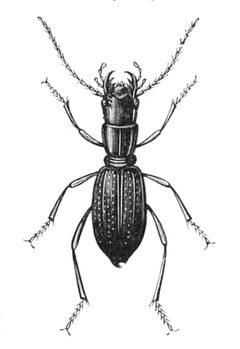
Amblycheila is a of flightless, tiger beetles comprising eight distributed across the southwestern United States and Mexico. are among the largest North American tiger beetles, ranging from approximately 23–38 mm in length. The genus has been considered a member of tribe Amblycheilini, but recent research places it in tribe Manticorini. Amblycheila is considered an adelphotaxon (sister-group) to all other tiger beetles, representing a basal lineage within Cicindelinae.
Pronunciation
How to pronounce Amblycheila: //ˌæmbliˈkaɪlə//
These audio files are automatically generated. While they are not always 100% accurate, they are a good starting point.
Identification
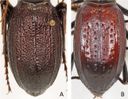
distinguished from all other North American tiger beetles by combination of: large size (23–38 mm), flightless condition with reduced/absent wings, activity pattern, and specific associations (soil burrows or rock-dwelling). Among , separated by body proportions (cylindrical vs. flattened), pronotum shape (trapezoidal in A. katzi), elytral (smooth and polished with sparse punctures in A. katzi; presence or absence of carinae), male genitalia, and male hind features (presence/absence of spine-line projection). Larvae identified by enormous size, two pairs of with pair larger, separated hook bases on fifth abdominal segment, and dense stout setae around hook bases. Distinguished from Tetracha larvae by separated (not touching) middle and inner hooks and presence of stout setal clusters around hook bases. Distinguished from Omus larvae by having two pairs of hooks rather than three.
Images
Habitat
occupy two distinct microhabitat types: (1) soil-dwelling in grassland and prairie with sandy or clay soils, where adults construct burrows in level to sloping ground; and (2) strictly petrophilous (rock-dwelling) species on vertical rock surfaces, ledges, and crevices in steep-sided calcareous canyons and hillsides. Larvae construct permanent burrows: soil-dwelling species in sandy or loose clay substrates, often on south-facing slopes with specific slope angles; petrophilous species in fine calcareous clays within grooves and crevices in vertical limestone walls. Burrow entrances large (6–8 mm diameter), perfectly circular with clean beveled edges, actually D-shaped to match larval profile.
Distribution
distributed across southwestern United States and Mexico. Eight with discrete ranges: A. baroni (montane giant tiger ), A. cylindriformis (Great Plains giant tiger beetle: Texas north to South Dakota), A. halffteri, A. hoversoni (south Texas giant tiger beetle), A. katzi (Trans-Pecos giant tiger beetle: Val Verde and Terrell Counties, Texas), A. nyx, A. picolominii (plateau giant tiger beetle), and A. schwarzi (Mojave giant tiger beetle).
Seasonality
active nocturnally; specific seasonal activity periods vary by and locality. In the Great Plains, A. cylindriformis adults have been observed active during summer months. Larval stages occupy permanent burrows year-round, with extended developmental periods (one individual reared from 2nd instar to adult required nearly four years).
Diet
are of . Larvae are sit-and-wait predators that capture prey items at burrow entrance.
Life Cycle
Development includes , larval (three instars), pupal, and stages. Larval development prolonged: one documented case required nearly four years from 2nd instar to adult . Larvae construct and permanently occupy vertical burrows, plugging burrow entrance for extended periods (months) between activity bouts. occurs within sealed burrow. Captive breeding successful for some , with adults reared from eggs laid in calcareous soil.
Behavior
Strictly activity pattern in . Adults are flightless, moving by running. Soil-dwelling adults construct and occupy burrows, spending much time within them. Petrophilous (e.g., A. katzi) unique among North American tiger beetles in strict association with vertical rock walls 1–5 m above ground, occupying rock crevices, grooves, and ledges rather than ground surface. Larvae exhibit characteristic sit-and-wait from burrow entrance, using large sickle-shaped to capture prey. When disturbed, larvae brace against burrow walls using abdominal hooks to prevent extraction. Larvae can be
Ecological Role
of in grassland, prairie, and desert canyon . Larvae function as sit-and-wait predators in soil surface and rock wall microhabitats.
Human Relevance
Subject of entomological interest due to large size, flightless condition, and basal phylogenetic position within tiger beetles. Some uncommon and desirable among collectors. Larval collection by
Similar Taxa
- TetrachaSimilar large size and habits; larvae also have two pairs of hooks, but hooks touch at base (not separated as in Amblycheila) and lack dense stout setal clusters around hook bases. have fully developed wings and are capable of .
- OmusSimilar large size and flightless condition in some ; larvae have three pairs of hooks on fifth abdominal segment (outer, middle, inner) versus two pairs in Amblycheila. Restricted to Pacific region of North America.
- Cicindela (sensu lato)Typical tiger beetles are generally smaller, , capable of , and have larvae with curved, sickle-shaped middle hooks rather than simple thornlike hooks.
More Details
Taxonomic placement
The has been considered a member of tribe Amblycheilini, but recent research places it in tribe Manticorini. It is referred to variously as a member of either tribe in current literature.
Phylogenetic significance
Amblycheila is considered an adelphotaxon (sister-group) to all other tiger beetles, representing a basal lineage within the Cicindelinae.
Sources and further reading
- BugGuide
- Wikipedia
- GBIF taxonomy match
- iNaturalist taxon
- NCBI Taxonomy
- Catalogue of Life
- How to collect larvae of Amblycheila cylindriformis | Beetles In The Bush
- Amblycheila success! | Beetles In The Bush
- centipedes | Beetles In The Bush
- A new petrophilous tiger beetle from the Trans-Pecos region of Texas and revised key to the genus Amblycheila (Coleoptera, Carabidae, Cicindelinae)
- Microhabitat Preference of Great Plains Giant Tiger Beetle Larvae,Amblycheila cylindriformisSay (Coleoptera: Carabidae: Cicindelinae), is Influenced by Soil Slope Profile
- A new petrophilous tiger beetle from the Trans-Pecos region of Texas and revised key to the genus Amblycheila (Coleoptera, Carabidae, Cicindelinae)