
Xestia
Hübner, 1818
clays, darts, rustics
Species Guides
36- Xestia badicollis(Northern Variable Dart)
- Xestia bolteri
- Xestia c-nigrum(setaceous Hebrew character)
- Xestia cinerascens(cutworm)
- Xestia colorado(cutworm)
- Xestia conchis
- Xestia dilucida(Dull Reddish Dart)
- Xestia dolosa(Greater Black-letter Dart)
- Xestia elimata(Southern Variable Dart)
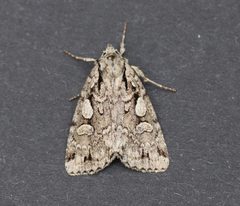
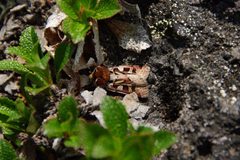
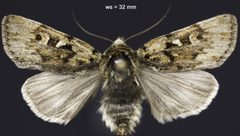
Xestia is a large of noctuid with nearly worldwide distribution, most diverse in the Holarctic region. The genus contains approximately 110 currently recognized , though it formerly held nearly 200 before taxonomic revision. Species are medium-sized with robust, hairy bodies and strong wings, often exhibiting cryptic coloration at rest. Many species inhabit high latitudes and altitudes, with some exhibiting two-year . The genus serves as the type genus for the tribe Xestiini.
Pronunciation
How to pronounce Xestia: /ˈzɛs.ti.ə/
These audio files are automatically generated. While they are not always 100% accurate, they are a good starting point.
Identification
Medium build with stout hairy body distinguishes Xestia from more slender noctuid . Lack of metallic coloration and generally unmarked hindwings separate it from superficially similar genera. Subgeneric classification (Anomogyna, Megasema, Pachnobia, Schoyenia, Xestia) based on genitalia and subtle external characters requires expert determination. -level identification often relies on genital dissection and geographic context.
Images
Habitat
Highly variable across . Many species inhabit high latitudes and altitudes, including tundra and taiga . range from spruce-covered ravines and coniferous forests to open pine forests and treeless summits. Some species occupy broader elevational ranges, from lowland meadows to alpine zones.
Distribution
Nearly worldwide, with maximum diversity in the Holarctic region. Particularly abundant in mountains of South Siberia, West China, and the Himalayas. Present across Europe, North America (including Canada and USA), and Asia (Russia, China, Japan, Korea, and other regions). Some with more restricted ranges.
Seasonality
periods vary by and latitude. Many high-latitude and altitude species exhibit (semivoltine) , with adults appearing only in odd years. Typical pattern: larvae overwinter, pupate in spring, adults fly midsummer; some species eclose later with flight from late summer into autumn.
Diet
Larvae feed on diverse plant groups. Many are , consuming core eudicots including Asteraceae, Ericaceae, Plantaginaceae, Rosaceae, and Polygonaceae, plus Poaceae and other monocots. Some high-latitude species specialize on Ericaceae, Betulaceae, and Poaceae. Certain species feed primarily or exclusively on Pinaceae (gymnosperms). feed on nectar from flowers with short or no corolla, and consume other sugary liquids.
Life Cycle
Most or semivoltine. In semivoltine species, larvae undergo two obligatory winter : first as large third to fourth instar larvae, rapidly completing development after overwintering, then entering a long summer diapause before . Pupation occurs in spring or summer depending on species. Some species require two years to complete development.
Behavior
are or , frequently attracted to light traps. High-latitude may deviate from strict nocturnal activity patterns. Males often dominate light trap catches. Larvae are generally stout and cryptically colored, with some species showing prominent dark lengthwise spots.
Ecological Role
Larvae function as herbivores in and montane , with some occasionally reaching pest status on conifers or agricultural crops. serve as of open flowers and as prey for . The contributes significantly to diversity in high-latitude and high-altitude .
Human Relevance
Some are minor agricultural pests, with the setaceous Hebrew character (Xestia c-nigrum) being notably on crops including solanaceous plants. Damage is generally localized and economically significant only in specific contexts. Larvae of certain species are used as prey by beneficial including thread-waisted wasps (Ammophila).
Similar Taxa
- AgnorismaFormerly included now placed in this ; distinguished by genital characters and subtle external .
- PseudohermonassaFormerly included now placed in this ; separation based on phylogenetic and morphological revision.
- EugrapheHistorically confused with Xestia; Xestia ornata was transferred from Eugraphe to Xestia in 2002 based on phylogenetic evidence.
Misconceptions
The has been treated as a 'wastebin genus' historically, with many now removed to other genera. Current species assignments remain provisional for some , with about one-third of included species of uncertain subgeneric placement.
More Details
Taxonomic instability
The has undergone extensive revision, with nearly half of traditionally included reassigned to other genera. Subgeneric classification (Anomogyna, Megasema, Pachnobia, Schoyenia, Xestia) reflects phenetic groupings that may not represent monophyletic clades. Further taxonomic changes are anticipated as noctuine progresses.
Biennial life cycles
Multiple exhibit semivoltine development, an to short growing seasons at high latitudes and altitudes. This trait is particularly common in subgenera Anomogyna and Pachnobia.
Sources and further reading
- BugGuide
- Wikipedia
- GBIF taxonomy match
- iNaturalist taxon
- NCBI Taxonomy
- Catalogue of Life
- Bug Eric: Wasp Wednesday: Ammophila pictipennis
- Bug Eric: Results of the Red Rock Canyon Open Space Bioblitz
- Xestia c-nigrum . [Distribution map].
- A new subspecies of Xestia ashworthii (Doublebay, 1855) from Russian Altai (Lepidoptera, Noctuidae)
- Notes on the larval biology of <i>Xestia borealis</i> (Lepidoptera: Noctuidae)
- Xestia communities (Lepidoptera, Noctuidae) in eastern Finnish Forest Lapland as indicated by light trap sampling