
Ectobius
Stephens, 1835
wood cockroaches, field cockroaches
Species Guides
4- Ectobius lapponicus(Dusky Cockroach)
- Ectobius lucidus
- Ectobius pallidus(Tawny Cockroach)
- Ectobius sylvestris(forest cockroach)
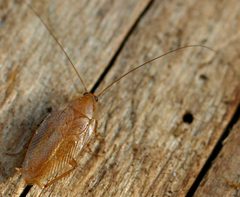
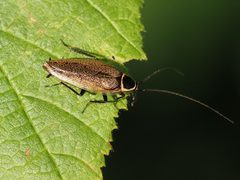
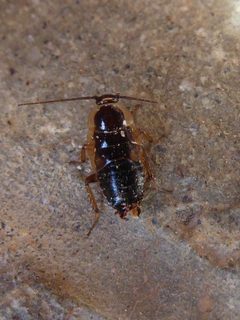
Ectobius is a of small, cool-adapted in the Ectobiidae. measure 6–12 mm in length with brown to yellowish coloration and pale margins. The genus has a complex biogeographic history: fossil evidence from the 49-million-year-old Green River Formation in Colorado indicates Ectobius originated in North America, despite its long absence from the continent until recent reintroductions. are primarily distributed across Europe, Africa, the eastern Palearctic, and the Near East. Several species have been introduced to northeastern North America within the last 65 years, where Ectobius lapponicus has become .
Pronunciation
How to pronounce Ectobius: /ɛkˈtoʊbiəs/
These audio files are automatically generated. While they are not always 100% accurate, they are a good starting point.
Identification
Distinguished from other small by combination of small size (6–12 mm), brown to yellowish coloration with pale margins, and pronounced in wing development. Females have notably shorter wings than males. Distinguished from Capraiellus (formerly included 'lesser cockroach') by revised generic placement. Ectobius vittiventris identifiable by amber coloration and specific wing venation patterns.
Images
Habitat
-specific preferences documented: Ectobius lapponicus occupies cooler, wetter conditions including moorlands and wet grasslands; Ectobius panzeri inhabits drier grasslands and meadows; Ectobius sylvestris found in woodland leaf litter and shaded forest floors. Ectobius vittiventris, a Mediterranean species, has expanded into urban and environments in northern Europe.
Distribution
Native range encompasses most of Europe, Africa, eastern , and the Near East. Fossil record indicates former presence in North America during the Eocene (49 million years ago, Green River Formation, Colorado). Extinct in North America until reintroductions within last 65 years: established in Canadian Maritimes and northeastern United States. Ectobius vittiventris underwent northward expansion since late 20th century from Mediterranean region (Spain, France, Italy, Balkans, Turkey, Caucasus) into Germany, Austria, Slovakia, Hungary, Czech Republic, and Great Britain.
Seasonality
Activity patterns vary by and climate. Ectobius lapponicus exhibits cycle with emerging mid-summer. Ectobius vittiventris shows partial autumn hatching with some to hatch following spring or summer. Reproductive activity peaks during summer months.
Host Associations
- Brachygaster minutus - Hymenopteran of Ectobius
Life Cycle
with external containing 15–30 . Female carries ootheca attached to until hatching—providing parental protection without maternal assistance at . Development includes 5–7 nymphal instars; Ectobius vittiventris has seven instars lasting more than one year. Sexual maturity reached in 2–3 months in some . strategy varies: Ectobius lapponicus overwinters as first-instar nymph with ; Ectobius vittiventris shows partial autumn hatching with some eggs overwintering. Single per year () typical.
Behavior
Females exhibit parental care by carrying externally until hatching. Mating occurs throughout active season; males produce . Females can store sperm from single mating to fertilize multiple sequential oothecae. Temperature-dependent development rate (20–40 days). Ectobius lapponicus shows facultative (thelytokous) with reduced in unmated females. Ectobius pallidus also exhibits facultative parthenogenesis.
Ecological Role
Decomposer and in terrestrial . Functions in nutrient cycling in grassland, woodland, and moorland . Serves as for specialized (Brachygaster minutus).
Human Relevance
Ectobius lapponicus became in North America following reintroduction, though not synanthropic in native European range. Ectobius vittiventris has been documented in hospital environments (intensive care unit in Switzerland). Some considered in expanded ranges. Ectobius pallidus sequenced as reference for .
Similar Taxa
- CapraiellusFormerly included 'lesser cockroach' now placed in separate ; historically confused with Ectobius
- BlattellaSmall with different wing and preferences; Ectobius distinguished by pronounced in wing length
Misconceptions
Long assumed to be exclusively Old World in origin; fossil discoveries in North America revealed Eocene presence and probable North American origin. Recent North American were assumed to be first occurrences until fossil evidence proved otherwise.
Sources and further reading
- BugGuide
- Wikipedia
- GBIF taxonomy match
- iNaturalist taxon
- NCBI Taxonomy
- Catalogue of Life
- Ectobius vittiventris Archives - Entomology Today
- Ectobius_vittiventris-WP - Entomology Today
- After a 49-million-year Hiatus, a Cockroach Reappears in North America
- The overwintering stages of Ectobius lapponicus (L.) (Dictyoptera: Blattidae)
- ASPECTS OF THE REPRODUCTIVE BIOLOGY OF THREE SPECIES OF ECTOBIUS (DICTYOPTERA: BLATTIDAE)
- Distribution and life history traits of Ectobius vittiventris (Blattaria: Ectobiidae) in Europe focused on the territory of Slovakia
- The Biology and Development ofBrachygaster minutusOlivier (Hymenoptera: Evaniidae), a parasite of the oothecae ofEctobiusspp. (Dictyoptera: Blattidae).
- NativeEctobius(Blattaria: Ectobiidae) from the Early Eocene Green River Formation of Colorado and Its Reintroduction to North America 49 Million Years Later
- The genome sequence of the tawny cockroach, Ectobius (Ectobius) pallidus (Olivier, 1789).
- Cockroaches (Ectobius vittiventris) in an intensive care unit, Switzerland.