
Ectobiinae
Brunner von Wattenwyl, 1865
wood cockroaches
Genus Guides
3- Capraiellus
- Ectobius(wood cockroaches)
- Luridiblatta
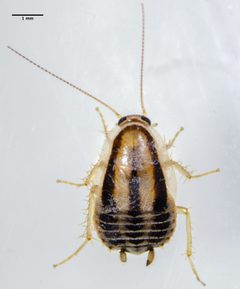
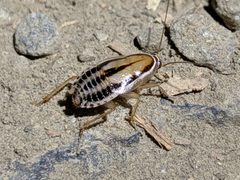
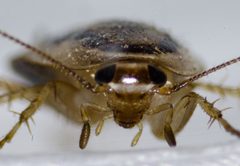
Ectobiinae is a of small to medium-sized within the Ectobiidae, characterized by morphological diversity and taxonomic complexity. The subfamily includes numerous distributed across Europe, North Africa, and the Mediterranean region, with several groups showing recent northward range expansion. Taxonomic revisions have revealed extensive cryptic diversity, with new genera such as Planuncus and multiple subgenera established based on detailed morphological analysis. Some exhibit unusual reproductive strategies including geographic .
Pronunciation
How to pronounce Ectobiinae: /ˌɛktoʊˈbiːɪniː/
These audio files are automatically generated. While they are not always 100% accurate, they are a good starting point.
Identification
Identification to and level in Ectobiinae requires examination of male genital structures, particularly abdominal tergites T6-T8, which show unusually high morphological variation. Subgenera within Dziriblatta are distinguished by patterns on abdominal segments. The subaptera-group of Phyllodromica cannot be distinguished externally between parthenogenetic and bisexual forms, requiring examination of offspring sex ratios or spermathecae contents. COI has been validated for species identification in some groups.
Images
Habitat
Native Ectobiinae in the Netherlands occupy eastern and north-eastern regions with suitable soil types and land cover, with western areas generally unsuitable except for coastal dunes. Soil type, land cover, and altitudinal range are key environmental predictors of distribution. Species show varying preferences: Ectobius pallidus has more restricted distribution in northern areas compared to E. lapponicus, E. sylvestris, and Capraiellus panzeri.
Distribution
Native European distribution concentrated in eastern and central Europe, Mediterranean basin, North Africa, and Macaronesian islands. The subgenus Planuncus ( Planuncus) is documented from Algeria, Morocco, southern Spain, and France, with recent northward expansion to Germany and Great Britain. The genus Dziriblatta occurs in southern Spain, North Africa, Israel, Cyprus, and the Near East. The genus Luridiblatta has almost circum-Mediterranean distribution.
Human Relevance
Some Ectobiinae are among the smaller common household pest , though native species generally occupy natural rather than domestic environments. Recent northward range expansion of Planuncus species in Europe may indicate climate-mediated distributional changes with potential implications for pest management.
Similar Taxa
- BlattellinaeFormerly included many Ectobiinae ; distinguished by different male genitalia structure and abdominal tergite
- BlaberidaeLarger, often wingless ; Ectobiinae are generally smaller with fully developed wings in most
More Details
Taxonomic complexity
Ectobiinae has undergone extensive taxonomic revision, with the former Blattellidae synonymized under Ectobiidae. such as Phyllodromica and Ectobius have been split, with new genera (Planuncus, Dziriblatta) and numerous subgenera established based on morphological .
Reproductive strategies
Geographic is documented in Phyllodromica subaptera: thelytokous parthenogenetic females occur throughout most Mediterranean countries, while bisexual are restricted to the Iberian Peninsula. This represents a new case of obligatory parthenogenesis in Blattoptera.
Morphological specialization
The panteli-group of Phyllodromica exhibits highly specialized male glands on tergite 7 consisting of two pairs of long tubular pouches. Some Luridiblatta show derived T6 structures interpreted as possible drainage systems.
Sources and further reading
- BugGuide
- iNaturalist taxon
- NCBI Taxonomy
- Catalogue of Life
- Another species of European Ectobiinae travelling north - the new genus Planuncus and its relatives (Insecta: Blattodea: Ectobiinae)
- Revision of the genus Luridiblatta (Blaberoidea, Ectobiidae, Ectobiinae)
- Geographie parthenogenesis in the subaptera-group of Phyllodromica (Blattoptera, Blattellidae, Ectobiinae)
- Revision of the panteli-group of Phyllodromica in Spain and Morocco (Blattaria: Blattellidae: Ectobiinae)
- Ecological niche models for four native cockroach species (Blattaria: Blattellidae: Ectobiinae) in the Netherlands
- Revision of the maculata-group of Phyllodromica: species from Central Europe (Insecta: Blattodea: Blattellidae: Ectobiinae)
- Revision of the genus Dziriblatta Chopard, 1936 (Blattodea, Ectobiidae, Ectobiinae). III. The species of the subgenus Dziriblatta
- Revision of the genus Dziriblatta Chopard, 1936 (Blattodea, Ectobiidae, Ectobiinae). II. The species of the subgenera Pauciscleroblatta and Monoscleroblatta
- Revision of the genus Dziriblatta Chopard, 1936 (Blattodea, Ectobiidae, Ectobiinae) from North Africa, Spain, and the Macaronesian islands. I. The nine subgenera of the genus
- Revision and phylogeny of the subaptera-group of Phyllodromica (Blattoptera: Blattellidae: Ectobiinae), including a parthenogenetic species and the evaluation of COI sequences for species identification (DNA barcoding)