
Ectobius lapponicus
(Linnaeus, 1758)
Dusky Cockroach
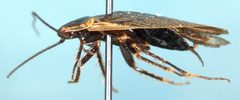
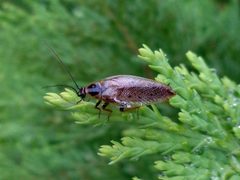
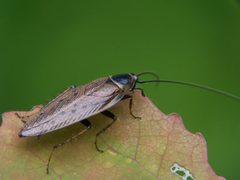
Ectobius lapponicus, commonly known as the dusky , is a small, non-pest cockroach native to Europe and northern Asia. It was introduced to North America, with first recorded sightings in 1984 in the northeastern United States and southeastern Canada. The species has a documented involving specific stages, including a in the and one of the nymphal instars. Unlike many cockroach species associated with human structures, E. lapponicus is primarily an outdoor species.
Pronunciation
How to pronounce Ectobius lapponicus: /ɛkˈtoʊ.bi.əs læpˈpɒ.nɪ.kəs/
These audio files are automatically generated. While they are not always 100% accurate, they are a good starting point.
Images
Habitat
Primarily outdoor environments; specific microhabitat preferences not documented in available sources.
Distribution
Europe, northern Asia (excluding China), northeastern United States, and southeastern Canada. Native to the Palearctic region; introduced to North America with first records from 1984.
Seasonality
have been observed active from March to October in North American ; specific seasonal patterns in native range not documented.
Life Cycle
involves a in the stage and one of the nymphal instars. Specific details of complete developmental stages and duration not documented in available sources.
Human Relevance
Not a pest ; does not inhabit human structures. Its reintroduction to North America after a 49-million-year absence (extinct in North America since the Eocene) makes it notable for biogeographic studies.
Similar Taxa
- Ectobius vittiventrisCongeneric with overlapping distribution in Europe; distinguished by different coloration patterns.
- Other Ectobius speciesMultiple Ectobius occur in both native and introduced ranges; precise identification requires examination of genitalia and other subtle morphological features.
Sources and further reading
- BugGuide
- Wikipedia
- GBIF taxonomy match
- iNaturalist taxon
- NCBI Taxonomy
- Ectobius balticus Archives - Entomology Today
- Ectobius_vittiventris-WP - Entomology Today
- After a 49-million-year Hiatus, a Cockroach Reappears in North America
- Bug Eric: Beetles from Bones
- Bug Eric: More Beetles from Bones
- The overwintering stages of Ectobius lapponicus (L.) (Dictyoptera: Blattidae)