
Ectobius pallidus
(Olivier, 1789)
Tawny Cockroach
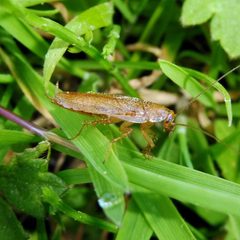
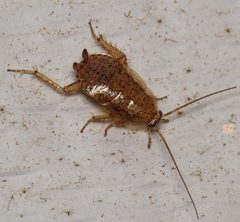
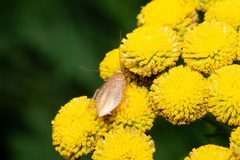
Ectobius pallidus, commonly known as the tawny , is a non- in the Ectobiidae. Unlike many cockroach species associated with human dwellings, this species is native to western Europe and North Africa. It has been introduced to North America, representing a reintroduction after a 49-million-year absence of the from the continent. The species is not considered a significant household pest.
Pronunciation
How to pronounce Ectobius pallidus: /ɛkˈtoʊbiəs ˈpælɪdəs/
These audio files are automatically generated. While they are not always 100% accurate, they are a good starting point.
Identification
Distinguished from other Ectobius by its tawny or pale coloration. The specific epithet "pallidus" refers to this pale appearance. Accurate identification to species level typically requires examination of male genitalia and other detailed morphological features.
Images
Habitat
Found in outdoor environments including grasslands, meadows, and woodland edges. Not associated with indoor human habitations. The inhabits natural and semi-natural vegetation in its native range.
Distribution
Native to western and southern Europe including southern England, Belgium, France, the Netherlands, Germany, Switzerland, Italy, Spain, and Portugal; also occurs in North Africa (Algeria and Tunisia). Introduced to North America, with established in the northeastern United States.
Human Relevance
Not a significant pest . Unlike such as Blattella germanica or Periplaneta americana, E. pallidus does not infest buildings or food storage areas. Its introduction to North America is primarily of biogeographic and evolutionary interest rather than economic concern.
Similar Taxa
- Ectobius vittiventrisAnother European Ectobius with overlapping distribution; distinguished by different color pattern and male genitalia
- Ectobius lapponicusNorthern European with more northerly native range; E. pallidus occurs further south and west
- Ectobius sylvestrisEuropean woodland ; preferences and subtle morphological differences separate the two
More Details
Biogeographic significance
The discovery of Ectobius fossils in the 49-million-year-old Green River Formation of Colorado demonstrated that the was once native to North America before going extinct there. The modern introduction of E. pallidus and other Ectobius to North America represents a reintroduction after a 49-million-year hiatus, making this a remarkable case of anthropogenic recolonization.
Subspecies
Four have been described: Ectobius pallidus pallidus (Olivier, 1789) – the nominate subspecies; Ectobius pallidus chopardi Adelung, 1917; Ectobius pallidus minor Ramme, 1923; and Ectobius pallidus punctulatus (Fieber, 1853). The validity and current taxonomic status of these subspecies may require verification.