
Trachelas tranquillus
(Hentz, 1847)
Broad-faced Sac Spider, Ground Sac Spider
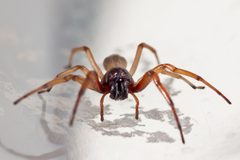
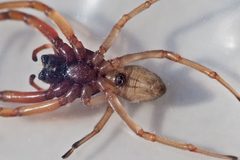
Trachelas tranquillus, commonly known as the broad-faced sac spider, is a hunting spider native to eastern North America. This is frequently encountered indoors during autumn when males wander in search of mates. It does not construct webs for prey capture but instead hunts actively at night, often around porch lights where insects congregate. Once considered mildly venomous to humans, it is now classified as harmless, though rare bites can cause localized pain and swelling.
Pronunciation
How to pronounce Trachelas tranquillus: /ˈtrækɪləs træŋˈkwɪləs/
These audio files are automatically generated. While they are not always 100% accurate, they are a good starting point.
Identification
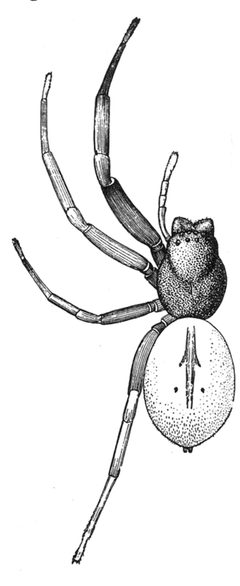
Distinguished from the similar-looking woodlouse hunter (Dysdera crocata) by having eight in two rows (versus six eyes in a semi-circle in Dysdera), shorter without elongated fangs, and better climbing ability. Dysdera crocata prefers to stay near baseboards and does not climb as readily. Trachelas tranquillus can be separated from other sac spiders by its broad, flattened and specific eye arrangement.
Images
Habitat
In natural settings, found in deciduous woodlands where it occupies retreats fashioned from curled leaves or hides under stones. Frequently enters human dwellings, especially in autumn. Does not construct permanent webs but may use silk draglines for security during climbing.
Distribution
Eastern North America from Nova Scotia and Minnesota south to Kansas, Oklahoma, and northern Georgia. Widespread throughout the eastern United States and southeastern Canada.
Seasonality
active year-round, but most conspicuous indoors during autumn (September–November) when mature males wander seeking mates. Mating occurs in summer and early fall.
Diet
Active of small insects. Has been observed hunting around porch lights at night. Known to scavenge on dead insects, a habit that may contribute to its persistence indoors when other spiders have perished or entered hiding.
Life Cycle
Mating occurs in summer and early fall after both sexes mature. Females produce a lens-shaped sac approximately 10 mm long, attached beneath loose bark or under rocks. The sac is flat on the bottom against the substrate and slightly convex on top. Developmental details beyond egg sac construction are not well documented.
Behavior
hunter that does not build webs for prey capture. Lays down silk draglines for security during climbing; females likely deposit on draglines to attract males. When disturbed, may retreat or drop from surfaces. Males are nomadic wanderers in autumn, frequently entering buildings. In natural , occupies silken retreats in curled leaves or under stones during daytime.
Ecological Role
of small insects and scavenger. Contributes to natural pest control in woodland and around human structures. Serves as prey for spider wasps including Auplopus , which provision nests with Trachelas spiders.
Human Relevance
Commonly encountered indoors, particularly in autumn, leading to frequent human interactions. Rare bites have been documented, typically resulting in localized pain and swelling; secondary from bites have been recorded but were originally misattributed to venom effects. Not considered medically significant. Often confused with the more intimidating-looking woodlouse hunter (Dysdera crocata).
Similar Taxa
- Dysdera crocataSimilar bi-colored body pattern with reddish legs, but Dysdera has six in a semi-circle, exceptionally long jaws and fangs for piercing woodlice, prefers baseboards, and climbs poorly compared to Trachelas
Misconceptions
Once considered mildly venomous to humans, but now classified as harmless. Secondary from bites were originally misinterpreted as direct venom effects. The is frequently confused with the woodlouse hunter (Dysdera crocata), which has a more formidable appearance due to elongated fangs but is also not dangerously venomous to humans.
More Details
Family placement
Historically placed in Corinnidae, but currently classified in Trachelidae based on molecular and morphological studies. Some sources including NCBI may still list Corinnidae.
Silk use
While Trachelas tranquillus does not build prey-capture webs, it produces silk for draglines and sac construction. The draglines serve both physical security and chemical communication functions.