
Thanatus striatus
C. L. Koch, 1845
Striped Running Crab Spider
Thanatus striatus is a running crab spider in the Philodromidae, characterized by its striped and ground-dwelling hunting . The has a broad distribution across the Northern Hemisphere, including North America, Europe, Turkey, Russia, and Central Asia. It is active primarily in spring and early summer, with capable of . The species is distinguished from similar slender crab spiders by its more robust body form and preference for ground-level .
Pronunciation
How to pronounce Thanatus striatus: /θəˈneɪtəs straɪˈeɪtəs/
These audio files are automatically generated. While they are not always 100% accurate, they are a good starting point.
Identification
Distinguished from the slender crab spider Tibellus (also Philodromidae) by its more robust body and different stripe pattern; Tibellus has a more elongated, slender body and is found on vegetation rather than the ground. Separated from wolf spiders in the genus Schizocosa by leg posture and arrangement. The striped lynx spider (Oxyopes salticus) has much longer leg spines and a more scrunched, vertical posture. Thanatus striatus lacks the extremely long spines of lynx spiders and the sheet-web building of many similar-sized ground spiders.
Images
Appearance
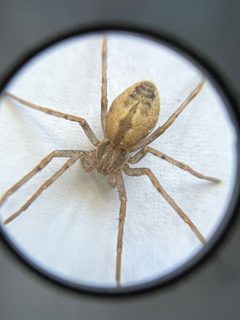
Medium-sized running crab spider with a robust, somewhat flattened body. The displays distinct longitudinal stripes. The bears a dark 'cardiac' mark on its surface. Legs are long and laterally extended, typical of crab spiders, with the first two pairs being particularly elongated and armed with spines on their inner surfaces for prey capture. The overall coloration provides effective camouflage among grasses and ground debris.
Habitat
Ground-dwelling among grasses, weeds, and low vegetation. Found in open, sunny areas including trails, meadows, and disturbed . Often observed on bare ground, concrete paths, or other exposed surfaces where it basks in sunlight. Does not construct webs for prey capture.
Distribution
North America; Europe; Turkey; Russia (European part through Far East); Kazakhstan; Central Asia. Records include France, Spain, and various localities across the broad transcontinental range.
Seasonality
Active primarily in spring and early summer. overwinter and become active with warming temperatures, sometimes observed on snow-free surfaces during winter thaws. Peak activity occurs from March through June in temperate regions.
Diet
Active ambush of small insects and other arthropods. Prey is captured directly with the elongated front legs rather than by web-building.
Life Cycle
Overwinters as . occurs in spring and summer. Females produce sacs that are guarded in silken retreats. Spiderlings emerge and disperse; some may balloon on silk threads to colonize new areas.
Behavior
Hunts by ambush, lying still and waiting for prey to come within reach of its elongated front legs. Capable of rapid sideways movement typical of crab spiders. are frequently observed basking on warm surfaces in sunlight. Has been observed engaging in ballooning for , climbing vertical objects and releasing silk to catch wind. When disturbed, may tumble or drop to escape.
Ecological Role
contributing to regulation of small in grassland and open . Serves as prey for spider wasps, including Priocnemis minorata, which has been documented paralyzing Thanatus as for its larvae.
Human Relevance
Harmless to humans; does not possess venom of medical significance. Occasionally encountered in urban and suburban settings on paths and in gardens. Contributes to natural pest control in open .
Similar Taxa
- Tibellus spp.Also Philodromidae with striped pattern, but more slender body, found on vegetation stems and leaves rather than ground, with different stripe arrangement.
- Schizocosa spp.Wolf spiders with superficially similar striped pattern and ground-dwelling habit, but different arrangement (two large eyes) and leg posture.
- Oxyopes salticusStriped lynx spider with similar and coloration, but distinguished by extremely long leg spines, vertical scrunched posture, and longer '' ( profile).
More Details
Cold Hardiness
Contains glycerol and specialized proteins in that reduce freezing point, enabling survival of winter temperatures. More cold-hardy than winter-active spider .
Predation by Spider Wasps
Documented as prey for the spider wasp Priocnemis minorata, which paralyzes the spider and provisions its underground nest .