
Ologamasidae
Ryke, 1962
Genus Guides
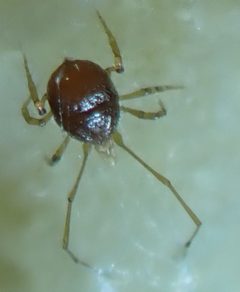
1Ologamasidae is a of predatory mites in the order Mesostigmata, comprising 44 and approximately 470-473 described . These mites are abundant and conspicuous in soil and litter , particularly in the Southern Hemisphere. Most species have been described from the Neotropical (33%) and Australasian (29%) ecozones. The family is classified in the superfamily Rhodacaroidea, though its taxonomic boundaries have historically been unstable.
Pronunciation
How to pronounce Ologamasidae: /oʊloʊˈɡæməsɪˌdiː/
These audio files are automatically generated. While they are not always 100% accurate, they are a good starting point.
Identification
The can be distinguished from related families in Rhodacaroidea by the combination of characters in the revised provided by the Catalogue of Ologamasidae. Identification to level requires use of the updated key to genera, as previous keys are obsolete and difficult to use. The family is most readily confused with Veigaiidae, Digamasellidae, Parasitidae, and Eviphididae, from which have been reassigned based on improved understanding of family-level characters.
Images
Habitat
Soil and litter environments, with more than 75% of described from soil specimens. Some species exhibit symbiotic associations with millipedes, particularly in the Xystodesmidae.
Distribution
Primarily distributed in the Southern Hemisphere, with highest in the Neotropical (33% of ) and Australasian (29%) ecozones. Also present in the Appalachian region of North America where symbiotic species occur on xystodesmid millipedes.
Diet
Appear to be , though direct observational evidence is limited.
Host Associations
- Xystodesmidae (Diplopoda: Polydesmida) - Symbiotic association documented for in Stylochyrus, particularly S. rarior found on multiple genera including Apheloria, Appalachioria, Boraria, Brachoria, Dixioria, Nannaria, Pleuroloma, Prionogonus, Rudiloria, and Sigmoria
Similar Taxa
- VeigaiidaeHistorical confusion; 74 previously placed in Ologamasidae now assigned to other including Veigaiidae
- DigamasellidaeHistorical confusion; reassigned based on revised
- ParasitidaeHistorical confusion; former ologamasid now placed in this
- EviphididaeHistorical confusion; taxonomic instability led to reclassification of some
Sources and further reading
- BugGuide
- Wikipedia
- GBIF taxonomy match
- iNaturalist taxon
- NCBI Taxonomy
- Catalogue of Life
- Catalogue of the family Ologamasidae Ryke (Acari: Mesostigmata)
- Databases of information on the mite families Ologamasidae and Rhodacaridae (Mesostigmata: Rhodacaroidea): unlocking taxonomy, geographical distribution, and habitats
- The symbiotic mites of some Appalachian Xystodesmidae (Diplopoda : Polydesmida) and the complete mitochondrial genome sequence of the mite Stylochyrus rarior (Berlese) (Acari : Mesostigmata : Ologamasidae)