
Sigmoria
Chamberlin, 1939
Species Guides
10- Sigmoria aequalis
- Sigmoria ainsliei
- Sigmoria australis
- Sigmoria bidens
- Sigmoria disjuncta
- Sigmoria latior(Red-sided Flat Millipede)
- Sigmoria nantahalae(Nantahala Cherry Millipede)
- Sigmoria nigrimontis
- Sigmoria plancus
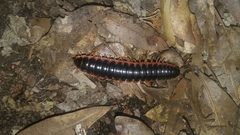
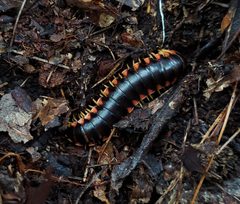
Sigmoria is a of flat-backed millipedes in the Xystodesmidae, containing more than 60 described . These millipedes are restricted to the eastern United States and are characterized by their dorsoventrally flattened bodies, a trait common to the order Polydesmida. The genus was established by Chamberlin in 1939 and belongs to the tribe Apheloriini within the Rhysodesminae.

Pronunciation
How to pronounce Sigmoria: //sɪɡˈmɔːriə//
These audio files are automatically generated. While they are not always 100% accurate, they are a good starting point.
Identification
Sigmoria can be distinguished from other xystodesmid by characters of the (male reproductive appendages), which are the primary diagnostic features used in species-level . As flat-backed millipedes, they exhibit the characteristic broad, flattened paranota (lateral extensions of body segments) typical of Polydesmida. Specific identification to species requires examination of gonopod and often geographic location, given the narrow ranges of many species.
Images
Habitat
Eastern United States, with occupying forested . Many species have narrow geographic distributions, often restricted to specific mountain ranges or physiographic regions.
Distribution
Eastern United States. are documented from the Appalachian region and surrounding areas, with many exhibiting highly localized distributions.
Ecological Role
As , Sigmoria contribute to decomposition and nutrient cycling in forest . They process decaying plant material, returning organic matter to the soil.
Human Relevance
Sigmoria , like many xystodesmids, are capable of producing hydrogen cyanide as a chemical defense when disturbed. This defensive secretion can be irritating to human skin and mucous .
Similar Taxa
- ApheloriaAlso in tribe Apheloriini; distinguished by structure and often by coloration patterns
- BorariaAnother eastern North American xystodesmid ; separated by and geographic distribution
- PachydesmusOverlaps in eastern range; distinguished by characters and body proportions
More Details
Species diversity
The contains substantial diversity, with over 60 described . Many species are to specific mountain systems, particularly in the Appalachians.
Taxonomic history
Sigmoria was established by Ralph V. Chamberlin in 1939. The has undergone extensive revision, with many originally described in other genera subsequently transferred to Sigmoria.
Defensive chemistry
As members of the Xystodesmidae, Sigmoria possess ozopores (defensive glands) that release hydrogen cyanide and benzaldehyde when the animal is threatened.