
Rudiloria
Causey, 1955
Species Guides
1- Rudiloria trimaculata(Bob's Yellow and Black Millipede)
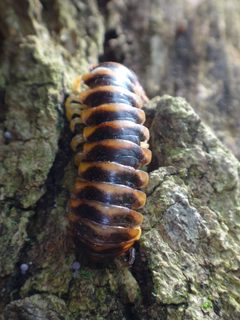
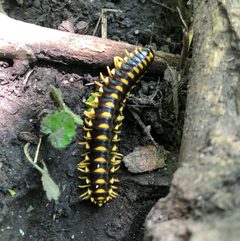
Rudiloria is a of flat-backed millipedes in the Xystodesmidae, to eastern North America. The genus contains seven described , including the widespread R. trimaculata. Members are characterized by their flattened bodies and distinct color patterns. The genus was established by Causey in 1955.

Pronunciation
How to pronounce Rudiloria: /ˌruːdɪˈlɔːriə/
These audio files are automatically generated. While they are not always 100% accurate, they are a good starting point.
Identification
Rudiloria can be distinguished from other xystodesmid by genitalic characters, particularly . Many species exhibit yellow or orange markings on a dark background. R. trimaculata is recognized by three pale spots on each paranotum. Species-level identification requires examination of male gonopods.
Images
Distribution
Eastern North America. Specific records include the Appalachian region and northeastern United States, with observations from Vermont and surrounding areas.
Similar Taxa
- ApheloriaBoth belong to tribe Apheloriini and share flattened body form; distinguished by structure and color pattern details
- CherokiaOverlaps in distribution and general ; requires examination for reliable separation
More Details
Species diversity
The includes seven described : R. charityae, R. guyandotta, R. kleinpeteri, R. mohicana, R. rigida, R. trimaculata, and R. tortua. R. trimaculata, described by Wood in 1864, is the oldest described species and among the most frequently observed.
Taxonomic history
Rudiloria was established by Causey in 1955 with R. mohicana as the type . Several species were transferred from other , including R. guyandotta from Nannaria and R. kleinpeteri from Pleuroloma.