
Cherokia
Chamberlin, 1949
wrinkled flat-backed millipede
Species Guides
1- Cherokia georgiana(Georgia Flat-backed Millipede)
Cherokia is a monospecific of flat-backed millipedes in the Xystodesmidae, containing only Cherokia georgiana (Bollman, 1889). Molecular phylogenetic analysis has confirmed the genus as monophyletic and sister to Pleuroloma. The exhibits substantial morphological variation in paranota shape, body size, and coloration that correlates with geography and elevation rather than phylogenetic relationships. Previously recognized have been synonymized under C. georgiana.

Pronunciation
How to pronounce Cherokia: //tʃɛˈroʊkiə//
These audio files are automatically generated. While they are not always 100% accurate, they are a good starting point.
Identification
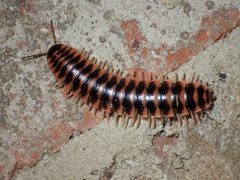
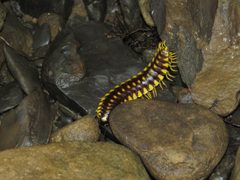
Distinguished from other Xystodesmidae by a wrinkled surface texture, horizontally wide paranota with minimal downward curvature, a straight telopodite on the (versus curved or twisted in Apheloriini), a long icepick-like prefemoral process on the telopodite, and absence of a receptacle in female cyphopods. Coloration ranges from yellow to red with variable patterns including two-spotted, three-spotted, and striped forms; the three-spotted yellow pattern is most common.
Images
Habitat
Southeastern United States forests, particularly those containing hemlock, maple, tulip poplar, rhododendron, cedar, and spruce-fir trees.
Distribution
Eastern United States, centered in the Appalachian Mountains region. Range expanded through citizen science collections to include Virginia and approximately 160 new localities beyond previously documented distributions in western North Carolina, Georgia, Alabama, and Tennessee.
Behavior
Highly variable in coloration and body ; morphological traits show clinal variation correlated with geographic distribution and elevation.
Similar Taxa
- PleurolomaSister to Cherokia; both belong to tribe Rhysodesmini and share flat-backed with lateral paranota expansion. Pleuroloma flavipes exhibits similar aposematic yellow and black coloration but differs in structure.
- ApheloriaRelated in Xystodesmidae sharing aposematic coloration and cyanide defense; distinguished by curved or twisted telopodite on versus straight telopodite in Cherokia.
- BorariaRelated Polydesmida with similar warning coloration pattern; not closely related within Xystodesmidae.