
Rhyacophila
Pictet, 1834
caseless caddisflies
Species Guides
10Rhyacophila is a large of caddisflies (Trichoptera) in the Rhyacophilidae, comprising at least 640 described . The genus is in distribution, with significant diversity in Europe, Asia, and North America. Larvae are commonly known as 'caseless caddis' because they do not construct portable cases, instead using silk to anchor themselves to substrates in running water. The genus exhibits high in certain regions, with multiple species restricted to specific mountain ranges or islands.
Pronunciation
How to pronounce Rhyacophila: //ˌraɪ.əˈkɒfɪlə//
These audio files are automatically generated. While they are not always 100% accurate, they are a good starting point.
Identification
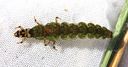
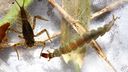
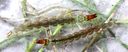
Larvae are distinguished from other caddisfly by the absence of portable cases; they are the only European caddisfly larvae that are both caseless and possess gills. -level identification of larvae relies on: number and arrangement of abdominal gill filaments (tetrafilament vs. comb-shaped patterns), anal , structure, and coloration patterns. require examination of genitalia and wing venation; molecular barcoding using mitochondrial oxidase I (mtCOI) is increasingly employed to resolve cryptic species.
Images
Habitat
Strictly lotic (running water) including streams, rivers, and spring runs. Larvae occur in riffle zones and fast-flowing sections, typically associated with rocky or gravel substrates where they attach to stones, woody debris, or macrophytes using silk. Found from lowland rivers to mountain streams at high elevations. Substrate composition varies from small sandy gravels to large boulders.
Distribution
distribution with highest diversity in the Holarctic region. Documented from Europe (including Corsica, Sardinia, Balkans, Alps), Asia (Japan, China including Hengduan Mountains, central Honshu), and North America. Multiple exhibit restricted distributions: R. pallida and R. trifasciata are to Sardinia and Corsica; R. tarda is restricted to Corsica; R. rougemonti is endemic to the southern Apennines.
Diet
Larvae are predatory, feeding on small aquatic including other insect larvae and microcrustaceans. Specific prey preferences vary by and instar.
Life Cycle
Holometabolous development with , larval, pupal, and stages. Larvae pass through multiple instars (typically five) over several months to two years depending on and thermal regime. occurs in silken retreats attached to submerged substrates in flowing water. Adults are short-lived and do not feed. Specific voltinism patterns (, semivoltine) vary by species and geographic location; some Japanese mountain stream species exhibit distinct seasonal patterns.
Behavior
Larvae are active that move freely over substrates without case protection, using silk threads to maintain position in flowing water. They are capable of rapid retreat into crevices when disturbed. are or , weak fliers typically found near larval .
Ecological Role
Larvae function as in stream , regulating of smaller . They serve as important prey for fish and other aquatic predators. As inhabitants of clean, well-oxygenated running waters, they are indicators of good water quality. Some are critical food sources for threatened species such as the Isogenus nubecula.
Human Relevance
Used as bioindicators of water quality in stream assessment programs. Larvae are important components of fish diet and thus significant for fisheries management. Some have been subject to conservation concern due to restricted ranges and degradation. Taxonomic complexity has required extensive revision using molecular methods.
Similar Taxa
- HydroptilaLarvae are small and caseless but belong to a different (Hydroptilidae, microcaddisflies); distinguished by much smaller size and different gill structure.
- PhilopotamidaeSome larvae are caseless but possess very different and mouthpart , with elongated labial palps used for filter-feeding rather than predatory .
- GlossosomatidaeLarvae construct saddle-case or tortoise-case structures from sand grains, unlike the completely caseless Rhyacophila larvae.
More Details
Taxonomic complexity
The has undergone extensive taxonomic revision due to cryptic and historical synonymies. Molecular studies using mtCOI have revealed multiple previously unrecognized species and necessitated resurrection of species previously synonymized, such as R. septentrionis and R. sociata.
Morphological diversity
Larval gill varies substantially among groups, with some lineages possessing tetrafilament abdominal gills and others comb-shaped gills, serving as key characters for identification matrices in regional faunas.
Sources and further reading
- BugGuide
- Wikipedia
- iNaturalist taxon
- NCBI Taxonomy
- Catalogue of Life
- Kicking over Dee River cobbles looking for Scarce Yellow Sally! - Buglife Blog - Buglife
- Cicio cerrig crynion afon Dyfrdwy drosodd yn chwilio am bryf y cerrig Isogenus nubecula! - Buglife Blog - Buglife
- The Rhyacophila fasciata Group in Europe: Rhyacophila fasciata Hagen 1859 and formerly synonymized species (Trichoptera: Rhyacophilidae), with new description of Rhyacophila fasciata and Rhyacophila septentrionis McLachlan 1865 (stat. prom.).
- The larvae of Rhyacophila rougemonti McLachlan 1880, Rhyacophila trifasciata Mosely 1930, Rhyacophila pallida Mosely 1930, and Rhyacophila tarda Giudicelli 1968 (Trichoptera: Rhyacophilidae), including a discriminatory matrix to the Rhyacophila larvae with tetrafilament abdominal gills from Italy and Corsica
- The Rhyacophila fasciata Group in Western Europe: Confirmation of Rhyacophila denticulata McLachlan 1879 (stat. prom.) and Rhyacophila sociata Navás 1916 (stat. res.), based on morphological and molecular genetic evidence (Trichoptera: Rhyacophilidae)
- The Rhyacophila fasciata Group in Croatia and Bosnia and Herzegovina: Rhyacophila f. fasciata Hagen 1859 and the description of two new subspecies, Rhyacophila fasciata delici Kučinić & Valladolid (ssp. nov.) from Croatia and Bosnia and Herzegovina and Rhyacophila fasciata viteceki Valladolid & Kučinić (ssp. nov.) from Bosnia and Herzegovina (Trichoptera: Rhyacophilidae)
- The larva of Rhyacophila albardana McLachlan 1879, including a discriminatory matrix to the Rhyacophila larvae with comb-shaped gills of Austria, Germany and Switzerland (Rhyacophilidae, Trichoptera)
- The larva of Rhyacophila palmeni McLachlan 1879 (Trichoptera: Rhyacophilidae) from Greece and Kosovo with notes on ecology and zoogeography including a key to the known Greek Rhyacophila larvae
- Figure 4 from: Taira A (2023) Life cycles and larval and pupal habitats of eleven Japanese Rhyacophila (Trichoptera) species at the mountain streams in central Honshu. Contributions to Entomology 73(2): 181-194. https://doi.org/10.3897/contrib.entomol.73.e108102
- Three new species of the Rhyacophila retracta species group (Trichoptera, Rhyacophilidae) from Japan
- Diversity of Rhyacophila (Trichoptera, Rhyacophilidae) in the Hengduan Mountains.