
Limnephilus
Leach in Brewster, 1815
caddisfly
Species Guides
19- Limnephilus ademus(northern caddisfly)
- Limnephilus concolor(northern caddisfly)
- Limnephilus externus(northern caddisfly)
- Limnephilus fagus(northern caddisfly)
- Limnephilus flavastellus(Yellowstar Northern Caddisfly)
- Limnephilus harrimani
- Limnephilus hyalinus
- Limnephilus indivisus(northern caddisfly)
- Limnephilus kalama
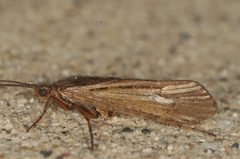
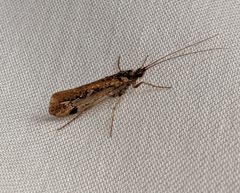
Limnephilus is the most diverse in the Limnephilidae, containing over 180 described with broad ecological tolerances and a primarily Holarctic distribution. Species inhabit diverse freshwater including lakes, ponds, slow-moving streams, and high-altitude streams, with some extending to salt marshes and desert environments. Several species are of conservation concern in North America. The genus has been extensively studied as a bioindicator for aquatic pollution and as a model for understanding -prey interactions and case-building .
Pronunciation
How to pronounce Limnephilus: /lɪmˈnɛfɪləs/
These audio files are automatically generated. While they are not always 100% accurate, they are a good starting point.
Identification
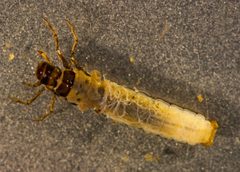
distinguished from other Limnephilidae by genitalic characters, particularly male claspers and structure; -level identification requires examination of genitalia. Larvae construct portable cases from sand grains, plant material, or mineral particles; case design varies by species and . Late instar larvae identified by metamorphotype larval frontoclypeal apotome remaining in pupal cases. Final instar larvae and pupae often found attached to stones in streams.
Images
Habitat
Lentic including lakes, permanent and temporary ponds, pools, and salt marshes; also lotic habitats such as slow-flowing streams, springs, and spring creeks. Particularly abundant in low-altitude, high-latitude environments, though some occur at high elevations (up to 2930 m). Beaver ponds and spring ponds are especially important habitats. Some species tolerate saline conditions.
Distribution
Primarily Holarctic with highest diversity; 82 to Nearctic, 44 to West Palearctic, 20 to East Palearctic. Also present in Oriental (9 species), Neotropical (3 species), and southernmost records in Rica and Panamá. Widespread across Britain; several species of conservation concern in Wisconsin and Michigan, USA.
Seasonality
Some are multibrooded; emerge after 3–5 days when reared from pupae indoors. Activity patterns vary by species and latitude.
Diet
Larvae are that consume leaf litter and detritus; specific consumption of distinct leaf documented for some species.
Life Cycle
Complete with , larva, pupa, and stages. Final instar larvae construct pupal cases attached to substrates. Some undergo . Duration from pupa to adult 3–5 days under laboratory conditions.
Behavior
Larvae build portable protective cases from environmental materials; case strength, width, and composition affect vulnerability to . Larvae and pupae attach to stones in streams. Some show avoidance to pollutants.
Ecological Role
functional feeding guild; contributes to leaf litter decomposition in freshwater . Important food source for predatory fish and including naiads. Serves as bioindicator for aquatic pollution monitoring.
Human Relevance
Used extensively in aquatic ecotoxicology and for detecting and heavy metal pollution. Several are of conservation concern. Some species support trout in spring creeks and slow pools.
Similar Taxa
- Other Limnephilidae generaLimnephilus distinguished by specific genitalic characters and broad ; other typically more restricted ecologically or morphologically distinct in case construction materials.
- Other Trichoptera familiesLimnephilidae larvae generally construct cases from coarse materials (sand, plant fragments); other may use silk alone, fine sand, or silk with .
Sources and further reading
- BugGuide
- Wikipedia
- GBIF taxonomy match
- iNaturalist taxon
- NCBI Taxonomy
- Catalogue of Life
- A New Species of Limnephilus (Insecta: Trichoptera: Limnephilidae) from China, with Revision of the Genus Limnephilus on the Chinese Mainland
- Larval description of Limnephilus atlanticus Nybom 1948, morphological comparison with Limnephilus affinis Curtis 1834, (Trichoptera: Limnephilidae) and additional notes on their ecology in Azores Islands
- Description of the larva and pupa of Limnephilus hamifer Flint 1963 (Trichoptera, Limnephilidae) from Costa Rica
- Validity and ecological relevance of an active in situ bioassay using gammarus pulex and limnephilus lunatus
- The Increase in Temperature Overwhelms Silver Nanoparticle Effects on the Aquatic Invertebrate Limnephilus sp.
- The influence of larval case design on vulnerability of Limnephilus frijole (Trichoptera) to predation
- Diapause in a Salt-tolerant Desert Caddisfly: The Life Cycle of Limnephilus assimilis (Trichoptera) in Death Valley
- Toxicity of aqueous-phase and suspended particle-associated fenvalerate: Chronic effects after pulse-dosed exposure ofLimnephilus lunatus(Trichoptera)