
Limnephilus externus
Hagen, 1861
northern caddisfly
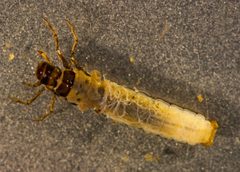
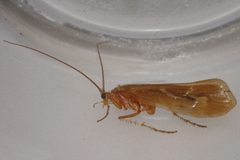
Limnephilus externus is a northern caddisfly in the Limnephilidae, first described by Hagen in 1861. The species has been documented in both North America and Europe. A detailed study in southern Alberta, Canada, revealed unique adaptations to temporary pool conditions, including -laying above water level and delayed larval entry into aquatic . emerge in August and exhibit a one-month reproductive delay.
Pronunciation
How to pronounce Limnephilus externus: //lɪmˈnɛfɪləs ɛksˈtɜrnəs//
These audio files are automatically generated. While they are not always 100% accurate, they are a good starting point.
Images
Habitat
Found in ponds, particularly those with fluctuating water levels. In southern Alberta, Canada, the has been documented inhabiting a permanent pond with fluctuating water level, where it could be accommodated despite being typically associated with temporary pool .
Distribution
North America and Europe. Specific records include southern Alberta, Canada.
Seasonality
emerge through August in southern Alberta, Canada.
Life Cycle
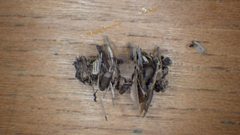
Females lay masses on the ground above the water level in late summer. Larvae hatch in autumn but remain within the egg masses until submerged by rising water in spring. Larvae exhibit growth rates faster than those documented for any permanent-water trichopteran studied to date.
Behavior
undergo a one-month reproductive delay following .
Similar Taxa
- Anabolia bimaculataBoth inhabit temporary pools and were studied together in the same southern Alberta pond; however, A. bimaculata emerge through July and show no reproductive delay, unlike L. externus.
- Nemotaulius hostilisBoth were studied in the same pond , but N. hostilis is associated with permanent pools, oviposits on riparian vegetation, and exhibits different timing and a longer reproductive .