
Nemotaulius hostilis
(Hagen, 1873)
Inimical Northern Caddisfly
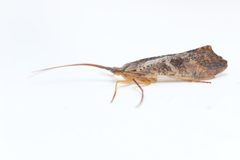
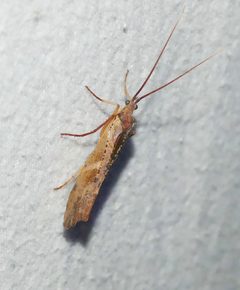
Nemotaulius hostilis is a northern caddisfly in the Limnephilidae, found in North America. It inhabits permanent freshwater pools and exhibits a with emerging in late May. The is notable for its use of in mate attraction and a distinctive reproductive phenomenon involving mass liquefaction. Larvae build cases using plant material and grow at rates comparable to other detritivorous in permanent waters.
Pronunciation
How to pronounce Nemotaulius hostilis: /nɛmoʊˈtɔːliəs hoʊˈstɪlɪs/
These audio files are automatically generated. While they are not always 100% accurate, they are a good starting point.
Images
Habitat
Permanent freshwater pools and ponds. In southern Alberta, Canada, it has been documented in a permanent pond with fluctuating water levels.
Distribution
North America; specifically recorded from southern Alberta, Canada, and Vermont, USA.
Seasonality
emerge primarily in late May, with over 75% of occurring within a single week. Larvae are present year-round, entering the water in August after hatching.
Diet
Larvae are detritivorous , feeding on decaying plant material.
Life Cycle
. emerge in late May and undergo a reproductive of slightly over one month. Females oviposit on riparian vegetation; larvae hatch in August and immediately enter the water. Larvae overwinter and grow continuously throughout the year.
Behavior
Larvae construct portable cases using plant material. use extractable for mate attraction. Females produce masses that undergo liquefaction, a distinctive phenomenon in this .
Ecological Role
Larvae function as detritivorous in freshwater , processing decaying plant material.
Sources and further reading
- BugGuide
- Wikipedia
- GBIF taxonomy match
- iNaturalist taxon
- NCBI Taxonomy
- The Phenomenon of Egg Mass Liquefaction in Nemotaulius hostilis (Hagen) (Trichoptera:Limnophilidae)
- Demonstration of Sex Pheromones in <i>Anabolia Bimaculata, Hydatophylax Argus,</i> and <i>Nemotaulius Hostilis</i> (Trichoptera: Limnephilidae)
- The life histories of Limnephilus externus Hagen, Anabolia bimaculata (Walker), and Nemotaulius hostilis (Hagen) (Trichoptera, Limnephilidae) in a pond in southern Alberta, Canada