
Rhyacophila fuscula
(Walker, 1852)
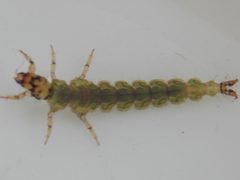
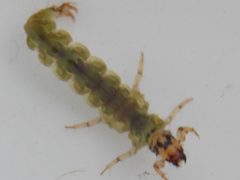
Rhyacophila fuscula is a of free-living caddisfly in the Rhyacophilidae. It is found in North America, with records from Vermont and other parts of the United States. The species belongs to a whose larvae are commonly known as 'caseless caddis' because they do not construct the portable cases typical of many other caddisfly families.
Pronunciation
How to pronounce Rhyacophila fuscula: //raɪˈækəˌfaɪlə ˈfʌskjʊlə//
These audio files are automatically generated. While they are not always 100% accurate, they are a good starting point.
Identification
Rhyacophila fuscula can be distinguished from other Rhyacophila by subtle morphological features of genitalia and wing venation, which require examination. As a member of Rhyacophilidae, it lacks the case-building of many other caddisfly larvae; larvae are free-living . Definitive identification to species level typically requires examination of adult specimens by an expert in Trichoptera .
Images
Habitat
As a member of the Rhyacophila, this is associated with lotic (flowing water) environments. The Buglife survey context indicates that Rhyacophila species occur in riverbed with varying substrates, from small sandy gravels to large cobbles, where they are sampled by kick sampling techniques.
Distribution
North America; recorded from Vermont, United States and other parts of the Nearctic region.
Life Cycle
Complete with , larval, pupal, and stages. Larvae are aquatic and free-living (caseless), occurs in a silken retreat attached to substrate.
Behavior
Larvae are free-living that actively hunt prey rather than constructing portable cases. They spin silken retreats for . are terrestrial and typically found near water bodies.
Ecological Role
Larvae function as in freshwater stream . They contribute to benthic dynamics as both predators of smaller and prey for larger aquatic organisms such as fish.
Human Relevance
Serves as a bioindicator for river health assessments. The presence of Rhyacophila larvae, including this species, is documented in freshwater biomonitoring surveys such as those conducted for the Scarce Yellow Sally (Isogenus nubecula) conservation project on the River Dee.
Similar Taxa
- Other Rhyacophila speciesMany Rhyacophila are morphologically similar and require detailed examination of genitalia for definitive identification; they share the caseless larval habit.
- GlossosomatidaeAlso case-building caddisflies, but Glossosomatidae larvae construct dome-shaped cases rather than being free-living; differ in wing venation and genitalia.
- HydropsychidaeNet-spinning caddisflies with larvae that construct fixed retreats with capture nets; generally have broader wings and different wing venation patterns.
More Details
Conservation Survey Context
Rhyacophila , including R. fuscula, have been documented in detailed riverbed surveys using kick sampling methods. In the River Dee surveys conducted by Buglife, Rhyacophila larvae were noted as 'lovely caseless caddis larvae' among the bycatch while surveying for the target species Isogenus nubecula (Scarce Yellow Sally), indicating their presence in high-quality river with good diversity.
Sources and further reading
- BugGuide
- Wikipedia
- GBIF taxonomy match
- iNaturalist taxon
- NCBI Taxonomy
- Catalogue of Life
- Meloidae Holdings | Entomology Research Museum
- Kicking over Dee River cobbles looking for Scarce Yellow Sally! - Buglife Blog - Buglife
- Cicio cerrig crynion afon Dyfrdwy drosodd yn chwilio am bryf y cerrig Isogenus nubecula! - Buglife Blog - Buglife