
Philopotamidae
Stephens, 1829
Fingernet Caddisflies, Finger-net Caddisflies
Genus Guides
3- Chimarra(Little Black Caddisflies)
- Dolophilodes
- Wormaldia
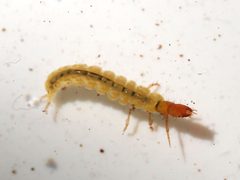
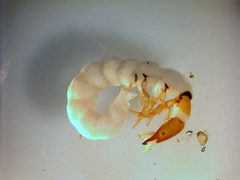
is a of caddisflies (order Trichoptera) comprising approximately 800 described across three : Chimarrinae, Paulianodinae, and Philopotaminae. The family is distinguished by larval : larvae construct fine-mesh silk nets in flowing water to capture food particles, earning them the 'fingernet caddisflies.' The Chimarra is the largest in the family, followed by Wormaldia. The family has a global distribution excluding the Australasian region and includes fossil representatives dating to the Jurassic.
Pronunciation
How to pronounce Philopotamidae: /fɪloʊˈpɒtəˌmaɪdiː/
These audio files are automatically generated. While they are not always 100% accurate, they are a good starting point.
Identification
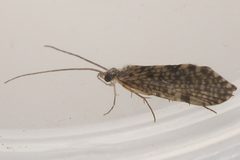
distinguished from Lepidoptera () by hairy rather than scaled wings, prominent maxillary and labial palps, and absence of a coiled . Within Trichoptera, identification to and relies primarily on male genitalia structure; wing venation patterns provide supplementary characters. Larvae identified by net-spinning and associated morphological traits. The is distinguished from other caddisfly families by the fine-mesh structure of larval capture nets rather than case-building behavior.
Images
Habitat
Larvae inhabit flowing freshwater environments including streams and rivers. The Chimarra lehibemavo -group is restricted to rivers in eastern pristine rainforests of Madagascar. Larvae require clean, well-oxygenated water for net construction and feeding.
Distribution
Global distribution spanning all biogeographic regions except Australasian. Documented from North America (Nearctic), Central and South America (Neotropical), Europe, Asia, and Africa including Madagascar. High reported: 64% of 60 Ecuadorian are to that country. Fossil representatives known from Jurassic deposits in Asia (Karabastau and Itat formations).
Diet
Larvae are filter-feeders, using silk nets to capture organic particles and small organisms from flowing water. Specific food items not documented in available sources.
Life Cycle
Complete with , larva, pupa, and stages. Larvae are aquatic and construct silk nets for feeding. occurs within the aquatic environment. Adults are terrestrial and short-lived.
Behavior
Larvae spin intricate mesh nets of silk in flowing water to capture food. Net construction requires extensive silk production; individual larvae spin over one kilometer of silk thread. rest on vegetation near water bodies.
Ecological Role
Larvae function as filter-feeders in lotic , processing organic matter and contributing to nutrient cycling. High and suggest importance in regional biodiversity and as indicators of quality, particularly in pristine rainforest streams.
Human Relevance
Potential use as bioindicators of water quality due to specific requirements for clean, flowing water. Larval silk production noted as remarkable biological phenomenon. No documented economic importance or pest status.
Similar Taxa
- HydropsychidaeBoth are net-spinning caddisflies in Trichoptera; Hydropsychidae construct coarser capture nets and occupy similar lotic . Distinguished by net mesh size and larval .
- Lepidoptera superficially resemble due to similar body plan and resting posture; distinguished by hairy (not scaled) wings, lack of coiled , and presence of prominent palps.
Sources and further reading
- BugGuide
- Wikipedia
- GBIF taxonomy match
- iNaturalist taxon
- NCBI Taxonomy
- Catalogue of Life
- Philopotamidae | Beetles In The Bush
- New species of Chimarrhodella from Venezuela and Ecuador (Trichoptera: Philopotamidae)
- The Chimarra lehibemavo species-group, new and endemic to Madagascar (Trichoptera, Philopotamidae)
- Revision of the Nearctic species of the caddisfly genus Wormaldia McLachlan (Trichoptera: Philopotamidae)
- Revision of the Neotropical species of the caddisfly genus Wormaldia McLachlan (Trichoptera: Philopotamidae)
- New Caddisflies (Insecta: Trichoptera, Necrotauliidae, Philopotamidae) from the Jurassic of Asia and Their Triassic Ancestors
- Description of the larva of Philopotamus achemenus Schmid 1959 (Trichoptera: Philopotamidae) and a larval key for species of Philopotamus in Greece
- New Philopotamidae (Insecta, Trichoptera) from Ecuador: seven new species and updated country checklist