
Trogium pulsatorium
(Linnaeus, 1758)
larger pale booklouse, deathwatch, common booklouse, grain psocid
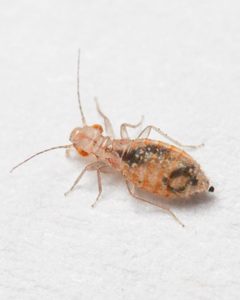
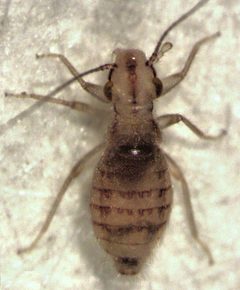
Trogium pulsatorium is a granary booklouse in the Trogiidae with a near- distribution spanning six continents. It inhabits stored grain facilities, warehouses, and human dwellings where it feeds on dry organic matter. The is notable for its association with stored products and its historical confusion with true deathwatch beetles due to shared .
Pronunciation
How to pronounce Trogium pulsatorium: //ˈtroʊdʒiəm ˌpʌlsəˈtɔːriəm//
These audio files are automatically generated. While they are not always 100% accurate, they are a good starting point.
Identification
Trogium pulsatorium can be distinguished from other booklice by its larger size relative to Liposcelis and other common domestic psocids. It lacks the distinct wing venation patterns seen in winged species. Separation from other Trogium species requires examination of genitalia and subtle chaetotaxy differences not visible without magnification.
Images
Habitat
Primarily associated with stored grain facilities, warehouses, mills, and human dwellings. Occupies dry, warm environments with access to starchy organic materials.
Distribution
Africa, Australia, Europe and Northern Asia (excluding China), Central America, North America, Southern Asia, New Zealand, and Antarctica.
Diet
Feeds on dry starchy materials including stored grains, cereal products, and other organic debris in human-associated environments.
Ecological Role
Decomposer in stored product ; contributes to nutrient cycling in dry organic matter accumulations.
Human Relevance
Pest of stored grain and cereal products. Historical confusion with true deathwatch beetles (Anobiidae) due to shared 'deathwatch,' though it does not produce the characteristic tapping sounds associated with those beetles.
Similar Taxa
- Liposcelis spp.Smaller size, different body proportions, and preference for damper environments distinguish Liposcelis from T. pulsatorium.
- True deathwatch beetles (Anobiidae)Unrelated beetles erroneously confused due to shared 'deathwatch' ; beetles produce audible tapping sounds and have hardened forewings absent in psocids.
Misconceptions
The 'deathwatch' properly refers to anobiid beetles whose tapping signals were historically associated with death vigils. T. pulsatorium does not produce these sounds, and the name transfer reflects historical confusion rather than biological similarity.