
Trogium
Illiger, 1798
granary booklice
Species Guides
1- Trogium pulsatorium(larger pale booklouse)
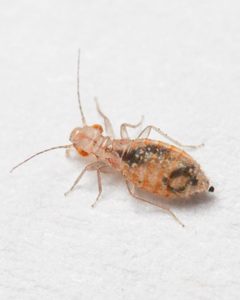
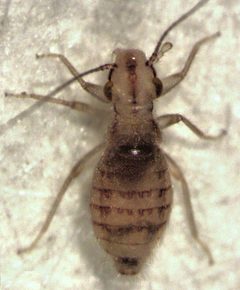
Trogium is a of granary booklice in the Trogiidae, established by Illiger in 1798. The genus contains approximately eight described distributed across Europe and other regions. Members are associated with stored grain and dry organic materials. The type species Trogium pulsatorium is commonly known as the larger pale booklouse.
Pronunciation
How to pronounce Trogium: /ˈtroʊ.dʒi.əm/
These audio files are automatically generated. While they are not always 100% accurate, they are a good starting point.
Identification
Trogium are distinguished from other Trogiidae by features of the and wing venation. Trogium pulsatorium, the most frequently encountered species, is larger and paler than many related . Species identification requires examination of genitalic structures and detailed wing venation patterns. Some species are fully winged while others show reduction.
Images
Habitat
Associated with stored grain products, granaries, and dry organic debris. Inhabits human-built structures including warehouses, mills, and food storage facilities. Some occur in natural settings such as caves and rocky .
Distribution
Recorded from Denmark, Norway, and Sweden; broader distribution includes Europe and regions where stored grain is present. Individual show more restricted ranges.
Diet
Feeds on stored grain, dry organic matter, and detritus in food storage environments.
Ecological Role
Decomposer in stored product ; contributes to breakdown of dry organic materials in granary and warehouse environments.
Human Relevance
Pest of stored grain and food products. Presence indicates potential deterioration of stored goods. Trogium pulsatorium is a recognized stored product pest.
Similar Taxa
- LepinotusAlso in Trogiidae; distinguished by wing venation and capsule structure
- TrogiomorphaHigher containing related granary booklice ; Trogium distinguished by specific genitalic and wing characters
More Details
Species diversity
Eight described : T. apterum, T. braheicola, T. evansorum, T. lapidarium, T. picticeps, T. pulsatorium, T. stellatum, and T. vanharteni
Taxonomic history
established by Illiger in 1798; some transferred from other genera (e.g., T. lapidarium formerly in Atropos, T. pulsatorium formerly in Psocus)