
Trogiidae
Roesler, 1944
Granary Booklice
Genus Guides
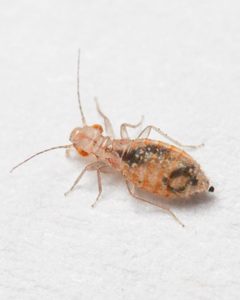
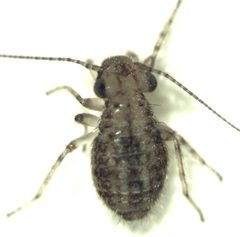
3is a of small, wingless or short-winged insects commonly known as granary booklice. The family comprises approximately 11 and more than 50 described . Members are classified in the order Psocodea (formerly ), suborder Trogiomorpha. Several fossil genera are known from Cretaceous and Eocene amber deposits.
Pronunciation
How to pronounce Trogiidae: /troʊˈdʒaɪ.iˌdiː/
These audio files are automatically generated. While they are not always 100% accurate, they are a good starting point.
Identification
Distinguished from other Psocodea by combination of: winglessness or highly reduced wings; three-segmented ; presence of pterostigma absent or when wings present; and characteristic structure of male genitalia. Differs from Liposcelididae by tarsal segmentation and wing reduction patterns. Differs from Psoquillidae by body shape and antennal segment count.
Images
Appearance
Small, soft-bodied insects, generally 1-5 mm in length. Most are wingless or possess reduced, non-functional wings (brachypterous). Body typically dorsoventrally flattened. Long, with 13-17 segments. usually reduced or absent. with three segments. Hind often enlarged in some .
Habitat
Primarily associated with stored products, granaries, warehouses, and dry organic debris. Found in dry, warm environments with abundant dry food materials such as grain, seeds, dried plant matter, and organic dust. Some occur in bird and mammal nests.
Distribution
distribution, with records from North America, Europe, Asia, and the Caribbean. Specific documented records include: Bahamas, Denmark, Norway, Sweden. Widespread in association with human food storage facilities.
Seasonality
Active year-round in controlled indoor environments. Outdoor likely show seasonal variation corresponding to temperature and humidity, though specific patterns are not well documented.
Diet
Feeds on dry organic matter including: stored grain and cereal products, dried seeds, fungal spores, dead insects, and organic detritus. Some have been observed feeding on dry animal matter.
Life Cycle
(hemimetabolous). Development progresses through , nymph, and stages. Nymphs resemble smaller, sexually adults. Multiple per year possible under favorable conditions. Specific developmental rates vary by and environmental conditions.
Behavior
Gregarious; often found in in suitable microhabitats. Avoids light; seeks concealed locations. Capable of rapid increase in favorable conditions. Poor ability due to winglessness; spread primarily through human transport of infested goods.
Ecological Role
Decomposer; contributes to breakdown of dry organic matter in stored product . Serves as prey for various small arthropods in granary and warehouse . for dry, undisturbed organic accumulations.
Human Relevance
Pest of stored products; infests grain, cereals, and dried foodstuffs. Economic damage generally minor compared to primary pests, but can reach nuisance levels. Presence indicates inadequate storage . Control through proper drying, sanitation, and temperature management of stored products.
Similar Taxa
- LiposcelididaeSimilar small, wingless in stored products; distinguished by two-segmented and different antennal structure
- PsoquillidaeSimilar preferences; distinguished by presence of well-developed wings and different body proportions
- PsyllipsocidaeRelated in Trogiomorpha; distinguished by wing venation and preferences (more commonly cave-dwelling)
More Details
Fossil Record
Three extinct known from amber deposits: Cretolepinotus (Campanian, Canadian amber), Eolepinotus (Santonian, Taimyr amber, Russia), and Paralepinotus (Ypresian, Fushun amber, China). These fossils document the 's presence since at least the Late Cretaceous.