
Lepinotus
Heyden, 1850
granary booklice
Species Guides
2- Lepinotus inquilinus(granary booklouse)
- Lepinotus reticulatus(reticulate-winged trogiid)
Lepinotus is a of granary booklice comprising approximately 12 described . These small, soft-bodied insects belong to the Trogiidae and are primarily known as pests of stored products. The genus has been subject to detailed anatomical study, particularly for the species Lepinotus patruelis, revealing distinctive features in antennal development and reproductive .
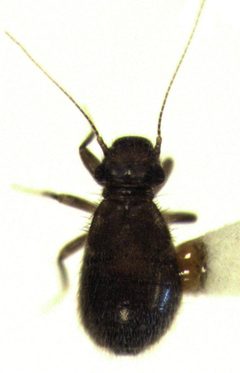
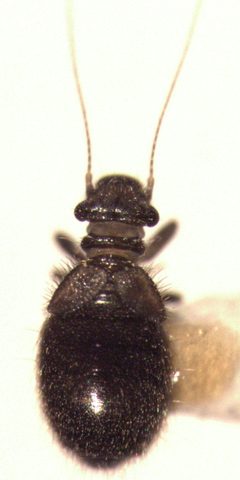
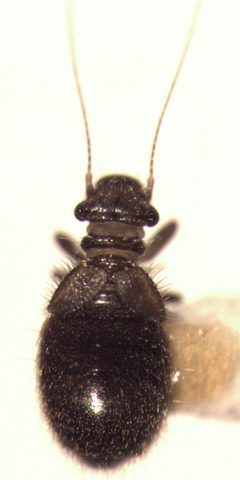
Pronunciation
How to pronounce Lepinotus: //ˌlɛpɪˈnoʊtəs//
These audio files are automatically generated. While they are not always 100% accurate, they are a good starting point.
Images
Habitat
Stored products; associated with granary and warehouse environments where dried organic materials are stored.
Distribution
Recorded from Portugal, Nicaragua, Tanzania, Norfolk Island, Denmark, Norway, and Sweden. Distribution likely broader due to human-mediated transport with stored goods.
Life Cycle
Antennal growth occurs through addition of new segments to the at each moult, a pattern differing from other . The female possesses two ovaries with five polytrophic each. The male includes bipartite glandular seminal vesicles and a with a terminal adapted for gripping the female spermathecal papilla.
Ecological Role
Pest of stored products. No other ecological roles documented.
Human Relevance
Recognized as a pest of stored products, indicating economic significance in food storage and warehouse management. Human-mediated likely facilitates spread to new geographic regions.
More Details
Anatomical features
Lepinotus patruelis exhibits several distinctive anatomical traits: pigment (possibly melanin) deposited in ectodermal regions including the stomodaeal wall; serving as both food storage and digestion site; four with ends attached to the ; a single-chambered heart with two groups of pericardial nearby; two pairs of labial glands (basophile and acidophile) with ducts; and complex that are injected in liquid form and solidify within the spermatheca.
Phylogenetic relationships
Anatomical similarities in labial glands, and pericardial , and reproductive organs support the hypothesis that are closely allied to (sucking lice), as first suggested by Snodgrass (1905).