
Linognathidae
Webb, 1946
sucking lice
Genus Guides
1is a of in the order Psocodea, containing at least 3 (Linognathus, Prolinognathus, Solenopotes) and approximately 70 described . Members are obligate of mammals, primarily infesting ungulates including cattle, deer, impalas, and related . The family is characterized by adapted for blood-feeding and complete dependence on host animals for survival and .
Pronunciation
How to pronounce Linognathidae: /ˌlɪnoʊˈnæθɪˌdiː/
These audio files are automatically generated. While they are not always 100% accurate, they are a good starting point.
Identification
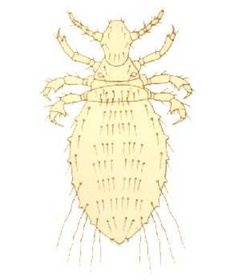
Distinguished from chewing lice (Trichodectidae) by blood-feeding mouthparts and from other (Haematopinidae) by morphological characters of the , , and tarsal claws. Solenopotes possess characteristic features separating them from Linognathus, including differences in antennal segmentation and abdominal chaetotaxy. Identification to species requires microscopic examination of genitalia, antennae, and tarsal claw .
Images
Habitat
Strictly parasitic on mammalian ; found in hair or fur of ungulates including cattle (Bos taurus), deer (Odocoileus, Cervus), impalas (Aepyceros melampus), and related Artiodactyla. Distribution on host body varies by ; Solenopotes ferrisi shows marked preference for regions of deer hosts. Microhabitat determined by host hair and temperature.
Distribution
Worldwide distribution coinciding with domestic and wild ungulate . Documented from North America (Canada, United States, Mexico), South Africa (Limpopo and Mpumalanga Provinces), Europe, and Asia. Solenopotes burmeisteri, native to Eurasia, recently recorded in Canada (Yukon Territory, 2024). GBIF records indicate presence across Europe, Africa, temperate and tropical Asia, and Australasia.
Seasonality
vary by and . Solenopotes ferrisi more abundant on deer in winter and spring; Solenopotes capillatus peaks in late winter to early summer on impalas. Year-round presence on hosts with seasonal fluctuations in intensity.
Diet
Obligate blood-feeders using to access vasculature. Nymphal development requires blood meals between .
Host Associations
- cattle - primary Bos taurus; includes Solenopotes capillatus, the little blue cattle louse
- domestic dog - Linognathus setosus documented on dogs in Mexico City
- impala - Aepyceros melampus; of Linognathus weisseri in South Africa
- black-tailed deer - Odocoileus hemionus columbianus; of Solenopotes ferrisi
- elk - Cervus canadensis; Solenopotes burmeisteri first Canadian record 2024
- Nubian ibex - Capra ibex nubiana; referenced in literature
- gazelle - Gazella gazella; referenced in literature
Life Cycle
Hemimetabolous development: → three nymphal instars → . Blood meals required between nymphal . Solenopotes capillatus completes egg-to-egg-laying adult cycle in approximately 2 weeks under optimal conditions. Entire occurs on ; off-host survival limited.
Behavior
Permanent remaining on throughout life. Exhibit site preference on host body; Solenopotes ferrisi concentrates on regions when intensity is low. Co-occurs with other (Haematopinidae, Trichodectidae) on same individual hosts without apparent competitive exclusion.
Ecological Role
Obligate with no free-living stage; tied directly to , health, and social . May influence host behavior and energy expenditure. Serve as potential for hemoplasmas (Mycoplasma haemocanis detected in Linognathus setosus).
Human Relevance
Veterinary importance as pests of livestock and wildlife. Solenopotes capillatus causes economic impact on cattle production requiring management intervention. Heavy may cause anemia, reduced weight gain, and skin irritation in . Control typically involves topical or parasiticides. Documented potential for bacterial (hemoplasmas) in domestic dogs.
Similar Taxa
- HaematopinidaeAlso () on ungulates; distinguished by shape, antennal structure, and tarsal claw
- TrichodectidaeChewing lice on mammals; distinguished by rather than suctorial mouthparts and different feeding
More Details
Taxonomic note
Authorship variously cited; Catalogue of Life lists Webb, 1946. historically placed in order , now subsumed into Psocodea.
Research significance
Solenopotes serve as model organisms for studying of on wild ungulate , with long-term studies on Columbian black-tailed deer providing detailed demographic data.
Sources and further reading
- BugGuide
- Wikipedia
- GBIF taxonomy match
- iNaturalist taxon
- NCBI Taxonomy
- Catalogue of Life
- Life Cycle Details of Solenopotes capillatus (Anoplura: Linognathidae)
- Little Blue Cattle Louse Solenopotes capillatus (Enderlein) (Insecta: Phthiraptera: Anoplura: Linognathidae)
- Density and distribution of cattle lice (Phthiraptera: Haematopinidae, Linognathidae, Trichodectidae) on six steers
- Life Cycle Details of <I>Solenopotes capillatus</I> (Anoplura: Linognathidae)
- First report of the sucking louse, Solenopotes burmeisteri (Psocodea: Linognathidae), infesting elk (Artiodactyla: Cervidae) in Canada
- Taxonomy ofSolenopotesEnderlein, 1904, with redescription ofLinognathus panamensisEwing (Linognathidae: Anoplura)
- Confirmation of hemoplasmas in Linognathus setosus (vol Olfers, 1816) (Psocodea: Anoplura: Linognathidae) infesting domestic dogs in Mexico City, Mexico
- <i>Linognathus weisseri<i/> n. sp. (Phthiraptera : Linognathidae) of impalas, <i>Aepyceros melampus<i/> : description and biology
- The population dynamics of Solenopotes ferrisi (Anoplura: Linognathidae) on the Columbian black-tailed deer Odocoileus hemionus columbianus