
Solenopotes
Enderlein, 1904
Species Guides
1- Solenopotes capillatus(Little Blue Cattle Louse)
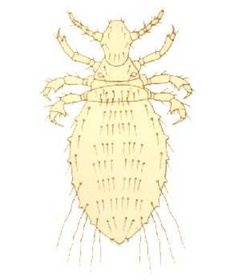
Solenopotes is a of sucking lice in the Linognathidae, containing eight recognized that parasitize ungulates, particularly members of the deer family (Cervidae) and cattle. The genus is distinguished from the closely related Linognathus by specific morphological characters. Species occur across Europe, North America, Asia, and Africa, with some showing specificity while others have broader host ranges. S. capillatus, the Little Blue Cattle , is the most economically significant species due to its impact on cattle production.
Pronunciation
How to pronounce Solenopotes: /səˌliːnoʊˈpoʊtiːz/
These audio files are automatically generated. While they are not always 100% accurate, they are a good starting point.
Identification
Solenopotes are distinguished from Linognathus by comparative morphological characters detailed in taxonomic revisions. A key to the eight known species exists based on major taxonomic characters. Species within the can be differentiated by association patterns and specific morphological features, though detailed diagnostic characters require microscopic examination. The genus as a whole is characterized within the Linognathidae by features separating it from the related genus Linognathus.
Images
Habitat
Strictly associated with mammals; no free-living stage exists. Found on the body surface of cattle, deer, elk, and related ungulates. On hosts, exhibit regional preferences—S. ferrisi shows marked preference for regions of deer, particularly at low densities. Populations fluctuate seasonally, with higher abundance in winter and spring documented for some .
Distribution
Europe; Northern America; Asia-Temperate; Northern Africa; Southern Africa; Australasia. Specific records include: S. burmeisteri native to Eurasia with first Canadian record from Yukon Territory (2024); S. ferrisi in northern California; S. capillatus worldwide where cattle occur, including Israel on Nubian ibex and gazelles; S. natalensis in South Africa.
Seasonality
Higher abundance documented in winter and spring for S. ferrisi on Columbian black-tailed deer. Seasonal vary by and , with temperature-dependent development rates affecting year-round presence on hosts in temperate regions.
Diet
Obligate blood-feeders (sucking lice). S. capillatus feeds on cattle blood. Diet of other inferred from characteristics and associations, but specific feeding habits not documented for most species beyond host blood.
Host Associations
- Cervidae (deer family) - primary Multiple including S. ferrisi on Odocoileus hemionus columbianus, S. burmeisteri on Cervus canadensis, S. capreoli on roe deer
- Bos taurus (cattle) - primary S. capillatus is an obligate of cattle
- Capra ibex nubiana (Nubian ibex) - S. capillatus documented in Israel
- Gazella gazella (gazelle) - S. capillatus documented in Israel
- Muntiacus (muntjacs) - S. muntiacus
- Rangifer tarandus (reindeer/caribou) - S. tarandi
Life Cycle
with , three nymphal instars, and stages. For S. capillatus: eggs hatch in 5-7 days; first instar 3-4 days; second instar 3-4 days; third instar 3-4 days; total egg-to-adult development 14-17 days at optimal temperature; adult lifespan 30-40 days. Entire completed on the with no free-living stages. Eggs attached to host hair shafts.
Behavior
Exhibits site preference: S. ferrisi concentrates on regions of deer when is low, with distribution becoming more uniform at higher densities. Persistent establish on individual animals. No host-switching documented; transmission occurs through direct host contact.
Ecological Role
causing direct blood loss and irritation to . S. capillatus contributes to reduced cattle productivity and is subject to veterinary management. influenced by host age, with fawns showing higher abundance in studied systems.
Human Relevance
S. capillatus (Little Blue Cattle ) has economic importance in livestock management as the smallest of five infesting cattle. Subject to parasiticide treatment in cattle operations. Other species have minimal direct human impact but serve as indicators of health and movement patterns.
Similar Taxa
- LinognathusClosely related in Linognathidae; Solenopotes distinguished by specific morphological characters detailed in taxonomic revisions. Linognathus panamensis was previously assigned to Solenopotes but has been reclassified.
More Details
Taxonomic History
established by Enderlein in 1904. Contains eight recognized : S. binipilosus, S. burmeisteri, S. capillatus, S. capreoli, S. ferrisi, S. hologastrus, S. muntiacus, S. natalensis, and S. tarandi. Complete synonymy and published in 1999 taxonomic revision.
Population Dynamics
S. ferrisi on Columbian black-tailed deer reaches mean of 389 per infested deer, with range of 1-3,968 individuals. and abundance vary by age, sex, and season.
Sources and further reading
- BugGuide
- Wikipedia
- GBIF taxonomy match
- iNaturalist taxon
- NCBI Taxonomy
- Catalogue of Life
- Life Cycle Details of Solenopotes capillatus (Anoplura: Linognathidae)
- Little Blue Cattle Louse Solenopotes capillatus (Enderlein) (Insecta: Phthiraptera: Anoplura: Linognathidae)
- Taxonomy ofSolenopotesEnderlein, 1904, with redescription ofLinognathus panamensisEwing (Linognathidae: Anoplura)
- First report of the sucking louse, Solenopotes burmeisteri (Psocodea: Linognathidae), infesting elk (Artiodactyla: Cervidae) in Canada
- Life Cycle Details of <I>Solenopotes capillatus</I> (Anoplura: Linognathidae)
- The population dynamics of Solenopotes ferrisi (Anoplura: Linognathidae) on the Columbian black-tailed deer Odocoileus hemionus columbianus