
Trichodectidae
Kellogg, 1896
Genus Guides
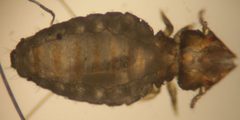
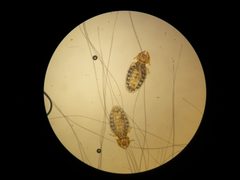
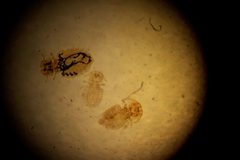
4is a of chewing lice () comprising 19 that are obligate of mammals. in this family feed on hair, skin debris, and sebum. The family was reclassified in 2021 from the Ischnocera into the newly established parvorder Trichodectera based on phylogenetic studies. Notable genera include Bovicola (sheep ), Damalinia (cattle and antelope lice), Geomydoecus (pocket gopher lice), and Tricholipeurus (gazelle lice).
Pronunciation
How to pronounce Trichodectidae: /ˌtrɪkoʊˈdɛktɪˌdeɪ/
These audio files are automatically generated. While they are not always 100% accurate, they are a good starting point.
Images
Habitat
Obligate living in the pelage, wool, or hair of mammal ; occupy specific microhabitats on host body regions including , , and limb areas. Documented on hosts in diverse environments from domestic livestock operations to wild rodent burrow systems.
Distribution
distribution following mammalian ranges. Documented from Europe, Africa, Asia-Temperate, Asia-Tropical, and Australasia. Specific records include sheep-raising regions worldwide, pocket gopher systems in western North America and Jalisco (Mexico), and antelope hosts in North Africa and the Middle East.
Diet
Chewing lice that feed on hair, wool fibers, skin debris, sebum, and epidermal material. Bovicola ovis has been observed feeding on sheep skin debris, sebum, and wool fibers.
Host Associations
- Ovis aries - primary Bovicola ovis (sheep biting )
- Bos taurus - primary Damalinia bovis and related
- Pappogeomys castanops - primary Geomydoecus
- Pappogeomys gymnurus tellus - primary Geomydoecus telli (type )
- Thomomys bottae-umbrinus complex - primary Geomydoecus
- Gazella leptoceros - Tricholipeurus balanicus
Life Cycle
(nit) attached to hair or wool fibers; three nymphal instars; . All developmental stages occur on the host. Bovicola ovis eggs are attached to wool fibers, with nymphs and adults remaining on the host throughout development.
Behavior
Shows microhabitat specialization with differential distribution across body regions. Males inseminate females; irradiated males of Bovicola ovis retain insemination ability but produce no viable offspring. One (Damalinia meyeri) has been documented in phoretic association with snipe flies (Symphoromyia immaculata), representing the first reported on Rhagionidae.
Ecological Role
causing irritation, wool damage, and economic losses in livestock production. No beneficial role documented. and distribution patterns on have been quantified for pest management purposes.
Human Relevance
Significant veterinary pests causing economic losses in sheep and cattle production through wool damage, skin irritation, and secondary . Subject to control efforts including chemical treatments and investigation of radiation-induced sterility (500-1000 Gy causing complete sterility while permitting 2-3 week survival) as a potential sterile insect technique.
Sources and further reading
- BugGuide
- Wikipedia
- GBIF taxonomy match
- iNaturalist taxon
- NCBI Taxonomy
- Catalogue of Life
- Radiobiology of the Sheep Biting Louse (Mallophaga: Trichodectidae)
- A NEW SPECIES OF GEOMYDOECUS (MALLOPHAGA: TRICHODECTIDAE) FROM PAPPOGEOMYS (RODENTIA: GEOMYIDAE) POCKET GOPHERS IN JALISCO, MEXICO1
- Louse-Host Associations of Geomydoecus (Mallophaga: Trichodectidae) with the Yellow-Faced Pocket Gopher, Pappogeomys Castanops (Rodentia: Geomyidae)1
- Density and distribution of cattle lice (Phthiraptera: Haematopinidae, Linognathidae, Trichodectidae) on six steers
- Slender-horned gazelle (Gazella leptoceros), a new host for Tricholipeurus balanicus (Phthiraptera: Ischnocera: Trichodectidae)
- Host Records for Geomydoecus (Mallophaga: Trichodectidae) from the Thomomys Bottae-Umbrinus Complex (Rodentia: Geomyidae)1
- First report of phoresy on snipe flies (Diptera: Rhagionidae): the chewing louse Damalinia meyeri (Psocodea: Phthiraptera: Trichodectidae) on Symphoromyia immaculata.