
Liposcelis
Motschulsky, 1852
Domestic Booklice, Booklice, Psocids
Species Guides
11- Liposcelis bostrychophila(House Psocid)
- Liposcelis brunnea(booklouse)
- Liposcelis decolor(booklouse)
- Liposcelis deltachi(booklouse)
- Liposcelis entomophila(booklouse)
- Liposcelis fusciceps
- Liposcelis hirsutoides(booklouse)
- Liposcelis nigra(booklouse)
- Liposcelis ornata(booklouse)
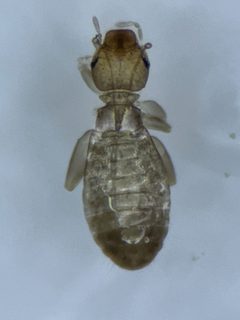
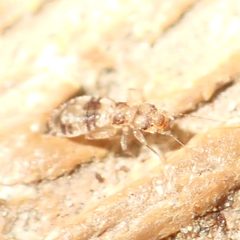
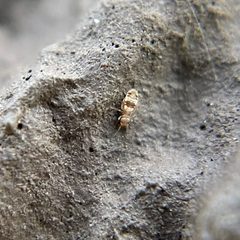
Liposcelis is a of approximately 126 of minute insects commonly known as booklice or . Many species are strongly associated with human habitation and are significant pests of stored products worldwide. They are particularly problematic in grain stores, museums, libraries, and food processing facilities where damp conditions prevail. The genus has a nearly distribution, with species found across all continents. Liposcelis species are closely related to (order ) and share morphological similarities with them.
Pronunciation
How to pronounce Liposcelis: //ˌlaɪpəˈsɛlɪs//
These audio files are automatically generated. While they are not always 100% accurate, they are a good starting point.
Identification
Liposcelis are extremely small, typically about 1 mm in length, making them difficult to detect with the unaided . They are generally transparent to light brown in color. Species identification often requires microscopic examination of morphological characters such as number, body setation patterns, and genitalic structures. The can be distinguished from other genera by features of the capsule, , and tarsal segmentation. L. bostrychophila is one of the most commonly encountered species in human environments.
Images
Habitat
occur in diverse including ground litter, woody vegetation, and highland areas. Many species are strongly associated with human-modified environments, particularly where humidity is elevated. In buildings, are linked to dampness and poor ventilation. In storage facilities, they occupy grain stores, especially where grain is damaged, slightly damp, or moldy. They cannot survive long-term where relative humidity falls below 60% due to desiccation risk.
Distribution
Nearly worldwide distribution. Documented from North America (Canada, USA, Mexico), Central America (Cuba, Jamaica, Nicaragua), South America (Argentina, Brazil, Chile), Europe (Austria, Cyprus, Finland, France, Germany, Great Britain, Italy, Poland, Romania, Yugoslavia), Africa (Angola, Congo, Madagascar, Nigeria), Middle East (Egypt, Israel, Saudi Arabia), Asia (Bangladesh, India, Indonesia, Japan, Malaysia), and Oceania (Australia, New Zealand, Pacific islands including Hawaii, Easter Island, Ascension Island).
Diet
, feeding on stored products of both animal and plant origin as well as molds. In grain stores, they specifically target the germ of damaged and broken kernels, accessing the soft endosperm through pre-existing damage from harvesting and handling.
Human Relevance
Major pests of stored products with economic significance in grain storage, food processing plants, retail facilities, and domestic premises. They reduce grain weight and quality, invade packaged foodstuffs, and render products commercially unacceptable even when direct damage is minimal. Also important pests in museums and libraries where they damage collections. At least one , L. bostrychophila, harbors felis, a human and feline . Control is challenging due to limited control options and growing recognition of their presence in stored products.
Similar Taxa
- Other PsocopteraLiposcelis can be distinguished from barklice in like Psocidae and Peripsocidae by their smaller size, more flattened body form, and stronger association with stored products rather than outdoor vegetation.
- Phthiraptera (lice)Closely related and morphologically similar, but are obligate of birds and mammals with modified legs for clinging to hair or feathers, whereas Liposcelis are free-living.
Sources and further reading
- BugGuide
- Wikipedia
- GBIF taxonomy match
- iNaturalist taxon
- NCBI Taxonomy
- Catalogue of Life
- Take a Bug Break--and Bring Along This Book | Bug Squad
- Bohart Museum Open House: Bed Bugs and Cochroaches and Pantry Pests | Bug Squad
- New species and records of Liposcelis Motschulsky (Psocoptera: Liposcelididae) from Hawaii with first description of the male of Liposcelis bostrychophila Badonnel
- Temperature and relative humidity as factors in the ecology of Liposcelis divinatorius (Müller) (Corrodentia, Atropidae)
- Behavior of Liposcelis bostrychophila (Psocoptera:Liposcelididae) Under Dark Condition
- The psocid <i>Liposcelis bostrychophilus</i> Badonnel (Psocoptera: Liposcelidae): an occasional herbarium pest
- Comparative Assessment of the Potential of Xylocoris flavipes (Hemiptera: Anthocoridae) and Two Cheyletus spp. (Trombidiformes: Cheyletidae) for Managing Liposcelis decolor (Psocodea: Liposcelididae).