
Udeopsylla
Scudder, 1862
robust camel cricket
Species Guides
1- Udeopsylla robusta(Robust Camel Cricket)
Udeopsylla is a of camel crickets in the Rhaphidophoridae, containing only the Udeopsylla robusta. These insects are , wingless orthopterans with distinctive defensive when disturbed, including regurgitation, defecation, and adopting exaggerated postures. The genus was established by Scudder in 1862.
Pronunciation
How to pronounce Udeopsylla: /juːdəʊˈsɪlə/
These audio files are automatically generated. While they are not always 100% accurate, they are a good starting point.
Identification
Distinguished from other camel cricket by its robust body build and specific genitalic characters. The status means any specimen assigned to this genus is U. robusta. Field identification relies on the combination of large size relative to other rhaphidophorids, humpbacked profile, and geographic range overlapping with known distribution records.
Images
Appearance
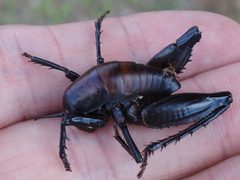
Wingless orthopterans with the characteristic humpbacked profile of camel crickets. As the specific epithet suggests, U. robusta is notably sturdy in build compared to related . Like other rhaphidophorids, they possess long, thread-like that extend well beyond the body length, enlarged hind adapted for jumping, and a dorsoventrally compressed body form. The body is typically pale to medium brown with variable patterning.
Habitat
Found in oak-juniper-pine woodlands and adjacent . Observations indicate association with montane and foothill environments in the southwestern United States. Specific microhabitat preferences include ground-level activity in wooded areas, often encountered on roadsides and trails at night.
Distribution
Recorded from Illinois, Kansas, Minnesota, New Mexico, and northeastern Mexico. Distribution appears disjunct, with in the Midwest and Southwest separated by the Great Plains. The southwestern records cluster in the Sacramento Mountains of New Mexico and adjacent areas.
Seasonality
active from late spring through summer. Specific data sparse, but observations from New Mexico in late May indicate nighttime activity during this period.
Life Cycle
Developmental details unknown. As with other rhaphidophorids, likely has an extended nymphal period with gradual development, though specific data are lacking.
Behavior
and ground-active. When disturbed, exhibits dramatic defensive including regurgitation of gut contents, defecation, and adoption of exaggerated, seemingly 'hilarious' defensive postures. These behaviors have been observed in field encounters and appear consistent across individuals.
Ecological Role
Human Relevance
Of minor significance as a curiosity; occasionally encountered by entomologists and naturalists during fieldwork. Not known to be a pest or to invade structures.
Similar Taxa
- CeuthophilusLargest and most diverse of North American camel crickets; Udeopsylla distinguished by more robust build and different genitalic structure
- DaihiniaAnother rhaphidophorid with overlapping range; differs in body proportions and preferences
More Details
Taxonomic history
The has remained since its description, with no additional described in over 160 years. This stability reflects both genuine rarity and possible undersampling of orthopteran fauna.
Field encounters
The defensive displays that include regurgitation and posturing make this memorable to field observers, though this is shared with other camel crickets to varying degrees.