Ceuthophilus uhleri
Scudder, 1862
Uhler's camel cricket
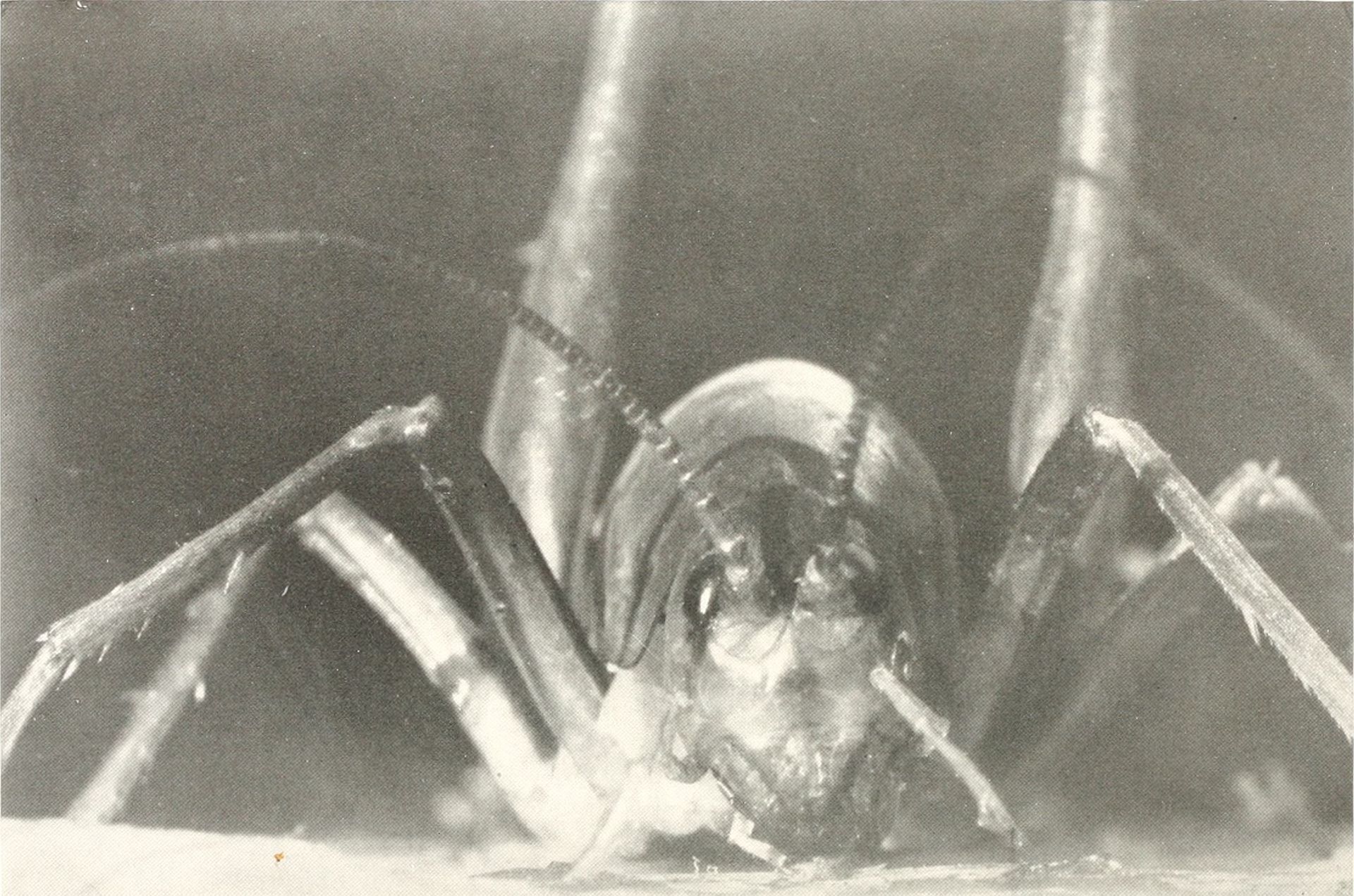
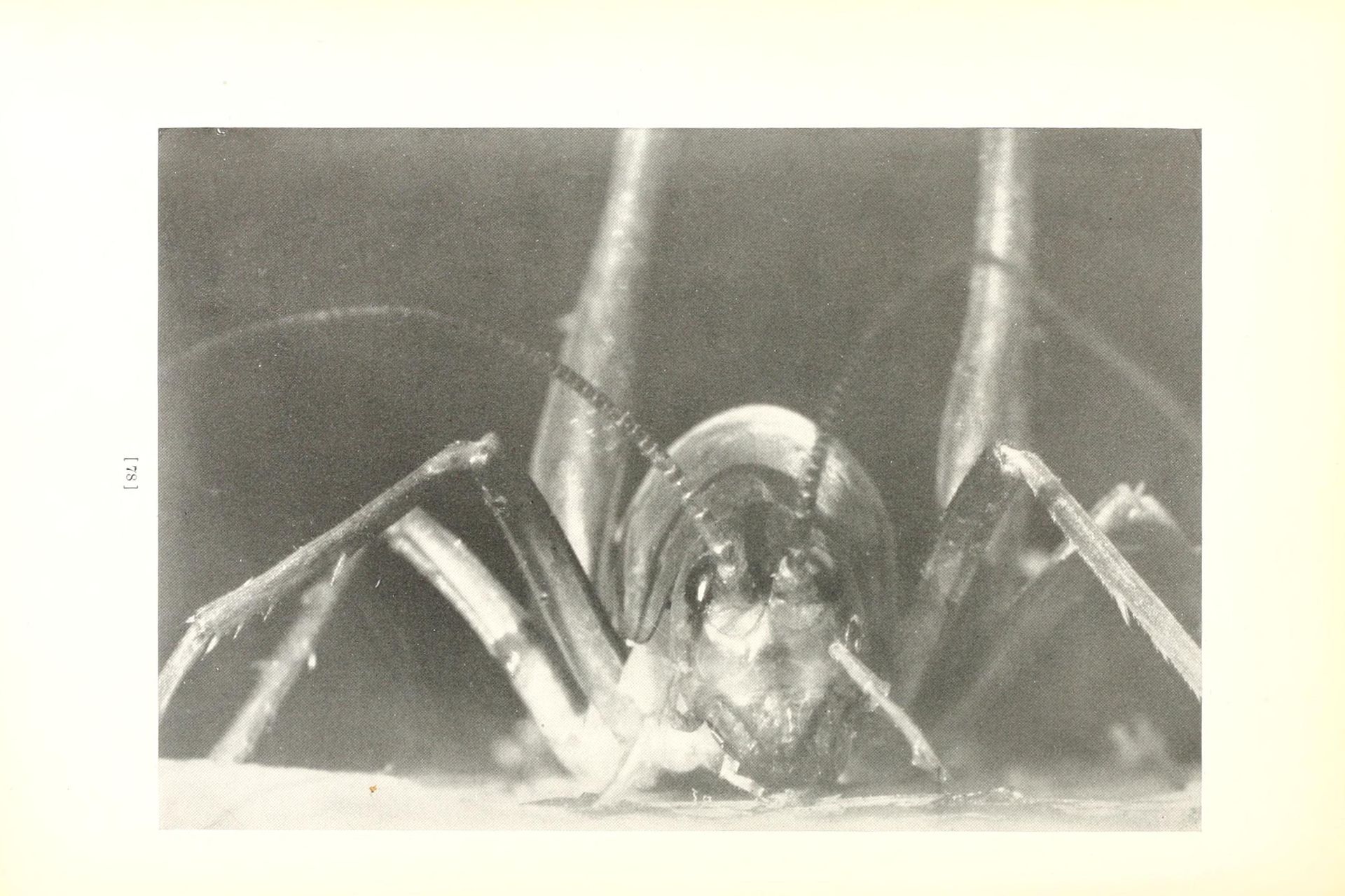
Ceuthophilus uhleri is a North American of camel cricket in the Rhaphidophoridae. Like other members of its , it is wingless and possesses exceptionally long adapted for navigating dark environments. The species is found in the eastern and central United States, with records from Illinois, Indiana, Kentucky, Maryland, and Missouri. It inhabits cool, damp, dark microhabitats and is primarily .
Pronunciation
How to pronounce Ceuthophilus uhleri: //kjuːˈθɒfɪləs ˈjuːlər.aɪ//
These audio files are automatically generated. While they are not always 100% accurate, they are a good starting point.
Identification
Distinguished from true crickets (Gryllidae) by absence of wings and inability to produce sound. Separated from Asian camel crickets (Diestrammena spp., particularly D. asynamora) by geographic origin and subtle morphological differences; D. asynamora has become in urban homes east of the Rocky Mountains, while C. uhleri is native. Specific distinguishing characters from not documented in available sources.
Images
Habitat
Cool, damp, dark microhabitats including caves, cellars, basements, mine shafts, rodent burrows, old wells, and deep woodlands. Moisture-dependent; requires high humidity. Outdoors found under boards, stones, bricks, logs, leaf litter, and debris.
Distribution
Eastern and central United States. Documented occurrence: Illinois, Indiana, Kentucky, Maryland, Missouri.
Seasonality
. home invasion begins late summer and early autumn. Active year-round in suitable microhabitats.
Diet
scavenger. Consumes decaying organic matter including leaves, roots, fruits, and rotting remains of other insects. Has been observed to capture and eat other insects and , particularly injured or weakened individuals. May nibble paper products and fabrics.
Life Cycle
Females use blade-like ovipositor to insert in soil. Developmental stages not specifically documented for this . Capable of (voluntary leg detachment) when threatened by ; can regenerate lost appendages.
Behavior
forager. Exhibits thigmotaxis (travels with body contact against walls). Can jump several feet when disturbed. Not social in the sense of eusocial insects, but aggregates in groups under sheltering objects. Attracted to dry oatmeal and molasses baits.
Ecological Role
Scavenger of decaying organic matter and animal droppings. Serves as prey for various . Contributes to nutrient cycling in cave and forest floor .
Human Relevance
Occasional nuisance in basements, crawl spaces, garages, and tool sheds. Not dangerous to humans; cannot sting. Rarely causes damage to property, though may nibble stored fabrics and paper products. Fecal spots can stain wood and tools. Presence may indicate excess moisture or mold problems. Used as fish by some anglers.
Similar Taxa
- Diestrammena asynamora (Greenhouse Stone Cricket) Asian now in urban homes east of the Rocky Mountains; superficially similar appearance but non-native origin and different geographic distribution pattern
- Ceuthophilus spp. (congeners)Approximately 90 North American in ; many require knowledge or geographic context to distinguish
- Gryllus spp. (field crickets)True crickets have wings and produce sound; camel crickets are wingless and silent
Misconceptions
The female ovipositor is frequently mistaken for a stinger, but the is harmless to humans. The '' leads some to expect chirping, but camel crickets are wingless and cannot produce sound.
More Details
Taxonomic note
The iNaturalist entry for this lists it as a 'complex' rather than a , suggesting possible taxonomic uncertainty or cryptic diversity; however, authoritative sources (GBIF, NCBI) recognize it as a valid species described by Scudder in 1862.
Research context
Studies of camel cricket home invasions have focused primarily on the Asian Diestrammena asynamora; less is known about the specific and of C. uhleri relative to its competitor.
Sources and further reading
- BugGuide
- Wikipedia
- GBIF taxonomy match
- iNaturalist taxon
- NCBI Taxonomy
- Grasshoppers of Colorado
- Grasshoppers of Colorado
- Grasshoppers of Colorado
- Five-legged cricket in the bathtub: Ceuthophilus spp. (American camel crickets) and Diestrammena spp. (Asian camel crickets) — Bug of the Week
- Move over American camel crickets, Asian camel crickets are in town: Ceuthophilus sp. (American camel crickets) and Diestrammena sp. (Asian camel crickets) — Bug of the Week
- Bug Eric: Camel Crickets