Hesperotettix viridis pratensis
Scudder, 1897
Purple-striped Grasshopper
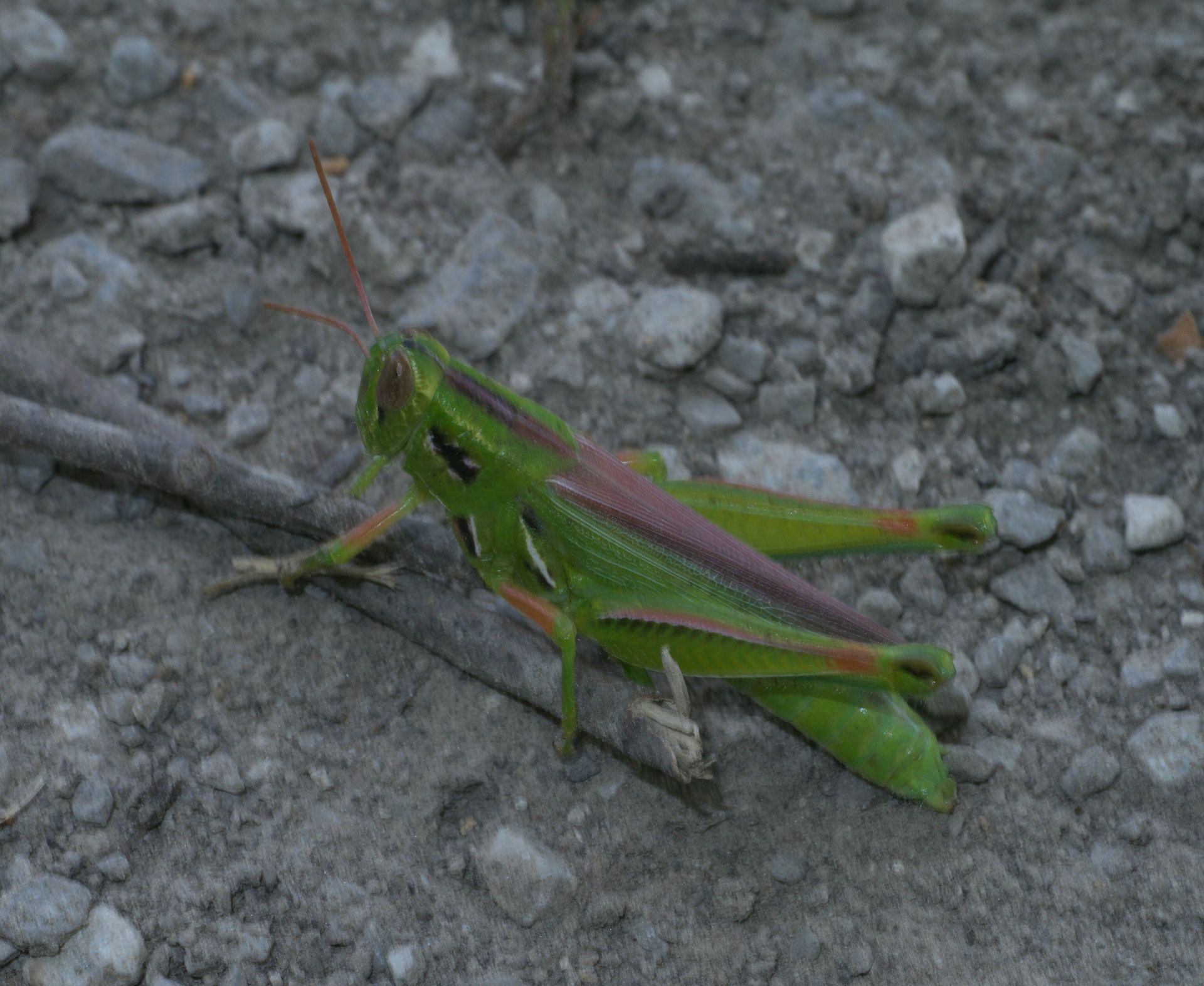
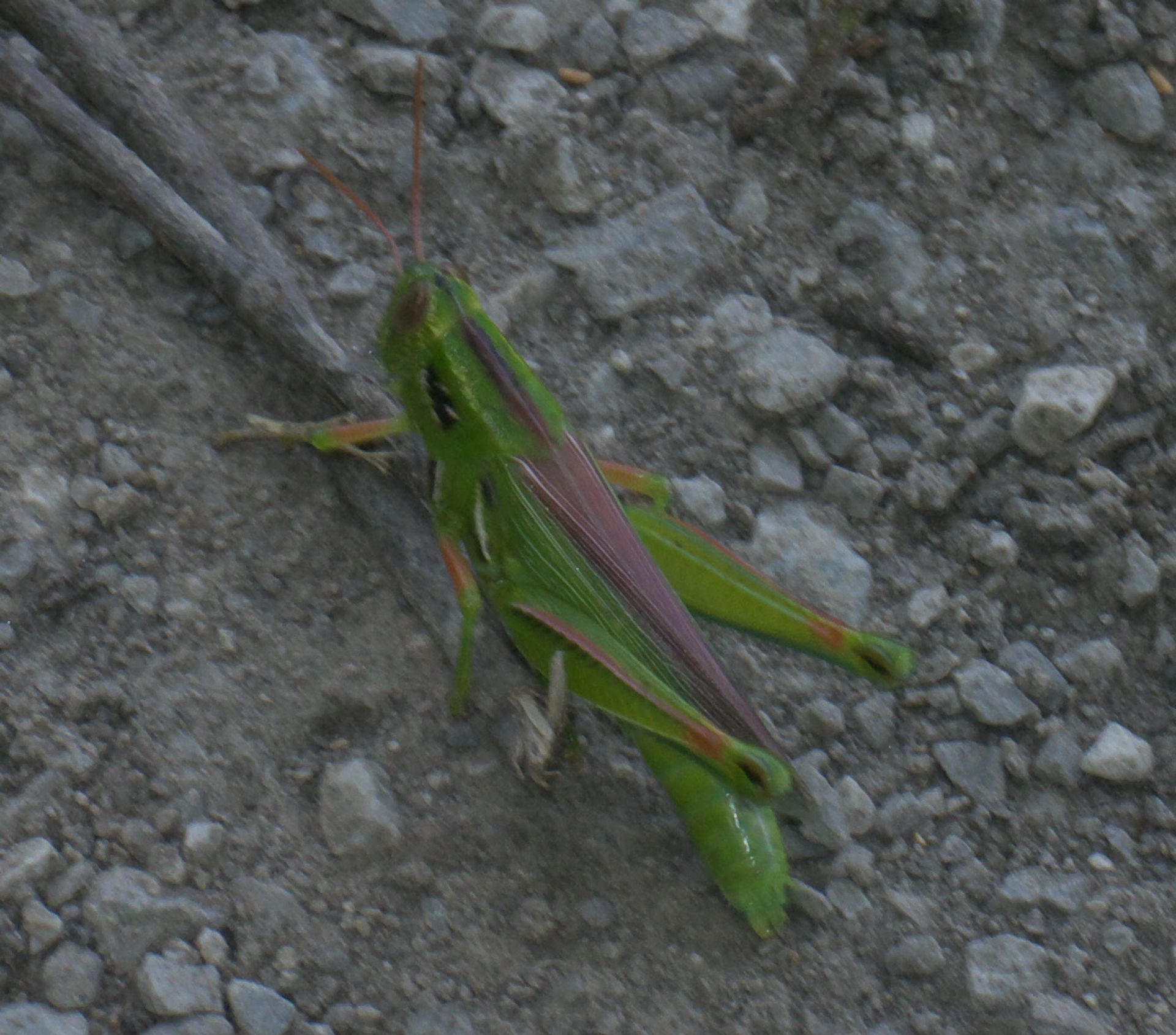
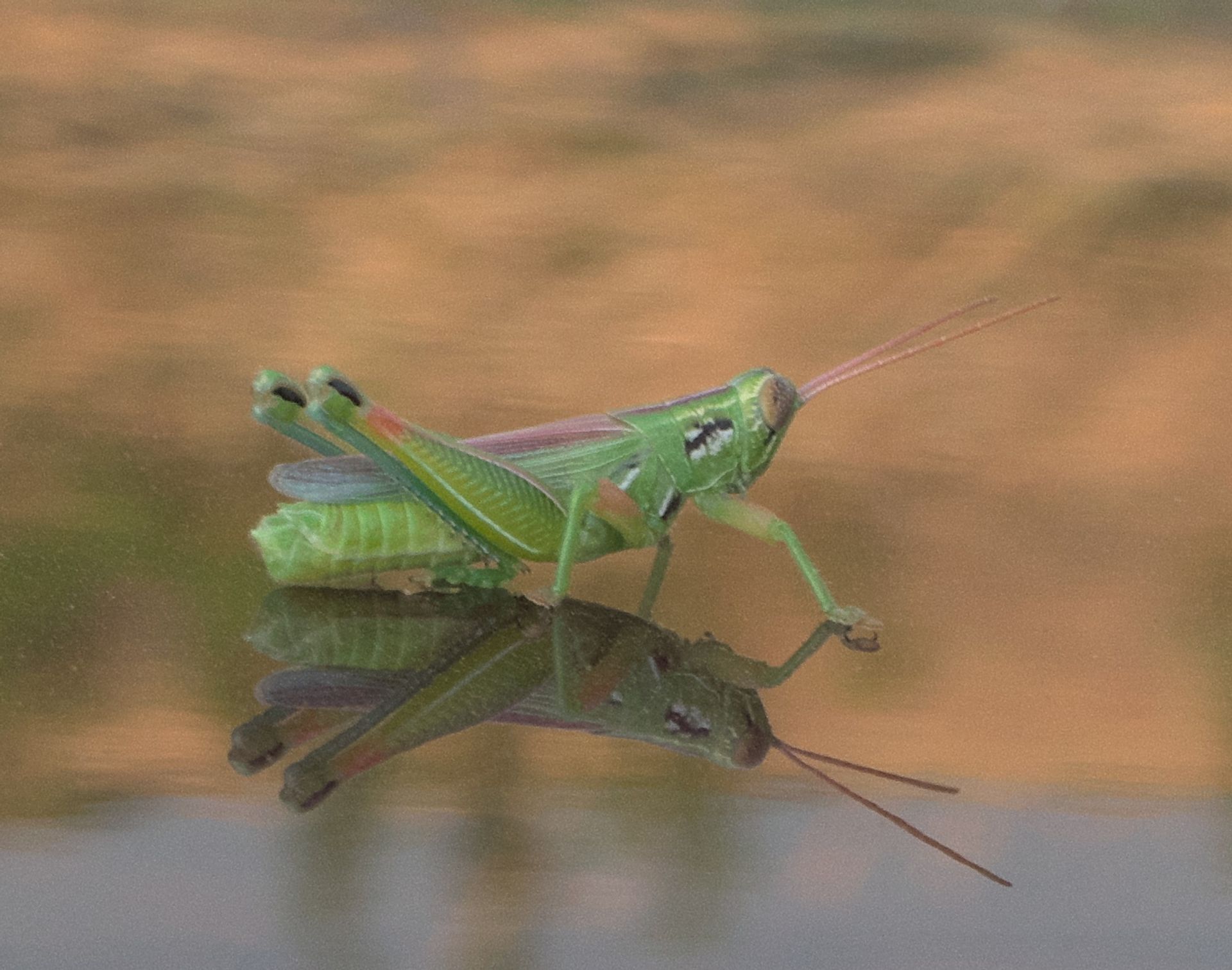
A of the snakeweed grasshopper, Hesperotettix viridis pratensis is a spurthroated in the Acrididae. It occurs in grasslands and prairie where its plants grow. The subspecies is distinguished from the nominate form by geographic distribution and subtle morphological differences. It is one of several subspecies within the H. viridis complex.
Pronunciation
How to pronounce Hesperotettix viridis pratensis: //ˌhɛspɛrəˈtɛtɪks ˈvɪrɪdɪs prəˈtɛnsɪs//
These audio files are automatically generated. While they are not always 100% accurate, they are a good starting point.
Identification
Distinguished from other H. viridis primarily by geographic range; from the nominate H. viridis viridis by occurring east of the Rocky Mountains in the Great Plains region. Separated from the similar Hypochlora alba by medium green (not pale green) body color, black with pale annuli (not green antennae), and hind with black spotting or chevrons (not brown spots). Male subgenital plate with large truncated preapical . Wings long, reaching or nearly reaching tip in males; females with wings slightly shorter. light line present on occiput and continuing onto pronotal disk.
Images
Habitat
Grasslands, prairies, and open rangeland east of the Rocky Mountains. Associated with areas supporting composite- plants, particularly snakeweeds (Gutierrezia spp.) and related shrubs.
Distribution
Great Plains and Midwestern North America: recorded from Illinois, Indiana, Arkansas, and northwestern United States. Extends into northeastern Mexico.
Diet
Feeds primarily on forbs in the Asteraceae (Compositae), particularly snakeweeds (Gutierrezia spp.), rabbitbrushes (Ericameria/Chrysothamnus), and related shrubs. Has been observed to feed on at least 34 forb across its range. Consumes trace amounts of grasses, flower petals, pollen, fungi, and arthropods.
Life Cycle
One annually. overwinter in soil at approximately 1 inch depth, in tough-walled pods containing approximately 10 tan eggs. Embryos develop to stage 19 before entering . Hatching occurs in mid-June in northern mixedgrass prairie, approximately two to three weeks after Ageneotettix deorum. Nymphal development requires about 55 days and five instars. present from late July through September.
Behavior
Phytophilous spending most of active life on plants. Roosts -up on stems during night. Basks after sunrise by turning perpendicular to sun's rays while remaining vertically positioned on vegetation. Later morning basking occurs on ground surface in horizontal position. Evasive silent, straight, low (6-9 inches), and short (2-6 feet), typically beginning when air temperature 1 inch above ground reaches 68°F. Feeding occurs in short bouts of less than three minutes, attacking leaf edges, stem cortex, and flower buds.
Ecological Role
herbivore on native Asteraceae shrubs. Functions as a agent against or undesirable snakeweed , with potential to suppress seedling establishment and reduce survival of young plants. High densities can consume all leaves and substantial stem cortex, contributing to plant mortality.
Human Relevance
Considered beneficial for rangeland management due to feeding on low-value or toxic plants that compete with forage . Some plants (snakeweeds) are poisonous to livestock, causing illness and abortion; feeding may reduce this hazard. Investigated as potential agent for broom snakeweed in New Mexico.
Similar Taxa
- Hesperotettix viridis viridisNominate occurring west of the Rocky Mountains; distinguished by geographic range and subtle morphological differences
- Hypochlora albaSimilar green coloration and spurthroated ; distinguished by pale green (not medium green) color, green (not black) , and brown (not black) hind markings
- Hesperotettix speciosusCongeneric spurthroated with overlapping range; distinguished by different plant associations and color pattern details