
Chromagrion conditum
(Hagen in Selys, 1876)
Aurora Damsel
Chromagrion conditum, commonly known as the Aurora Damsel, is the sole in its . This small is distinguished by its striking coloration with bright yellow-green and blue abdominal markings in males. It inhabits forested streams and seeps across eastern North America. The species is notable for its early spring , often appearing before most other damselflies in its range.
Pronunciation
How to pronounce Chromagrion conditum: //ˌkroʊməˈɡriː.ɒn ˈkɒn.dɪ.təm//
These audio files are automatically generated. While they are not always 100% accurate, they are a good starting point.
Identification
Distinguished from other eastern pond damselflies by unique color pattern: bright yellow-green combined with blue abdominal tip (segments 8-10) and blue base. Similar-sized Enallagma lack the yellow-green thorax and have different abdominal patterning. Superficially resembles some forktails (Ischnura) but lacks the forked abdominal appendages of males and has different thoracic striping. Early season also aids identification.
Images
Appearance
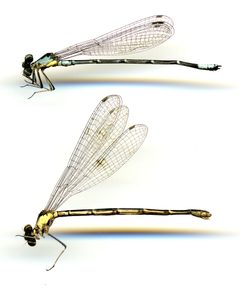
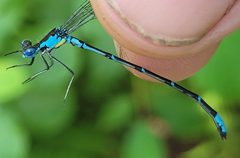
Small with vivid coloration. Male: bright yellow-green with black stripes; dark with blue rings on segments 1-2 and 8-10, segments 3-7 black. Female: similar pattern but with more subdued greenish or tan thorax and less extensive blue on abdomen. Both sexes have pale legs and clear wings with dark pterostigma. Body length approximately 25-30 mm.
Habitat
Small, shaded forest streams with moderate current, often in seepage areas or spring runs. Also found along wooded edges of larger streams and rivers. Requires clean, cool water with abundant emergent vegetation and nearby forest .
Distribution
Eastern North America: from Ontario and Quebec south to northern Florida, west to Minnesota and eastern Texas. Disjunct in Ozark and Appalachian regions.
Seasonality
Early spring emergent: active from March to June in southern range, April to July in northern range. Peak activity typically April-May. One of the first to appear in spring in most of its range.
Diet
prey on small flying insects including , mosquitoes, and other tiny arthropods. Nymphs are aquatic on small and insect larvae.
Life Cycle
Hemimetabolous development with , nymph, and stages. Eggs laid in submerged vegetation in running water. Nymphal stage lasts approximately one year, with through winter. occurs early spring before leaf-out.
Behavior
Males perch on vegetation over water or along stream banks, making short to intercept prey or pursue females. Tandem mating position typical of . Females oviposit alone or in tandem, inserting into aquatic vegetation. often found in shaded areas, showing less tendency to disperse to open areas than many coenagrionids.
Ecological Role
in both aquatic (nymph) and terrestrial () . Nymphs serve as prey for larger aquatic and fish. Adults contribute to control of small flying insect . for high-quality, cool, forested stream .
Human Relevance
Subject of citizen science monitoring and odonatological surveys due to its restricted requirements and early season. Presence indicates good water quality in headwater streams. Occasionally used in biomonitoring programs for stream health assessment.
Similar Taxa
- Enallagma speciesSimilar size and general form, but lack bright yellow-green and have different abdominal color patterns (usually solid blue or different segmental patterning)
- Ischnura verticalis (Eastern Forktail)Similar size and some color overlap, but has forked male appendages, different thoracic pattern (striped rather than solid yellow-green), and later season
- Nehalennia species (Sprites)Similar small size and early , but have metallic green or blue without yellow-green coloration, and more slender
More Details
Conservation Notes
Vulnerable to degradation from stream warming, siltation, and forest removal. can be locally abundant but are often restricted to specific stream reaches. Climate change may affect and northern range limits.
Taxonomic History
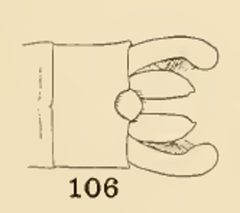
Originally described as Erythromma conditum by Hagen in 1876, later transferred to Chromagrion based on distinctive morphological features including unique genital and coloration pattern.